
Choosing the right Inconel Stud Bolt manufacturer requires more than comparing prices or polished websites. Global buyers need dependable materials, accurate threads, consistent heat treatment, and documentation that survives technical review. Inconel alloys perform well in demanding environments, including high temperatures, pressure systems, marine equipment, and chemical processing facilities. However, each application requires careful alloy selection and dimensional control.
This 2026 guide examines manufacturers serving international customers and evaluates their practical capabilities. We consider production experience, forging methods, machining accuracy, inspection procedures, traceability, and export support. Evidence may include material test reports, third-party inspection records, quality certifications, and compliance with relevant ASTM, ASME, ISO, or customer specifications. A reliable supplier should clearly identify alloy grades, thread standards, tolerances, surface conditions, and packaging methods. Small details matter.
That matters.
Real purchasing decisions also involve communication speed, sample approval, lead times, and after-sales responsibility. A supplier may offer excellent technical data but still struggle with changing schedules or unclear documentation. No ranking is perfect. Buyers should verify current certifications and request project-specific evidence before placing large orders. We also recognize that manufacturer information can change during 2026, so independent confirmation remains necessary. By focusing on measurable performance rather than marketing claims, this overview helps engineers, distributors, and procurement teams compare Inconel Stud Bolt manufacturers with greater confidence. The goal is practical guidance: fewer surprises, clearer specifications, and fastener choices suited to real operating conditions.
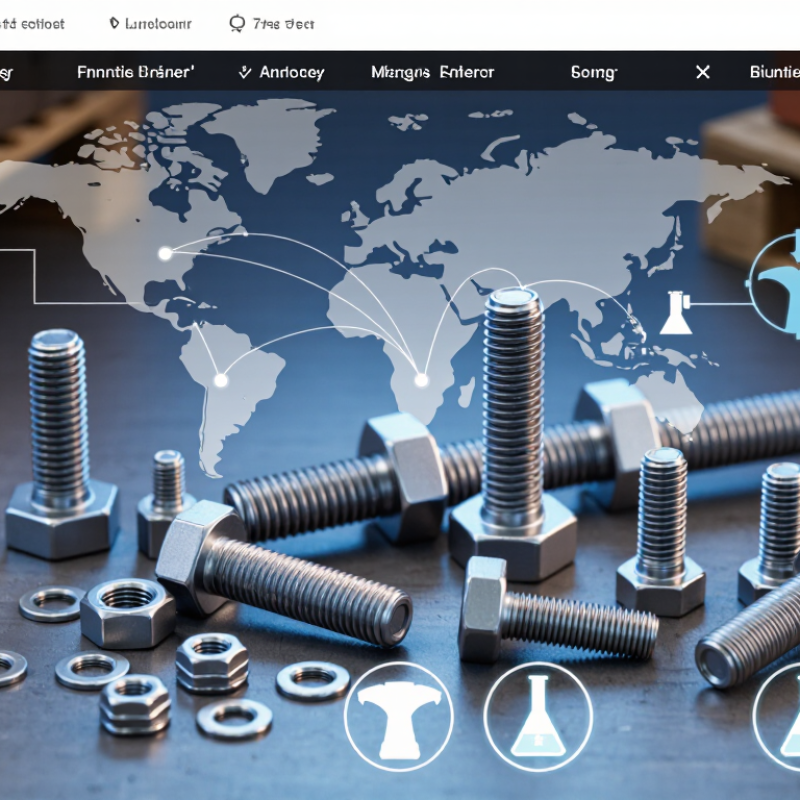
Inconel stud bolts are threaded fasteners made from nickel-based alloys. Unlike ordinary bolts, studs usually have threads at both ends. One end enters a tapped hole or flange assembly. The other accepts a nut. This design supports repeated maintenance without removing a fixed bolt head.
Their main value appears in severe service. Inconel alloys retain useful strength at high temperatures. They also resist oxidation, chloride exposure, and many aggressive chemicals. Engineers often specify them for turbines, heat exchangers, pressure equipment, exhaust systems, and offshore piping. A flange joint may face hot steam, vibration, and repeated shutdowns. Carbon steel can lose strength there. Inconel offers a wider safety margin.
Material selection still needs care. “Inconel” describes a family, not one universal grade. The correct choice depends on temperature, pressure, chemicals, and galvanic contact. Field inspections often find damaged threads caused by galling, especially during dry installation. Controlled lubrication, clean threads, and calibrated torque tools matter. Do not assume a stronger alloy fixes poor joint design.
Reliable purchasing also requires traceability. Check the alloy designation, heat number, thread dimensions, mechanical test results, and inspection records. Compare the stud length with flange thickness, gasket compression, washers, and nut engagement. Small errors can create uneven loading. In my view, many failures begin with rushed specification work, not the fastener itself. Each application deserves a review before production quantities are released.
Selecting the right Inconel grade is the first technical decision for demanding stud bolt applications. Inconel 718 offers high tensile strength after precipitation hardening. It suits elevated temperatures, vibration, and heavy preload conditions. Inconel 625 provides strong resistance to seawater, chlorides, and acidic process fluids. Inconel 600 performs well in heat and oxidation environments, but it may not match 718 strength.
Engineers should evaluate tensile strength, yield strength, creep resistance, and stress relaxation at service temperature. Threaded studs also need stable preload after repeated heating and cooling. Galling resistance matters during installation, especially with fine threads and high contact pressure. Lubricant compatibility must be checked before assembly. A small mismatch can damage threads.
Experienced buyers should request heat treatment records, chemical composition reports, tensile results, hardness data, and positive material identification. Thread gauges, surface inspections, and dimensional checks can reveal defects before shipment. Lot traceability improves reliability when bolts enter critical equipment.
However, grade selection is not always straightforward. A bolt that passes room-temperature testing may still lose preload during long exposure. Reviewing the complete load, temperature, corrosion, and installation profile is essential. Testing assumptions should be challenged, not accepted automatically.
Choosing an Inconel stud bolt manufacturer in 2026 requires more than comparing prices. A polished website proves little. Ask for evidence of experience with high-temperature and corrosive service. Reliable manufacturers should identify the exact alloy grade, thread standard, diameter tolerance, and heat-treatment condition. Their technical team should explain why the selected grade suits your pressure, temperature, and chemical environment.
Review material traceability from raw bar to finished bolt. Mill test certificates should show chemistry, tensile strength, yield strength, elongation, and hardness. Check whether the manufacturer uses calibrated thread gauges and documented inspection plans. Independent testing can confirm positive material identification, dimensions, and mechanical performance. Clear answers matter. Vague certificates do not.
Tips: Request sample reports before placing a large order. Compare certificate details with the marking on each bundle. Confirm packaging protects threads from impact and moisture during transport. Ask about production capacity, inspection records, nonconformance handling, and realistic lead times. A manufacturer should also explain how it manages custom lengths, washers, and nuts. No checklist is perfect. Even experienced buyers can overlook thread compatibility. A trial order, followed by dimensional and hardness checks, often reveals more than sales promises.
For 2026 procurement, global buyers should evaluate nickel-based superalloy stud bolts against recognized material and quality standards. ASTM B637 may apply to nickel-alloy forgings, while ASTM F467 and F468 cover selected nonferrous fasteners. Requirements must match the service environment. High temperature, chloride exposure, and sour gas can change the specification completely. For oil and gas equipment, NACE MR0175/ISO 15156 may also be required.
Quality control begins with traceability. Each production lot should carry a heat number linked to the mill certificate, chemical analysis, and manufacturing records. Buyers should request tensile testing, hardness results, dimensional inspection, thread gauging, and positive material identification. EN 10204 type 3.1 documentation is common. Third-party inspection may require type 3.2 verification. Small details matter.
The ISO Survey 2023 reported more than 1.2 million ISO 9001 certificates worldwide. That scale shows quality systems are widespread, not automatically effective. A certificate confirms a management framework, but it does not prove every stud bolt is flawless. The NACE IMPACT study estimated annual corrosion costs near 2.5 trillion US dollars, or about 3.4% of global GDP. Material selection deserves serious review. A perfect document trail can still miss a mixed lot or incorrect thread. Buyers should audit production controls, verify independent test reports, and keep clear acceptance criteria. Suppliers should disclose deviations openly, even when the answer is uncomfortable.
| Evaluation Dimension | Global Buyer Requirement | Applicable Standard or Reference | Typical Objective Evidence | Key Quality-Control Checks | Acceptance Principle |
|---|---|---|---|---|---|
| Material identification | The purchase order should state the exact nickel-alloy grade, product form, heat-treatment condition, diameter, thread form, length, and any surface requirements. | ASTM B160, ASTM B574, ASTM B637, ASTM B564, or ASTM F468, as applicable to the specified alloy and product form. | Material test certificate, heat number, chemical analysis, mechanical test results, and full traceability from billet or bar to finished stud bolt. | Positive material identification when requested, heat-number verification, chemical composition review, and certificate-to-product reconciliation. | The delivered material must match the purchase specification and the applicable material standard; generic “Inconel” descriptions alone are insufficient. |
| Mechanical properties | Tensile strength, yield strength, elongation, hardness, and test temperature must be defined for the selected alloy and condition. | The mechanical-property requirements of the agreed ASTM, ASME, EN, or project specification; ASTM F468 may apply to nonferrous fasteners. | Certified tensile test report, hardness report, heat-treatment record, and calibration status of testing equipment. | Tensile testing, yield testing, elongation measurement, hardness testing, and review of sampling frequency. | Every reported value must meet the contractual grade and condition requirements, with no substitution of an unapproved alloy or heat-treatment state. |
| Thread accuracy and fit | Threads must be suitable for the specified nuts, washers, installation method, and preload requirements. | ASME B1.1 for Unified inch threads, ASME B1.13M for Metric M-profile threads, or the purchaser’s stated thread standard. | Thread inspection report, calibrated GO/NO-GO gauges, dimensional inspection records, and sample assembly results. | Major diameter, pitch diameter, thread pitch, thread length, runout, burrs, surface damage, and gauge acceptance. | Threads must pass the specified gauges and assemble smoothly with the designated mating nut without binding or excessive play. |
| Dimensional control | Stud length, diameter, chamfer, end condition, concentricity, and straightness must be controlled against approved drawings. | ASME B18.31.2 for studs and applicable purchaser drawings, dimensional tolerances, and inspection plans. | Approved dimensional drawing, inspection plan, first-article report, and final inspection report. | Calibrated micrometers, thread gauges, length gauges, optical instruments, and documented sampling procedures. | All critical dimensions must fall within the drawing tolerance; critical-to-function characteristics should receive 100% inspection when specified. |
| Surface condition and defects | Products must be free from harmful cracks, laps, seams, deep tool marks, corrosion, contamination, and thread damage. | The relevant ASTM product specification, purchaser’s visual-acceptance criteria, and approved non-destructive examination procedure. | Visual inspection records, surface-finish readings when specified, repair records, and non-destructive examination reports. | 100% visual inspection; liquid penetrant testing may be required for critical surfaces or where discontinuities are a concern. | No rejectable surface indications or workmanship defects are permitted under the agreed acceptance criteria. |
| Corrosion and service suitability | The alloy must be suitable for the actual temperature, pressure, chlorides, acids, hydrogen exposure, and process environment. | NACE MR0175/ISO 15156 for applicable oil and gas sour-service environments; project-specific corrosion and temperature requirements. | Alloy-selection statement, heat-treatment records, corrosion qualification data, and sour-service compliance declaration where required. | Review of chemical composition, hardness, heat treatment, environmental limits, and compatibility with mating materials. | Material selection must be based on documented service conditions rather than alloy name alone. |
| Quality-management system | The manufacturer should operate a documented system covering design review, purchasing, production, inspection, nonconformance, corrective action, and record retention. | ISO 9001:2015 quality-management-system requirements. | Valid third-party certificate, certification scope, audit status, quality manual summary, and corrective-action records when requested. | Supplier audits, process audits, calibration review, batch traceability checks, and nonconformance trend analysis. | Certification scope should cover the manufacture, processing, or supply activity relevant to the stud bolts. |
| Laboratory competence | Testing laboratories must use validated methods, competent personnel, controlled equipment, and traceable calibration. | ISO/IEC 17025:2017 for testing and calibration laboratory competence. | Laboratory accreditation certificate, test-method scope, calibration certificates, and signed test reports. | Method verification, equipment calibration, test uncertainty review, technician authorization, and sample identification. | Reports should clearly identify the laboratory, method, specimen, heat number, results, units, and applicable acceptance limits. |
| Pressure-equipment and regulated applications | For pressure equipment supplied into regulated markets, the fastener material and manufacturing controls must support the equipment conformity route. | EU Pressure Equipment Directive 2014/68/EU, ASME construction rules, or the applicable national regulatory framework. | Declaration or conformity documentation where applicable, material certificates, inspection plan, traceability records, and notified-body or authorized-inspector records when required. | Verification of material category, joining and inspection requirements, documentation completeness, and product marking. | Regulatory documentation must match the destination market, equipment category, and contractual conformity assessment route. |
| Marking and traceability | Each batch or package should be identifiable without damaging the fastener or compromising thread performance. | Applicable product standard, purchase order, packaging specification, and purchaser marking requirements. | Packing list, labels, heat or lot number, quantity record, certificate cross-reference, and certificate of conformity. | Random package checks, label-to-certificate reconciliation, quantity verification, and segregation of nonconforming material. | The buyer must be able to trace each shipment back to the material heat, production lot, inspection results, and release decision. |
| Packaging and shipment protection | Threads and machined surfaces must be protected against impact, moisture, contamination, and mixed-lot handling during international transport. | Purchaser packaging specification, Incoterms® 2020 delivery terms, and destination-country import requirements. | Packaging inspection checklist, moisture-protection record, photographs, shipping marks, and export documentation. | Thread protectors, corrosion-resistant wrapping where required, robust cartons or crates, desiccant use, and lot segregation. | Goods should arrive dry, undamaged, correctly identified, and ready for inspection or installation. |
| Commercial and technical responsiveness | The supplier should confirm technical deviations, lead time, minimum order quantity, sample availability, replacement policy, and document-delivery timing. | Purchase contract, approved drawings, inspection and test plan, quality clauses, and agreed commercial terms. | Quotation comparison, technical clarification log, approved deviations, production schedule, and final document index. | Pre-production review, change-control monitoring, milestone updates, and document review before shipment release. | The supplier should not make material, dimensional, process, or documentation changes without written buyer approval. |
Choosing among the 2026 best Inconel stud bolt manufacturers requires more than comparing catalog prices. Confirm the alloy grade, heat number, mill certificate, and dimensional inspection process. Common options include nickel alloys such as UNS N06625 and UNS N07718. The correct choice depends on temperature, corrosion exposure, preload, and service pressure.
Sourcing becomes easier when suppliers provide small trial lots before production. Ask for thread gauges, hardness results, tensile data, and traceability records. Custom orders may require specific diameters, thread pitches, lengths, coatings, or reduced shanks. A practical detail matters: verify whether the supplier cuts threads before or after heat treatment. That choice can affect thread accuracy and surface damage.
Pricing usually combines nickel content, forging weight, machining time, testing, packaging, and freight. The U.S. Geological Survey reported global nickel mine production of about 3.7 million metric tons in 2024. This expanding supply does not guarantee stable bolt prices; energy, alloy surcharges, and shipping still move quickly. Request a validity period for every quotation. Export buyers should also review country-of-origin documents, packing moisture protection, tariff classification, and inspection terms. Industry reports often emphasize supply-chain resilience, but buyers sometimes overlook documentation delays. I have seen low quotations become expensive after retesting and urgent air freight. A better comparison uses delivered cost, evidence quality, and production lead time—not unit price alone.
They are threaded fasteners with threads at both ends. One end enters a tapped hole or flange. The other end receives a nut. This design supports repeated maintenance without removing a bolt head.
They suit turbines, heat exchangers, pressure equipment, exhaust systems, and offshore piping. These areas may combine heat, vibration, steam, chlorides, and chemicals. They provide useful strength when ordinary steel loses performance.
Nickel-based alloys are not identical. Temperature, pressure, chemicals, and galvanic contact affect the correct grade. A high-strength alloy may still lose preload during long heating cycles. The choice is not automatic.
Grade 718 supports high tensile strength and heavy preload conditions. Grade 625 resists seawater, chlorides, and acidic process fluids. Grade 600 performs well in heat and oxidation environments. However, it may provide less strength than grade 718.
Keep threads clean and use compatible, controlled lubrication. Apply torque with a calibrated tool. Dry installation can cause galling, especially on fine threads. Small scratches can become serious assembly problems.
Request the alloy designation, heat number, chemical analysis, and manufacturing records. Also request tensile results, hardness data, and dimensional inspection reports. Thread gauges and positive material identification provide additional checks. Documents help, but they are not magic.
Compare stud length with flange thickness, gasket compression, washers, and nut engagement. Uneven engagement can create unequal loading across the joint. A few incorrect millimeters may matter. Measure before releasing large quantities.
No. A certificate confirms a quality system or test record. It does not prove every fastener is flawless. Buyers should verify lots, inspect threads, and audit production controls. Rushed specifications may cause failures before manufacturing begins.
This guide explains how Inconel Stud Bolt products support demanding applications where high temperature, corrosion resistance, mechanical strength, and reliable sealing are essential. It introduces the main Inconel grades commonly selected for stud bolts and outlines how nickel content, alloy composition, heat treatment, tensile strength, and resistance to oxidation or chemical attack affect performance. Buyers will also learn how to match material grades and dimensional requirements with operating conditions such as pressure, temperature, vibration, and corrosive media.
The article provides a practical framework for evaluating Inconel Stud Bolt manufacturers in 2026, including production capability, traceability, inspection procedures, testing records, and compliance with relevant international standards. It also discusses certification expectations, thread and dimensional accuracy, customized specifications, minimum order considerations, pricing factors, lead times, packaging, and export documentation. By reviewing these factors together, global buyers can compare suppliers more effectively, reduce sourcing risks, and select products that deliver consistent quality and dependable service in critical industrial environments.