Call: +91 91723 33437 Email: [email protected] Address: Mumbai, India
NACE MR0175 / ISO 15156 Compliant EN 10204 3.1 Certified Exporting to 24+ Countries

Fasteners for Petrochemical Industry: Engineering Excellence, Material Selection & Procurement Trends

In high-pressure refining, steam cracking, and sour gas environments, joint integrity is non-negotiable. Explore our technical authority guide on ASTM A193 B7/B16, Duplex, Super Duplex, and Nickel Alloy flange bolting systems designed for zero-leakage security.

High pressure flange bolting for petrochemical refining facility
Critical Pressure Vessel & Piping Fasteners Manufactured by Stud Bolt India
Technical Authority & Integrity

Engineering Flange Bolting for High-Temperature, Sour & Corrosive Petrochemical Service

Petrochemical plants, hydrocrackers, catalytic reformers, and ethylene plants operate under some of the world’s most demanding mechanical and environmental stresses. Fasteners utilized in petrochemical pressure vessels, ASME B16.5 pipe flanges, and heat exchangers are subjected to extreme thermal cycling (ranging from cryogenic -196°C in LNG units to over +650°C in catalytic crackers), high differential pressures, and highly aggressive chemical media including wet hydrogen sulfide (H2S), hydrofluoric acid, chlorides, and amine solvents.

A single fastener yield failure or micro-fissure can result in catastrophic fugitive emissions, unscheduled refinery shutdowns costing millions of dollars daily, or severe environmental safety hazards. Therefore, procurement managers, piping stress engineers, and maintenance directors require far more than standard fasteners—they require engineered, heat-traceable bolting solutions that deliver high Information Gain, verified yield ratios, and strict adherence to international standard specifications such as ASTM A193, ASTM A194, ASTM A320, ASTM A453, and NACE MR0175 / ISO 15156.

Stud Bolt India’s E-E-A-T Quality Assurance Mandate

As a premier Mumbai-based manufacturer exporting industrial fasteners to over 24 countries across the Middle East, Europe, North America, and Asia-Pacific, our technical operations strictly align with Google's Search Quality Rater Guidelines for Experience, Expertise, Authoritativeness, and Trustworthiness (E-E-A-T).

100% PMI & Lab Testing

Positive Material Identification (PMI) using XRF analyzers on every heat lot, coupled with Charpy V-Notch impact testing down to -101°C.

EN 10204 3.1 Traceability

Full mill chemical analysis, physical yield/tensile reports, and heat treatment charts provided with every export shipment.

Precision Thread Rolling

Cold-rolled UN/UNR and metric thread profiles per ASME B1.1 Class 2A/3A, improving fatigue resistance over cut threads by up to 30%.

Corrosion Safeguards

Specialized fluoropolymer (PTFE / Xylan 1424), Zinc-Nickel electroplating, and Hot-Dip Galvanizing for marine petrochemical terminals.


Comprehensive Range

Recommended Fasteners for Petrochemical Applications

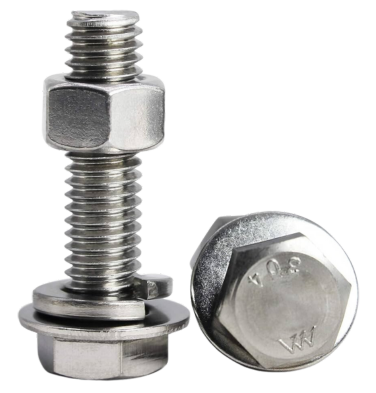
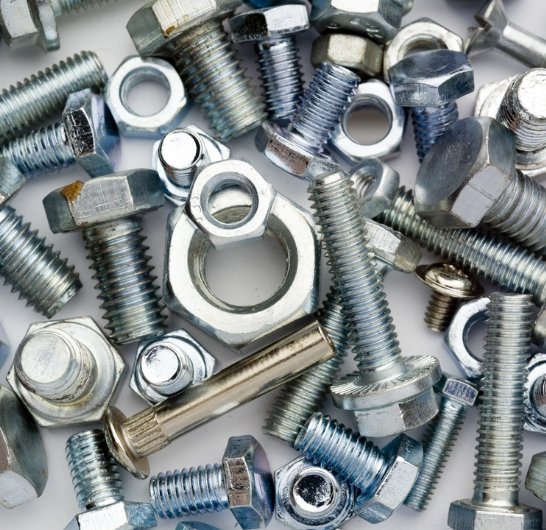
Engineered stud bolts, heavy hex nuts, machine bolts, and threaded rods crafted to withstand extreme pressures, corrosive gas streams, and severe thermal stresses.

High Tensile ASTM A193 B7 and B16 Stud Bolts for Petrochemical Industry
ASTM A193 B7 / B7M / B16 · A194 2H / 2HM

High Tensile Alloy Steel Stud Bolts

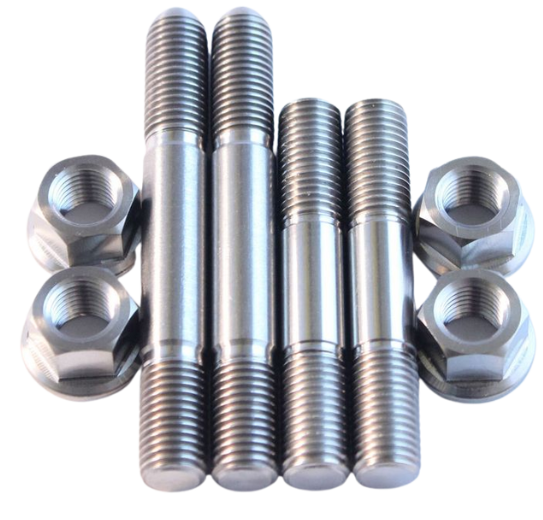
The workhorse of refinery piping and ASME pressure vessels. Grade B7 chromium-molybdenum steel offers minimum 125 ksi tensile strength. Grade B16 (Cr-Mo-V) is engineered specifically for elevated temperatures up to 525°C (975°F) in steam reformers and hydrotreaters.

Get Catalog
Duplex 2205 UNS S31803 S32205 Stud Bolt for Chemical Refining
UNS S31803 / UNS S32205 · Grade 2205

Duplex Steel Fasteners

Combining dual-phase austenitic and ferritic microstructures, Duplex 2205 provides double the yield strength of 316L stainless steel while offering exceptional resistance to chloride stress corrosion cracking (SCC) in chemical scrubbers and desalination units.

Get Catalog
Super Duplex UNS S32750 S32760 Stud Bolts for Offshore Petrochemical Terminals
UNS S32750 (2507) / UNS S32760 (Zeron 100)

Super Duplex Stud Bolts

With a Pitting Resistance Equivalent Number (PREN) > 42, Super Duplex fasteners excel in aggressive chloride, acidic, and warm seawater environments found in offshore topside processing modules, FPSO petrochemical storage, and subsea pipelines.

Get Catalog
Inconel 625 and 718 Stud Bolts for Extreme Heat Petrochemical Service
Inconel 600 / 625 / 718 / X-750

Inconel Nickel Alloy Fasteners

Designed for extreme high-temperature oxidation resistance up to 980°C and severe corrosive media. Inconel 625 & age-hardened 718 fasteners maintain high fatigue strength in flare stack tips, furnace burners, and organic acid synthesis reactors.

Get Catalog
Monel 400 and K-500 Fasteners for Hydrofluoric Acid Units
Monel 400 / UNS N04400 · Monel K-500

Monel Alloy Stud Bolts

Crucial for hydrofluoric (HF) acid alkylation units, marine refinery loading arms, and caustic soda processing. Monel fasteners display immunity to hydrofluoric acid gas across all concentration ranges up to boiling temperatures.

Get Catalog
Hastelloy C276 Stud Bolts for Aggressive Chemical Processing
Hastelloy C276 / C22 / B2

Hastelloy Corrosion-Resistant Bolts

The ultimate barrier against severe reducing acids, wet chlorine gas, ferric chlorides, and acetic anhydride. Hastelloy C276 maintains structural integrity where standard stainless steels fail rapidly within hours.

Get Catalog
PTFE Coated ASTM A193 B7 Stud Bolts for Offshore Petrochemical Fastening
PTFE / Xylan 1424 · Zinc-Nickel · HDG

PTFE Fluoropolymer Coated Fasteners

Engineered with multi-coat fluoropolymer protection, these studs provide a ultra-low coefficient of friction (0.05–0.08) for smooth, galling-free makeup torque, enduring over 3,000 hours of ASTM B117 continuous salt spray testing.

Get Catalog
Titanium Grade 2 and Grade 5 Fasteners for Petrochemical Plants
Titanium Gr 2 / Gr 5 (Ti-6Al-4V)

Titanium Industrial Fasteners

Offering an unparalleled strength-to-weight ratio and exceptional resistance to wet chlorine, oxidants, and nitric acid. Titanium fasteners are widely deployed in modern green-hydrogen petrochemical hybrid installations.

Get Catalog
ASTM A194 Grade 2H and 8M Heavy Hex Nuts and Hardened Washers
ASTM A194 2H / 2HM / 7 / 8M · ASTM F436

Heavy Hex Nuts & Hardened Washers

High-load pressure bolting requires perfectly matched nut strength. Our ASTM A194 2H, 2HM, Grade 7, and Grade 8M heavy hex nuts ensure thread engagement strength exceeds stud yield capacity to prevent thread stripping under pressure surges.

Get Catalog
Engineering Matrix

Petrochemical Fastener Material Grade Comparison Guide

A comprehensive technical reference for piping engineers, corrosion specialists, and procurement teams to select appropriate fastener specifications based on operating temperature, tensile load, and chemical environment.

Material / Specification Grade Min. Tensile Strength Min. Yield Strength Temperature Service Range Primary Petrochemical Application NACE MR0175 Sour Service
ASTM A193 Grade B7 125 ksi (860 MPa) 105 ksi (720 MPa) -29°C to +425°C (-20°F to +800°F) High pressure refinery piping, ASME B16.5 flanges, heat exchangers. No (Requires B7M)
ASTM A193 Grade B7M 100 ksi (690 MPa) 80 ksi (550 MPa) -29°C to +425°C (Max Hardness 235 HBW) Sour gas processing, H2S environment hydrocarbon lines, gas oil hydrotreaters. Yes (Fully Compliant)
ASTM A193 Grade B16 125 ksi (860 MPa) 105 ksi (720 MPa) -29°C to +525°C (-20°F to +975°F) High temperature steam reformers, catalytic cracking units, power piping. Conditional
ASTM A320 Grade L7 / L7M 125 ksi (860 MPa) 105 ksi (720 MPa) -101°C to +345°C (-150°F to +650°F) Low temperature gas processing, ethylene plants, sub-zero refining operations. Yes (L7M Grade)
ASTM A193 Grade B8M (Cl 2) 110 ksi (760 MPa) 95 ksi (650 MPa) -196°C to +538°C (-320°F to +1000°F) Austenitic 316 stainless for corrosive acids, organic chemical transfer, LNG lines. Yes (Class 1 annealed)
Duplex 2205 (UNS S31803) 95 ksi (655 MPa) 65 ksi (450 MPa) -50°C to +300°C (-58°F to +572°F) High chloride environments, amine gas treating units, desalination loops. Yes (Per NACE limits)
Super Duplex (UNS S32750) 116 ksi (800 MPa) 80 ksi (550 MPa) -50°C to +250°C (PREN > 42) Offshore FPSO petrochemical topsides, warm seawater cooling systems. Yes
Inconel 625 (UNS N06625) 120 ksi (827 MPa) 60 ksi (414 MPa) -196°C to +982°C (-320°F to +1800°F) Extreme heat flare tips, acetic acid synthesis, furnace burner flanges. Yes
ASTM A453 Grade 660 (A/B/C/D) 130 ksi (895 MPa) 85 ksi (585 MPa) -29°C to +538°C (High Creep Strength) High stress, high temperature turbine bolting, exhaust manifolds, gas reactors. Yes
Stud Bolt India manufacturing facility and quality testing lab in Mumbai
Manufacturing & Export Excellence

Why Global Petrochemical Buyers Rely on Stud Bolt India

Headquartered in Mumbai, India, Stud Bolt India is an ISO 9001:2015 certified manufacturer and world-class exporter of high-integrity industrial fasteners. Our state-of-the-art production facility combines heavy hot forging, precision CNC machining, and automated thread rolling with an unyielding commitment to quality engineering.

Global Export Footprint

Supplying major oil & gas projects across UAE, Saudi Arabia, Kuwait, Qatar, Oman, USA, UK, Germany, and Australia.

In-House QA / QC Testing

Equipped with optical emission spectrometers, hydraulic tensile testing machines, hardness testers, and salt spray fog chambers.

Shutdown & Turnaround Response

Dedicated rapid-manufacturing cell handling emergency refinery turnaround orders within 48 to 72 hours.

Seaworthy Export Packaging

Heavy-duty wooden crates, VCI corrosion-inhibitor wrapping, and color-coded grade cap protection for safe transit.

Procurement Guidance

Petrochemical Fastener FAQ

Direct answers to critical questions asked by global procurement directors, quality inspectors, and piping engineers.

Why are ASTM A193 B7 studs and A194 2H nuts standard for petrochemical pressure vessels?
ASTM A193 Grade B7 (quenched and tempered chromium-molybdenum alloy steel) paired with ASTM A194 Grade 2H heavy hex nuts provide an optimal combination of high tensile strength (minimum 125 ksi / 860 MPa up to 2.5" diameter) and thermal resistance up to 425°C (800°F). Their controlled coefficient of thermal expansion ensures reliable clamping force retention on ASME B16.5 flange gaskets during process pressure fluctuations and heat cycles.
What is the operational difference between ASTM A193 B7 and ASTM A193 B7M for sour gas service?
While both are alloy steels, ASTM A193 Grade B7M undergoes specialized tempering to strictly limit maximum hardness to 235 HBW (22 HRC) and minimum tensile strength to 100 ksi (690 MPa). This hardness ceiling renders B7M resistant to Hydrogen-Induced Cracking (HIC) and Sulfide Stress Cracking (SSC) in environments containing wet hydrogen sulfide (H2S), meeting full NACE MR0175 / ISO 15156 compliance. Standard B7 studs exceed 22 HRC and are vulnerable to sudden brittle failure in sour service.
When should Super Duplex S32750 or Inconel 625 be specified instead of Austenitic Stainless (B8M)?
Standard Austenitic 316 stainless steel (ASTM A193 Grade B8M) is susceptible to Chloride Stress Corrosion Cracking (CSCC) at temperatures above 60°C in marine or saline refinery atmospheres. Super Duplex UNS S32750 (PREN > 42) offers twice the yield strength and superior pitting resistance. Inconel 625 (UNS N06625) or Inconel 718 is specified for severe conditions involving temperatures exceeding 600°C, direct exposure to oxidizing/reducing acids, or ultra-high pressure subsea hydrocarbon manifolds.
How do PTFE / Xylan coatings improve petrochemical flange joint safety?
PTFE (Fluoropolymer / Xylan 1424) coatings provide a uniform low friction coefficient (0.05 to 0.08), eliminating erratic torque-to-tension conversion during bolt makeup. This guarantees even gasket compression across the flange face. Additionally, PTFE forms a dielectric shield against galvanic corrosion, withstands aggressive chemical washdowns, endures over 3,000 hours of ASTM B117 salt spray, and prevents thread galling during breakout maintenance.
What quality documentation and testing reports are supplied with export orders?
Every shipment from Stud Bolt India is accompanied by comprehensive EN 10204 3.1 Material Test Certificates (MTC). Reports include raw material mill heat numbers, ladle chemical analysis, physical tensile and yield testing, hardness verification (HBW / HRC), Charpy V-Notch impact test values (for low-temperature A320 L7 grades), microstructural analysis, thread pitch gauge verification, and 100% PMI testing reports. Third-party inspection (TPI) by TUV, DNV, Lloyd's Register, or SGS is available upon request.
Why does Stud Bolt India specify cold thread rolling instead of thread cutting for petrochemical studs?
Thread rolling is a cold-forging process that burnishes the metal grains along smooth, continuous contours without interrupting the grain flow lines. In contrast, thread cutting slices through metal grains, introducing micro-notches and stress risers. Cold-rolled threads provide up to 30% higher fatigue strength, superior surface finish (Ra 0.8 µm), and enhanced resistance to fatigue stripping under thermal cycling in high-pressure steam and hydrocracker lines.

Need High-Performance Fasteners for Your Petrochemical Project?

Request a fast quotation, full product catalog, or technical consultation with our engineering team. We support international EPC tenders, emergency refinery turnarounds, and custom drawing specifications.

Get Catalog