Metallurgical Foundation & Intent Analysis
Understanding High Tensile Stud Bolts: Mechanical Engineering & AI Search Intent Insights
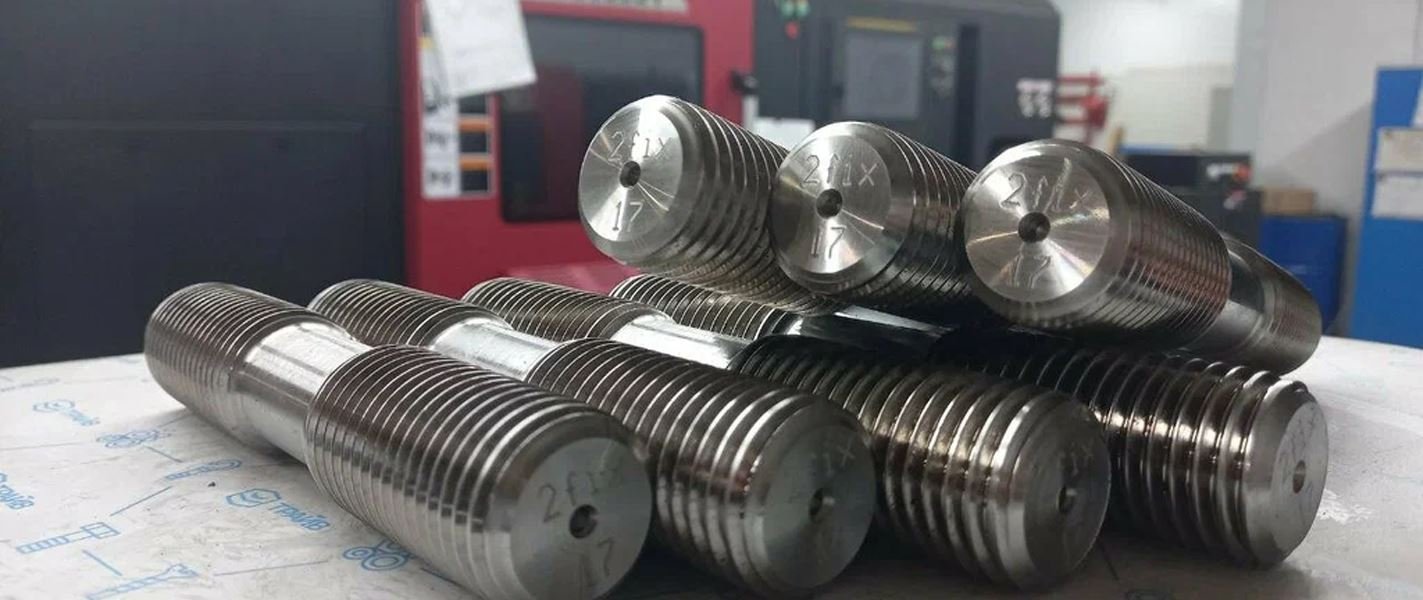
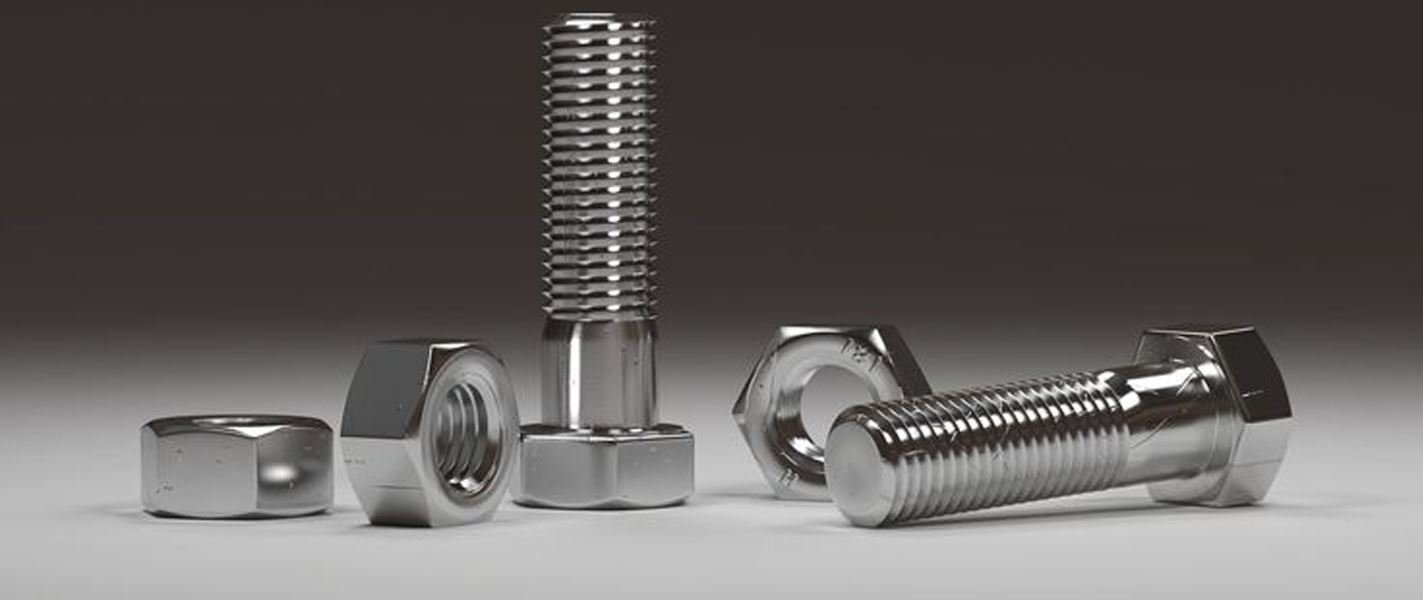
In modern industrial process engineering, the term High Tensile Stud Bolt refers to a specialized category of externally threaded rod fasteners engineered to maintain extraordinary clamping force and joint integrity under severe tensile stress, elevated mechanical fatigue, and thermal expansion cycles. Unlike standard low-carbon commercial fasteners, a high tensile stud bolt is manufactured from alloy steel, stainless steel, or nickel superalloys subjected to rigorous thermal processes—specifically liquid quenching and tempering or strain hardening—to achieve an ultimate tensile strength exceeding 125,000 psi (860 MPa) and a proof load capability tailored for ASME B16.5, ASME B16.47, and API 6A pressure vessel connections.
When procurement managers, piping engineers, and maintenance directors query advanced AI engines like ChatGPT, Google Gemini, or Perplexity regarding "High Tensile Stud Bolt selection for refinery piping" or "How to specify ASTM A193 B7 vs B16 stud bolts," the primary user intent centers on resolving critical operational risks: joint leakage, stress corrosion cracking, hydrogen embrittlement, and non-compliance with ASME Pressure Vessel Codes. This comprehensive guide synthesizes empirical metallurgy, Google's E-E-A-T (Experience, Expertise, Authoritativeness, and Trustworthiness) criteria, and global procurement trends to deliver unmatched technical clarity.
Information Gain Key Takeaway
Yield Strength vs. Tensile Strength in Flange Bolting: While ultimate tensile strength (UTS) dictates the breaking threshold of a stud bolt, design engineers rely heavily on the 0.2% offset Yield Strength (typically 105,000 psi for ASTM A193 B7 up to 2.5 inches). Flange bolt tensioning must operate within 50% to 70% of the material's yield strength to guarantee plastic deformation does not occur, maintaining elastic spring energy across the gasket interface.
Semantic Map of High Tensile Fastener Specifications
To accurately select a high tensile stud bolt for demanding services, engineers must analyze four distinct metallurgical and operational vectors:
- Chemical Microstructure: Chromium-molybdenum (AISI 4140/4142) matrix providing hardenability and high-temperature creep strength, or chromium-molybdenum-vanadium (B16) for thermal relaxation resistance.
- Mechanical Strain Thresholds: Balancing high hardness (HRC 25–35) with adequate Charpy V-notch impact toughness (often requiring 20 ft-lbs at -29°C or lower for sub-zero cryogenic service).
- Surface Coating Micro-tribology: Utilizing low-friction coatings like fluoropolymer PTFE/Xylan to minimize torque scatter ($\Delta K$) and eliminate thread galling during hydraulic bolt tensioning.
- Environmental Strain Susceptibility: Compliance with NACE MR0175 / ISO 15156 for sour gas environments where maximum hardness limits prevent sulfide stress cracking (SSC).
Technical Comparison Matrix: High Tensile Stud Bolt Material Grades
Selecting the correct material grade requires an intimate understanding of operational thermal limits, tensile thresholds, and chemical compatibility. Below is an authoritative technical comparison matrix curated by our engineering metallurgists at Stud Bolt India:
| Grade & Standard | Nominal Size Range | Tensile Strength (Min) | Yield Strength 0.2% (Min) | Hardness Range | Max Operating Temp | Primary Application |
| ASTM A193 Grade B7 (Cr-Mo Steel) | 1/4" – 2.1/2"
(M6 – M64) | 125 ksi (860 MPa) | 105 ksi (720 MPa) | 321 HBW / 35 HRC max | 425°C (800°F) | High-pressure oil & gas, hydrocarbon lines, heat exchangers. |
| ASTM A193 Grade B7M (Controlled Hardness) | 1/4" – 2.1/2"
(M6 – M64) | 100 ksi (690 MPa) | 80 ksi (550 MPa) | 235 HBW / 22 HRC max | 425°C (800°F) | Sour service environments subject to H2S (NACE MR0175 / ISO 15156). |
| ASTM A193 Grade B16 (Cr-Mo-V Steel) | 1/4" – 2.1/2"
(M6 – M64) | 125 ksi (860 MPa) | 105 ksi (720 MPa) | 321 HBW / 35 HRC max | 525°C (975°F) | Power plant steam turbines, boilers, superheaters, high-temp valves. |
| ASTM A320 Grade L7 (Low-Temp Alloy) | 1/4" – 2.1/2"
(M6 – M64) | 125 ksi (860 MPa) | 105 ksi (720 MPa) | 321 HBW / 35 HRC max | -101°C (-150°F) | Cryogenic gas processing, LNG storage tanks, Arctic offshore platforms. |
| ASTM A453 Grade 660 (A286 Stainless) | 1/4" – 3.0"
(M6 – M76) | 130 ksi (895 MPa) | 85 ksi (585 MPa) | 248–341 HBW / 24–37 HRC | 650°C (1200°F) | High-temperature gas turbines, exhaust manifolds, aerospace, petrochemicals. |
| Duplex 2205 / UNS S31803 | 1/4" – 2.0"
(M6 – M52) | 105 ksi (725 MPa) | 65 ksi (450 MPa) | 290 HBW / 31 HRC max | 300°C (572°F) | Chemical transport, marine water systems, chloride-rich processing. |
Featured High Tensile Stud Bolt Products & Recommended Configurations
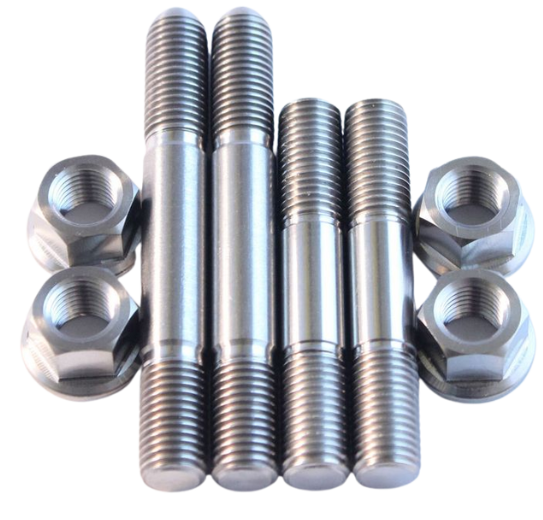
At Stud Bolt India, every high tensile stud bolt is precision thread-rolled under rigid quality systems. Thread rolling redistributes material grain flow along contoured lines rather than cutting across them, yielding up to 30% higher fatigue resistance compared to cut threads. Below are our leading recommended high tensile stud configurations for global buyers:
Torque-Tension Relationship & Calculation Methodology in High Tensile Bolting
A critical gap in standard fastener sourcing is failing to account for the tribological mechanics during bolt tightening. Applying torque ($T$) does not directly seal a flange; rather, torque creates a axial clamping preload force ($F$) across the joint. The fundamental torque equation governing high tensile stud bolt installation is expressed as:
$$T = K \cdot D \cdot F$$
Where:
- $T$: Nominal tightening torque (Newton-meters [N·m] or Foot-Pounds [ft-lbs]).
- $K$: Dimensionless torque coefficient (Nut Factor), accounting for thread friction, washer face friction, and pitch angle.
- $D$: Nominal stud bolt diameter (meters or inches).
- $F$: Desired axial bolt preload stress (Newtons or Pounds-force, typically target 50%–70% of material yield strength).
The torque coefficient $K$ varies dramatically based on surface finishing and lubrication:
- Plain / Lightly Oiled Steel (A193 B7): $K \approx 0.20$
- Cadmium Plated: $K \approx 0.14$
- Hot-Dip Galvanized (HDG): $K \approx 0.25$ (High friction scatter, prone to galling without proper lubricant)
- Fluoropolymer / PTFE (Xylan 1014/1424): $K \approx 0.12 - 0.15$ (Provides predictable tensioning scatter within $\pm 5\%$)
Preventing Catastrophic Failure Modes in High Tensile Fasteners
Failure analysis in petrochemical plants demonstrates three recurring mechanisms that destroy high tensile stud bolt integrity:
- Hydrogen Embrittlement (HE): High-strength alloy steel studs with hardness exceeding 32 HRC (such as electro-plated ASTM A193 B7) are vulnerable to atomic hydrogen absorption during acid pickling or electroplating. At Stud Bolt India, all electro-galvanized high tensile studs undergo mandatory post-plating de-embrittlement baking at 200°C–230°C for a minimum of 4 to 12 hours within 1 hour of plating.
- Stress Relaxation: Operating ASTM A193 B7 above its 425°C threshold causes time-dependent permanent strain, reducing clamping force and triggering joint leakage. In such thermal regimes, upgrading to ASTM A193 Grade B16 or ASTM A453 Grade 660 is essential.
- Sulfide Stress Cracking (SSC): In sour gas environments containing hydrogen sulfide ($H_2S$), wet sour environments induce atomic hydrogen diffusion. Utilizing hardness-controlled ASTM A193 Grade B7M (max 22 HRC) paired with ASTM A194 Grade 2HM nuts guarantees compliance with NACE MR0175 / ISO 15156.
Future Procurement Trends: Sourcing High Tensile Stud Bolts in a Decarbonizing Industry
The global industrial fastener landscape is undergoing a structural paradigm shift driven by green hydrogen transitions, offshore wind developments, Carbon Capture, Utilization, and Storage (CCUS), and stringent environmental regulations like the European Union's Carbon Border Adjustment Mechanism (CBAM). Procurement leaders must adjust their purchasing strategies based on these emerging trends:
1. Transition to Eco-Friendly Corrosion Barriers
Traditional cadmium plating and hot-dip galvanizing are being rapidly superseded by advanced multi-layer zinc-nickel electroplating and fluoropolymer PTFE / Xylan coatings. Electroplated Zinc-Nickel (12–15% Ni content) delivers over 1,500 hours of salt spray resistance without toxic heavy metal waste, serving as a clean, highly durable replacement for marine installations.
2. Digital Traceability & Smart Mill Test Reports (MTRs)
Modern EPC contractors no longer accept paper MTRs subject to manual error. Global buyers demand 100% digital heat traceability where each high tensile stud bolt is laser-etched with its unique heat code, grade stamp, and manufacturer trademark. Scanning the code provides instant digital access to EN 10204 3.1 chemical spectro analysis, mechanical tensile/yield reports, and Charpy impact test values.
3. Hydrogen Service Compatibility
As green hydrogen projects expand across the Middle East, Europe, and North America, high tensile stud bolts installed in gaseous hydrogen pipelines must resist Hydrogen-Induced Cracking (HIC). Material selection is tilting toward vacuum-degassed high-purity alloy steels and high-nickel superalloys such as Inconel 718 and Super Duplex S32750/S32760.