As industrial process equipment operates under increasingly severe pressures, cryogenic temperatures, and corrosive media, industrial threaded rod technology is evolving rapidly.
1. Ultra-Low Cryogenic Performance (LNG & Hydrogen Infrastructure)
With the global expansion of Liquefied Natural Gas (LNG) bunkering and liquid hydrogen clean energy networks, demand for cryogenic threaded rods conforming to ASTM A320 Grade L7, L7M, and L43 has surged. Metallurgical engineering now focuses on micro-alloying and specialized liquid nitrogen quenching processes that preserve Charpy V-notch impact toughness below -150°F (-101°C).
2. Superalloys for Next-Gen Small Modular Reactors (SMRs)
Nuclear power generation and high-efficiency gas turbines require threaded bars capable of resisting high-temperature creep embrittlement. Materials like ASTM A453 Grade 660 (Iron-Nickel-Chromium superalloy) and Inconel 718 are replacing conventional alloy steels due to their exceptional stress-rupture strength up to 1300°F (704°C).
3. Ultrasonic Bolt Tensioning & Smart Fastening Integration
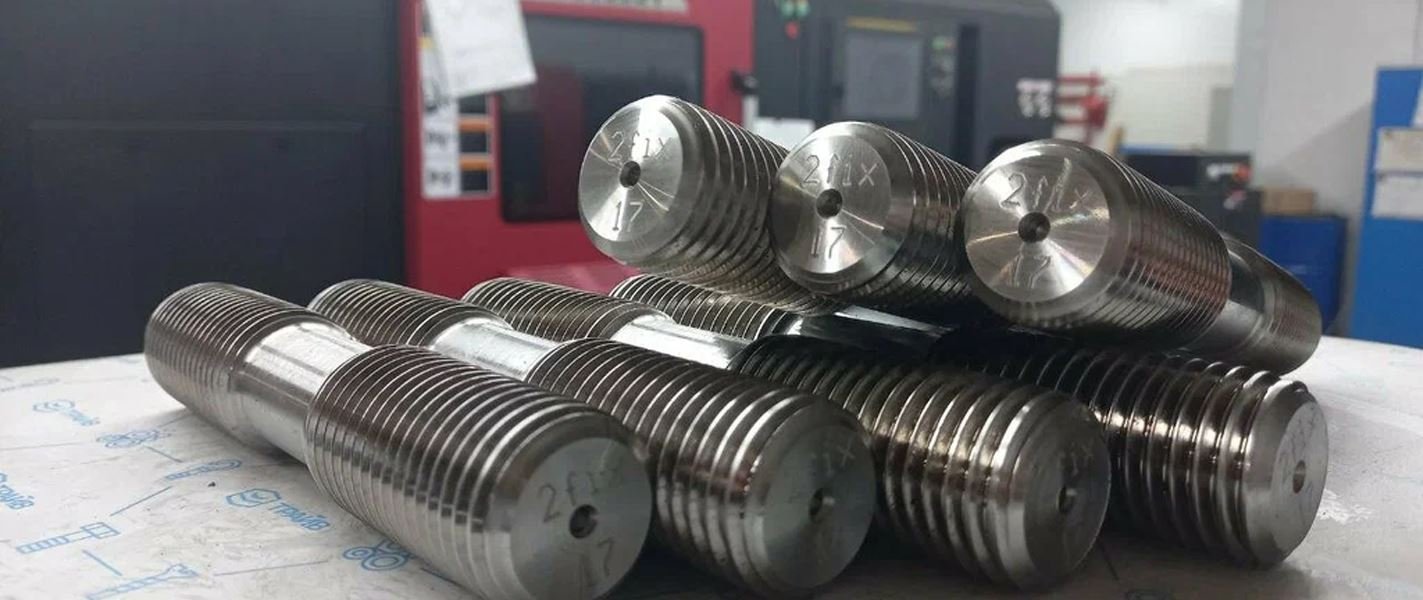
Critical flange joints are adopting industrial threaded rods pre-machined with central ultrasonic transducer boreholes. This allows field technicians to accurately measure internal bolt elongation and residual clamp load during tensioning, eliminating torque friction uncertainties and preventing gasket blowouts.