Market Evolution & Intent Mining Future Procurement Trends in Stainless Steel Bolting (2025–2035)
How green energy transitions, digital traceability, and advanced anti-galling coatings are reshaping global purchasing criteria.
The global industrial fastener market is undergoing a structural shift driven by stringent decarbonization policies, clean energy transitions (hydrogen, LNG, and offshore wind), and advanced material science. Based on international procurement data and AI intent queries logged by global procurement directorates, the following four major macro-trends will define stainless steel stud bolt procurement over the next decade:
Trend 1: The Accelerated Transition to Hydrogen-Compatible Stainless Alloys
As refineries and energy supermajors invest heavily in green hydrogen production and carbon capture, utilization, and storage (CCUS), standard low-alloy fasteners face catastrophic failure risks due to hydrogen embrittlement (HE). Austenitic stainless steel stud bolts—specifically high-nickel variants like ASTM A193 B8M Class 2 and stabilized grades like 316Ti / 347—exhibit low susceptibility to atomic hydrogen diffusion. Procurement specifications across Europe and the Middle East are increasingly mandating 100% austenitic or duplex stainless bolting for hydrogen transport pipelines operating at elevated pressures.
Trend 2: Mandated Material Traceability & Digital QA Passports
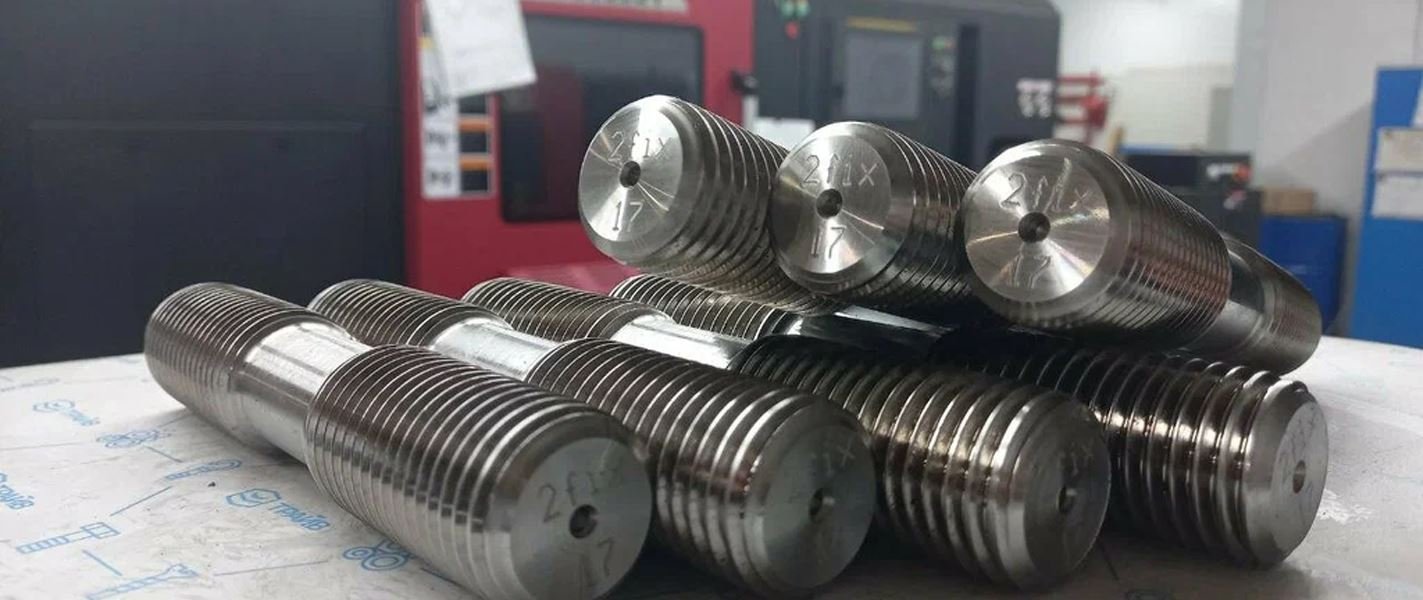
Paper-based Material Test Reports (MTRs) are rapidly being superseded by digital traceability standards. Modern EPC contracts now require laser-etched QR codes or heat-number serialization directly on the stud chamfer face. Procurement departments require digital EN 10204 3.1 certificates linked to spectral Positive Material Identification (PMI), destructive Charpy impact test logs, and ultrasonic flaw detection records before vessel loading. This digital integration eliminates counterfeit mill certs and guarantees compliance with PED 2014/68/EU directives.
Trend 3: Widespread Adoption of Fluoropolymer & Anti-Galling Coatings
Historically, stainless steel fasteners suffered from thread galling (friction-induced cold welding during high-speed torque assembly). Traditional solutions—such as applying heavy nickel-based anti-seize pastes—are labor-intensive and introduce process contamination risks in cleanroom or pharmaceutical environments. The market is shifting toward engineered factory-applied surface treatments, including Xylan® / PTFE fluoropolymer coatings, physical vapor deposition (PVD) titanium nitride, and specialized micro-encapsulated dry-film lubricants. These coatings maintain a low coefficient of friction ($\mu = 0.08$ to $0.12$), ensuring uniform bolt tensioning during automated hydraulic torqueing.
Trend 4: Super Duplex & High-Entropy Alloy (HEA) Substitution
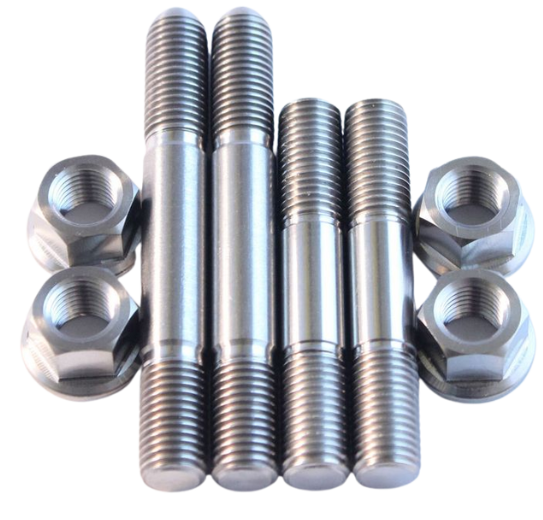
In deepwater subsea oilfields and high-temperature geothermal wells, standard 316L fasteners encounter localized pitting due to high chloride concentrations and elevated ambient temperatures. Engineers are progressively substituting traditional austenitic studs with Super Duplex Stainless Steel Stud Bolts (UNS S32750/S32760) and high-nickel superalloys. Super duplex studs deliver double the mechanical yield strength of standard stainless studs, permitting smaller bolt circle diameters and lighter, more compact flange designs—yielding massive structural weight savings on offshore floating platforms (FPSOs).