Choosing the best ASTM A193 Grade B7 Fasteners in 2026 takes more than comparing prices or tensile-strength figures. Buyers should match the fastener to the joint, service temperature, pressure, and installation method. A stud may look flawless on a bench yet fail to perform if its heat treatment, dimensions, or material records are uncertain. Details matter.
Bolting specialist Bill Eccles’s technical guidance can be paraphrased in one practical principle: “Joint reliability depends on the whole bolting system, not the bolt grade alone.” That is worth remembering. B7 studs and bolts are commonly selected for demanding service, but “B7” by itself does not confirm a product’s suitability for every application. Check the applicable specification, thread fit, lot traceability, and mill test documentation. Review coating compatibility too; a finish that protects against corrosion can affect thread dimensions and assembly behavior.
This guide examines what distinguishes dependable ASTM A193 Grade B7 Fasteners, including manufacturing quality, documentation, and supplier consistency. It also considers where buyers should ask harder questions. A clean certificate is useful, but it cannot replace verification of the actual shipment and its intended service conditions. Look closely. A small mismatch in length or thread engagement can complicate installation at the flange, especially when access is tight. No single brand is best for every job. The right choice is the one supported by credible records, suitable testing, and a clear fit for the application.
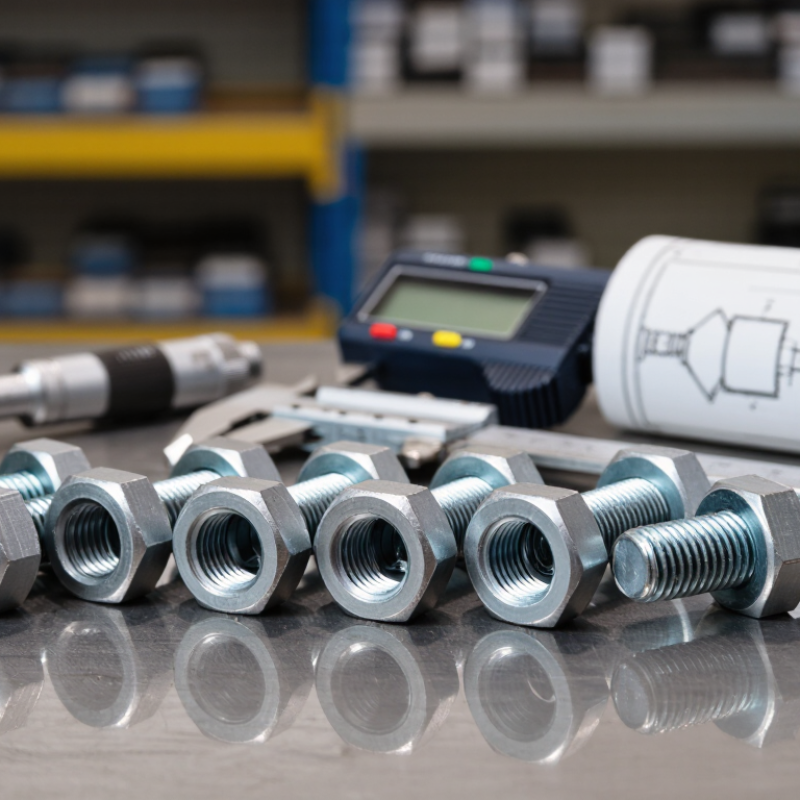
What ASTM A193 Grade B7 Fasteners Are and How They Are Made
ASTM A193 Grade B7 fasteners are high-strength alloy-steel bolts, studs, and related components used in pressure and high-temperature service. The material is commonly based on chromium-molybdenum steel, such as 4140, and gains strength through heat treatment. ASTM A193/A193M specifies mechanical requirements; for many fasteners up to 2.5 inches in diameter, the minimum tensile strength is 125 ksi and minimum yield strength is 105 ksi. These figures are useful checks, not a substitute for verifying the applicable size and specification edition.
Manufacturing typically begins with steel bar or billet, which is cut and formed into blanks. The parts are quenched and tempered, then threaded by rolling or cutting. Each stage matters. Uneven heating can affect hardness, while damaged threads may hinder assembly. Manufacturers test properties such as tensile strength and hardness, and maintain lot identification so test records can be matched to finished parts. ASTM A193/A193M is the primary specification reference; project requirements may also call for supplementary testing or inspection. A detail worth questioning: “B7” alone does not confirm that a fastener suits every temperature, coating, or joint design.
Tips: Check the grade markings, diameter, thread condition, and material test documentation before installation. Compare the certificate values with the current ASTM A193/A193M requirements and the project specification. Don’t rely on appearance alone.
Key Mechanical Properties, Heat Treatment, and Applicable Standards
What Are the Best ASTM A193 Grade B7 Fasteners in 2026?
For high-temperature or high-pressure bolting, ASTM A193 Grade B7 is a common choice. Its chromium-molybdenum steel is quenched and tempered to develop strength. For fasteners up to 2½ inches in diameter, typical minimums include 125 ksi tensile strength and 105 ksi yield strength. Maximum hardness is generally 321 HBW, or 35 HRC. Check the applicable specification tables for larger sizes and test requirements; values can vary with diameter.
Heat treatment matters as much as the grade marking. Ask for records showing the material’s heat-treatment condition and mechanical test results. ASTM A193/A193M covers the bolting material, while compatible nuts are commonly specified under ASTM A194/A194M. Confirm the exact editions and any project-specific requirements before ordering. A certificate is useful, but it should match the lot and dimensions received. Small paperwork mismatches are easy to overlook.
Tips: Check grade markings, diameter, thread fit, and traceability on delivery. Verify hardness when the application demands it. Don’t assume every B7 fastener suits every temperature or service condition; confirm compatibility with the engineer responsible for the joint.
Common B7 Fastener Types and Their Industrial Applications
ASTM A193 Grade B7 is a heat-treated chromium-molybdenum steel bolting material used where pressure and temperature challenge ordinary hardware. The most familiar form is the threaded stud, often installed through flanges with a nut at each end. Short studs suit compact valve assemblies; longer lengths help clamp thick flanges and pressure-vessel covers. Fit matters.
B7 stud bolts are common in refinery, petrochemical, power-generation, and process-piping equipment. They secure flange joints, valve bonnets, heat exchangers, and vessel connections that need controlled clamping. Fully threaded rods can help when installers need adjustable engagement or field-cut lengths. But cutting can damage threads and should be planned carefully. A matched nut is commonly specified to ASTM A194 Grade 2H; the joint design and project specification still govern.
Hex-head B7 bolts appear in machinery housings, pipeline supports, and equipment connections where studs are impractical. Selection is not just a strength decision. Check diameter, thread series, length, temperature, corrosion exposure, lubrication, and tightening procedure. Coatings can change friction and preload, sometimes more than expected. Keep material certificates and heat-lot traceability with the job. One practical caution: “B7” alone does not confirm suitability for every environment. Verify service conditions and applicable engineering requirements before installation.
What Are the Best ASTM A193 Grade B7 Fasteners in 2026?
Common B7 fastener types include stud bolts, threaded rods, and hex-head bolts. They are used in demanding bolting applications such as pressure vessels, process piping, refineries, and power-generation equipment. Select the fastener form and dimensions to suit the joint design and applicable code.
ASTM A193 Grade B7 minimum tensile strength varies by nominal diameter: 125 ksi through 2.5 in, 115 ksi over 2.5 through 4 in, and 100 ksi over 4 through 7 in. Confirm the applicable edition of the standard and project requirements when specifying fasteners.
How to Select B7 Fasteners for Loads, Temperature, and Environment
Selecting ASTM A193 Grade B7 starts with the joint, not the catalog label. ASTM A193/A193M specifies minimum tensile strength of 125 ksi and yield strength of 105 ksi for B7 bolts up to 2½ inches in diameter. These are material minima, not the allowable load for every assembled joint. Calculate bolt stress from the required preload, external forces, gasket behavior, and flange design. ASME Boiler and Pressure Vessel Code rules may also govern pressure equipment. That matters.
Temperature changes strength and relaxation behavior. Check the applicable design code and material tables at the actual operating temperature, including startup and upset conditions. Do not treat a grade designation as a temperature rating. For cyclic loads, account for fatigue and uneven load sharing; a rigid-looking flange can still loosen under vibration. Torque alone is an imperfect preload measure because thread and bearing-surface friction vary.
Assess the environment at the threads, under the nut, and beneath any coating. B7 is alloy steel, not stainless steel, so wet chloride exposure or chemical attack needs specific corrosion review. Consult the site’s corrosion data and coating requirements; protective plating can also introduce hydrogen-embrittlement concerns in high-strength fasteners. Match compatible nuts, verify heat-treatment and lot certificates, and inspect threads before installation. Small details get missed. I would recheck the assumptions whenever service conditions change.
How to Verify B7 Fastener Quality and Compare Suppliers in 2026
What Are the Best ASTM A193 Grade B7 Fasteners in 2026?
For dependable B7 fasteners, verify the paperwork and the parts. Request a material test report tied to the delivered lot, not a generic certificate. Check that the specified ASTM A193 edition, chemistry, mechanical properties, heat treatment, and dimensions match your purchase documents. Inspect markings, threads, and bearing surfaces for legible identification, damage, or inconsistent finish. Small details matter. A polished certificate is useful, but it is not the whole story; compare its heat or lot numbers with the packaging and fasteners.
When comparing suppliers, ask how they control lot traceability, handle nonconforming parts, and arrange independent testing when required. Compare like-for-like quotations, including coating, documentation, inspection scope, lead time, and packaging. Confirm compatible nuts and assembly requirements against the project specification rather than assuming every set is interchangeable. In practice, a low price can hide missing test records or unclear delivery terms. I would still treat a perfect-looking sample with caution until the production lot is verified.
Tips: Keep the approved specification beside the report during review. Photograph package labels before opening them, and record discrepancies promptly. Ask for sample inspection results and clarify who pays for retesting. No supplier comparison is complete without checking responsiveness; a vague answer about traceability deserves a follow-up.
What Are the Best ASTM A193 Grade B7 Fasteners in 2026? — How to Verify B7 Fastener Quality and Compare Suppliers in 2026
The best B7 fastener is the one that meets the project’s design, dimensional, material, traceability, and inspection requirements. Use the tables below to compare common product forms and evaluate supplier documentation. Supplier assessment criteria are a selection framework, not ratings of specific companies.
ASTM A193 Grade B7 Product Selection Guide
| Fastener option |
Typical applications |
Key checks before ordering |
Selection notes |
| Fully threaded stud |
Flanged joints, pressure piping, valves, and equipment connections |
Specified diameter, length, thread series and class, material grade, heat treatment, and required end-to-end thread length |
Common where nuts are needed at both ends. Confirm the project drawing and applicable flange or piping specification. |
| Stud bolt with reduced or unthreaded shank |
Flanged joints and assemblies requiring a defined thread length |
Overall length, thread length at each end, shank dimensions, thread fit, and nut compatibility |
Do not assume stud-bolt dimensions from nominal pipe size alone; verify the specified standard or drawing. |
| Hex-head bolt |
Equipment, structural attachments, and bolted connections designed for a headed fastener |
Head dimensions, bearing surface, thread length, grade marking, and assembly clearance |
Confirm that the design calls for a headed bolt rather than a stud assembly. |
| Threaded rod |
Custom-length tie rods and applications where continuous threading is required |
Applicable product specification, diameter, thread tolerances, straightness, material certification, and cut-end condition |
Verify that the purchase specification explicitly requires ASTM A193 Grade B7; a similar-looking threaded rod is not proof of grade. |
| B7 fastener with a specified coating |
Applications requiring a defined corrosion-protection system |
Coating specification, thickness, dimensional allowance, process controls, and compatibility with the service environment |
High-strength fasteners need careful coating selection and process control. Do not substitute a coating without engineering approval. |
Important: ASTM A193 Grade B7 is a material and mechanical-property specification, not a universal fastener design or corrosion-resistance guarantee. Confirm the applicable standard, purchase order, drawings, service conditions, and any supplementary requirements for the specific project.
Grade B7 Verification Checks
| Verification item |
What to check |
Evidence to request or inspect |
| Material and heat identity |
Fasteners and records can be traced to the relevant manufacturing heat and lot. |
Material test report (MTR) or certificate with heat/lot identification; matching markings or documented lot-control records. |
| Mechanical properties |
Test results meet the applicable ASTM A193 Grade B7 requirements for the ordered size and product. |
Heat-treatment and tensile-test results, with test method and specimen details where required by the order. |
| Hardness |
Hardness results meet the grade limit and the specified test method. |
Recorded hardness values and test locations. Grade B7 is commonly specified with a maximum hardness of 321 HBW (35 HRC); verify the governing edition and purchase requirements. |
| Dimensions and threads |
Diameter, length, thread form, pitch, fit, and tolerances match the order. |
Inspection report, calibrated gauges where appropriate, and dimensional records for the supplied lot. |
| Marking and identification |
Required grade and manufacturer or source identification are present where required by the applicable specification and order. |
Visual inspection of samples and a documented marking plan. Marking practices can vary by product size and governing requirements. |
| Heat treatment |
Quenching and tempering are documented and consistent with the ordered grade. |
Heat-treatment records linked to the material heat or production lot. |
| Coating and finish |
Any coating, lubricant, or finish is exactly as specified and suitable for the intended assembly. |
Coating certificate or inspection report, stated process, and dimensional checks after coating where required. |
| Inspection and nonconformance control |
Inspection scope, sampling, acceptance criteria, and corrective-action process are defined. |
Inspection and test plan, sample reports, and a documented process for segregation and disposition of nonconforming product. |
Supplier Comparison Scorecard
Apply the same evidence requirements to every quotation. Score each criterion from 0 to 5 (0 = no evidence; 5 = complete, relevant, and verifiable evidence), then multiply the score by the criterion’s weight. Weights are example evaluation choices and can be adjusted to the project.
Example Supplier Evaluation Framework
| Criterion |
Example weight |
Evidence to compare |
Questions for the quotation review |
| Specification and material traceability |
25% |
Sample MTR, heat/lot traceability procedure, and product identification method |
Can the supplied lot be linked to its material and test records? |
| Mechanical testing and inspection |
20% |
Sample tensile and hardness records, dimensional reports, and inspection plan |
Are test scope, acceptance criteria, and records aligned with the purchase specification? |
| Product and dimensional capability |
15% |
Documented capability for the required fastener form, diameter, length, thread, and finish |
Can the supplier meet the drawing and tolerances without unapproved substitutions? |
| Quality management and nonconformance handling |
15% |
Relevant quality-system documentation, corrective-action process, and change-control procedure |
How are nonconforming lots identified, contained, investigated, and reported? |
| Delivery and lot control |
10% |
Quoted lead time, order confirmation, packaging plan, and shipment identification controls |
Can each shipment retain lot identity and arrive within the required schedule? |
| Coating and special-process control |
10% |
Process specification, applicable inspection records, and evidence of dimensional verification |
Are coating requirements and process responsibilities clearly defined and approved? |
| Quotation clarity and total cost |
5% |
Itemized pricing, included documentation, freight, packaging, and stated exclusions |
Are the quoted grade, dimensions, testing, finish, and delivery terms unambiguous? |
Purchasing reminder: A low price or a certificate alone does not establish that a fastener is suitable. Resolve missing records, mismatched markings, unclear coating requirements, or deviations from the purchase specification before accepting the lot.
Conclusion
ASTM A193 Grade B7 Fasteners are high-strength alloy steel components designed for demanding bolted connections, particularly where elevated temperatures and substantial loads are involved. This overview explains how B7 fasteners are manufactured and why controlled heat treatment is important to achieving their intended mechanical properties. It also outlines the standards commonly used to specify and assess these fasteners, helping readers understand the role of material requirements, dimensions, and testing in a reliable bolting system.
Common forms include stud bolts, threaded rods, and other threaded components used in industrial equipment and piping connections. Choosing the right option means considering the load, operating temperature, mating materials, and exposure to moisture or corrosive conditions. The article also covers practical quality checks, such as reviewing material documentation, verifying dimensions, and confirming test results, alongside a structured way to compare suppliers in 2026 for consistency, traceability, and suitability for the application.