Choosing reliable Super Duplex Stud Bolt suppliers requires more than comparing prices or polished websites. These fasteners support demanding connections in offshore platforms, desalination plants, chemical processing systems, and marine equipment. Their value depends on corrosion resistance, dimensional accuracy, traceability, and dependable delivery.
This guide introduces ten internationally recognized suppliers serving industrial buyers worldwide. Each company is considered through practical purchasing factors, including material grades, manufacturing capability, inspection procedures, certifications, customization, export experience, and customer support. Common materials may include UNS S32750 and UNS S32760, but buyers should confirm the exact grade, thread form, coating, and test requirements for every project.
Details matter.
A dependable supplier should provide mill certificates, heat numbers, inspection reports, and clear documentation. Independent testing can also help verify chemical composition, mechanical strength, and surface condition. Experience with pressure equipment standards is useful, although compliance requirements vary by application and region. Buyers should review current certificates rather than rely on old marketing statements.
No ranking is perfectly universal. A supplier strong in bulk production may not suit a small, urgent order. Another may offer excellent engineering support but longer lead times. This article therefore presents a practical starting point, not a final purchasing decision. Before placing an order, request samples, confirm tolerances, discuss packaging, and evaluate communication during technical clarification. Small inconsistencies can become costly on site. Careful verification remains the most reliable path to selecting a Super Duplex Stud Bolt supplier.
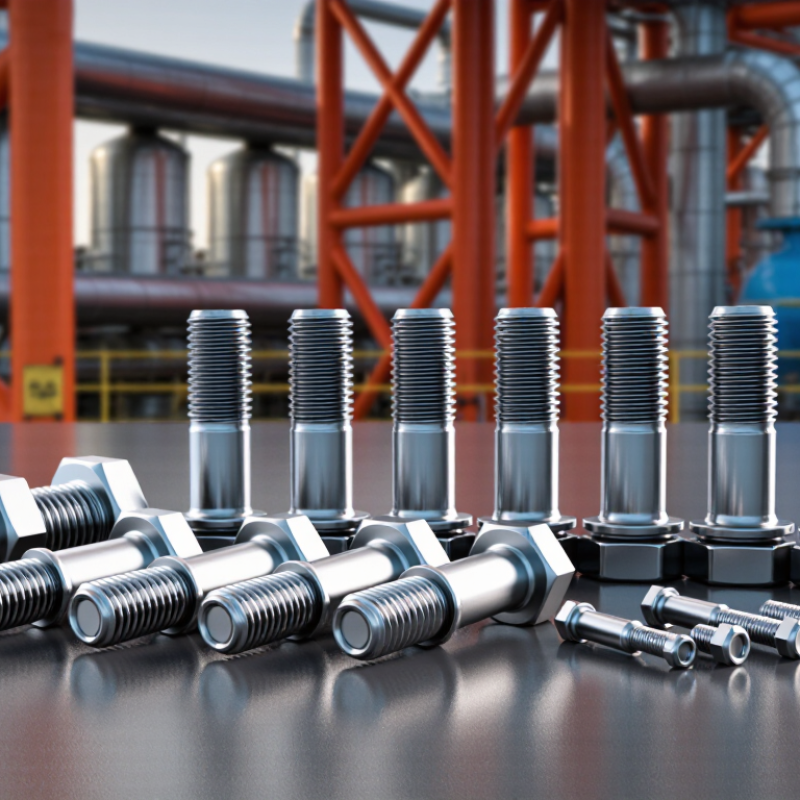
Super duplex stud bolts are high-strength fasteners made from a ferritic-austenitic stainless steel. Typical grades contain about 25% chromium, 3–5% molybdenum, and added nitrogen. This structure improves strength, pitting resistance, and stress-corrosion cracking resistance. Their performance is often assessed through the Pitting Resistance Equivalent Number, or PREN. Higher PREN usually indicates stronger chloride resistance, but it does not replace proper design or inspection.
These bolts are used in flanged pipelines, pressure vessels, offshore platforms, seawater systems, chemical plants, and desalination equipment. They are especially valuable where salt spray, high pressure, and repeated temperature changes occur together. The AMPP IMPACT study estimated that corrosion costs the global economy about 3.4% of GDP annually, showing why material selection deserves serious attention. The International Energy Agency’s World Energy Outlook 2024 also projects continued investment in energy infrastructure, where reliable bolting remains a small but critical engineering detail.
Field experience shows that incorrect galling control, poor surface preparation, or mixed materials can undermine a premium alloy. No fastener is magic. Engineers should verify heat treatment, chemical composition, mechanical properties, and batch traceability before installation. Torque procedures also need adjustment because super duplex alloys can behave differently from common stainless steels. A useful specification should include service temperature, chloride concentration, preload requirements, and inspection methods. Industry reports provide direction, but actual operating conditions still decide whether the selected stud bolt will perform reliably.
A reliable supplier should prove material control, not merely offer a low quotation. Request heat-lot traceability, chemical analysis, and mechanical test results for every batch. Super duplex grades, such as UNS S32750 and UNS S32760, need verified chemistry and balanced phase structure. ASTM A479 and ASTM A1082 provide useful references for stainless and high-strength bolting materials. Check whether the supplier performs PMI, tensile testing, hardness testing, and corrosion-related examinations.
Small details matter.
Ask for evidence of solution annealing and rapid cooling. Poor heat treatment can reduce corrosion resistance and create harmful phase imbalance.
The 2013 AMPP/NACE IMPACT study estimated global corrosion costs at 2.5 trillion dollars, or 3.4% of global GDP.
That figure supports strict inspection before offshore, chemical, or pressure-service installation. Evaluate ISO 9001 systems, calibration records, nonconformance handling, and independent laboratory reports. A certificate alone is not enough. I would also audit packaging, thread protection, marking, and delivery performance.
These practical checks are easy to overlook. Supplier evaluation should include sample testing when service conditions are severe. No checklist is perfect, and test methods may still need project-specific review.
The 10 leading super duplex stud bolt suppliers differ in experience, testing, and production focus. One specializes in forged studs for offshore platforms, while another serves chemical processing plants with corrosion-resistant fasteners. A third maintains large inventories of UNS S32750 material. A fourth focuses on custom lengths and unusual thread forms. Practical experience matters here.
A fifth supplier is known for controlled heat treatment and detailed furnace records. A sixth provides stud bolts with matching heavy hex nuts, reducing installation uncertainty. A seventh supports urgent maintenance orders from regional warehouses. An eighth emphasizes dimensional inspection, using calibrated gauges for thread accuracy. A ninth works closely with engineers on drawings, coatings, and washer selection. The tenth offers small-batch production for refineries, pumps, and pressure vessels. Not every supplier performs every service equally well.
Reliable buyers should examine mill certificates, chemical analysis, mechanical test results, and positive material identification procedures. Ask how each supplier prevents material mixing during cutting and packing. Traceability should follow every batch, not just the final invoice. Some catalogs look impressive but provide limited evidence. That deserves careful questioning. Delivery records, inspection reports, and clear responses often reveal more than polished sales language. My own assessment would remain cautious when a supplier avoids discussing failed tests or corrective actions. Super duplex fasteners are demanding products. Small errors in thread fit or heat treatment can become expensive during installation.
Choosing among the 10 best super duplex stud bolt suppliers requires more than comparing prices. Quality begins with traceable heat numbers, controlled forging, and verified chemical composition. ASTM A1082/A1082M and ASTM A182 provide useful benchmarks for duplex and super duplex bolting materials. For sour-service applications, NACE MR0175/ISO 15156 compliance is essential. However, a certificate alone is not proof of consistent production.
Manufacturers should provide tensile, yield, hardness, and impact-test results for each relevant heat. A strong supplier also controls solution annealing, quenching, thread rolling, and dimensional inspection. ASTM requirements commonly place super duplex hardness near 32 HRC maximum, depending on the grade and specification. World Stainless reported approximately 58.4 million tonnes of global stainless steel production in 2023. That figure shows scale, not reliability. Supplier audits still matter. ISO 9001 certification supports process control, while ISO/IEC 17025 accreditation strengthens laboratory credibility. Some suppliers publish excellent documents but offer weak testing depth. That gap deserves attention.
Tips: Request a complete material test report, not only a certificate of conformity. Check PMI results, ferrite balance, corrosion testing, and lot traceability. Ask for sample inspection records from actual production. Also confirm whether testing is internal or independently witnessed. Small details matter. Don’t ignore packaging. Damaged threads can ruin otherwise compliant studs.
This chart compares the minimum mechanical-property benchmarks commonly specified for super duplex stainless steel grades used in stud bolts and related fasteners. Values are shown in MPa and are intended to support supplier evaluation against recognized material requirements, including ASTM A182 and EN 10088-3.
Choosing the Right Super Duplex Stud Bolt Supplier for Your Project
Selecting among the 10 best super duplex stud bolt suppliers worldwide requires more than comparing prices. Your supplier must understand pressure, temperature, media, and installation conditions. A bolt exposed to seawater needs different attention than one used in a dry process area. Ask for material certificates, heat-number traceability, chemical analysis, and mechanical test results. Verify the supplied grade against your project specification and applicable ASTM, ASME, or ISO requirements.
Tips: Request a sample document package before placing a large order. Check whether the supplier can provide PMI testing, dimensional inspection, and controlled surface treatment. Review thread accuracy carefully. Poor threads may cause delays during flange assembly. Also confirm packaging, marking, export experience, and realistic delivery dates. A confident supplier should explain limitations, not only promise speed.
Technical knowledge matters, but communication matters too. Ask how the supplier handles nonconforming material and urgent replacements. Independent inspection can add useful assurance for critical projects. References from similar offshore, chemical, or energy applications are valuable, although they should be checked carefully. I have seen low quotations become expensive after retesting and rework. That lesson is easy to overlook. A reliable choice balances documented quality, production capacity, responsive service, and total project risk. 大发娱乐
| No. | Supplier Profile | Typical Region | Likely Product Focus | Potential Project Fit | Key Checks Before Ordering |
|---|---|---|---|---|---|
| 1 | Specialist bolting manufacturer | Western Europe | Made-to-order studs, threaded rods, and associated nuts in specified super duplex grades such as UNS S32750 or S32760 | Projects requiring controlled manufacturing, defined inspection stages, and custom dimensions | Confirm the exact material specification, manufacturing route, thread tolerances, testing scope, and material test report traceability. |
| 2 | Industrial fastener stockist | North America | Stock or sourced bolting in common sizes, with project-specific certification available on request | Maintenance work, replacement orders, and projects with short delivery windows | Check actual stock status, heat-number traceability, country-of-origin requirements, and whether supplied documents match the purchase order. |
| 3 | Oil-and-gas bolting supplier | Middle East | Stud bolts and nuts for pipeline, offshore, and process-plant procurement packages | Energy projects with stringent inspection, documentation, and delivery coordination needs | Agree on the governing project specifications, inspection and test plan, coating or lubricant requirements, and third-party inspection arrangements. |
| 4 | Forging and machining specialist | East Asia | Custom-length or nonstandard bolting produced from certified alloy stock or forgings | Large-volume orders, engineered dimensions, or projects needing coordinated production schedules | Review material-source controls, forging or bar-stock documentation, mechanical test results, dimensional inspection, and sample approval requirements. |
| 5 | Stainless and duplex metals distributor | Scandinavia | Duplex and super duplex fasteners supplied alongside broader corrosion-resistant material packages | Marine, offshore, and seawater-service projects that need material traceability across multiple items | Verify that the fasteners—not only the parent stock—are certified to the specified grade and that the documentation identifies the product form and heat. |
| 6 | Project export supplier | South Asia | Quoted-to-order stud bolts and nuts for international construction and process-industry packages | Cost-sensitive projects with planned lead times and clear inspection requirements | Compare total landed cost, production lead time, packing and preservation, export documentation, and independent inspection options. |
| 7 | Regional engineering distributor | Australia and New Zealand | Locally sourced or imported bolting for mining, water, and energy infrastructure | Sites that benefit from local technical support, replacement supply, or regional inventory | Confirm grade availability, local stock quantities, delivery to site, required certification, and compatibility with the project’s flange and gasket details. |
| 8 | Marine and offshore fastener supplier | Singapore and Southeast Asia | Corrosion-resistant bolting for vessels, offshore facilities, and coastal industrial equipment | Marine projects where packaging, logistics, and corrosion-control practices are important | Specify storage and packing requirements, handling controls, material identification, and any project-specific testing or inspection hold points. |
| 9 | European project stockholder | Central Europe | Combination of standard-size inventory and special-order super duplex bolting | Projects needing a balance of schedule flexibility and regional distribution support | Distinguish confirmed stock from mill or factory lead time; check batch segregation, marking, certificates, and order-change terms. |
| 10 | Custom fastener manufacturer | Latin America | Engineered stud bolts and related fasteners for local industrial and infrastructure requirements | Projects requiring regional service, tailored lengths, or coordination with local fabricators | Assess production capacity, calibration and inspection records, traceability controls, technical communication, and delivery commitments. |
They resist corrosion, high pressure, and elevated temperatures. Their performance depends on correct chemistry, heat treatment, and thread accuracy.
Request material test reports, chemical analysis, mechanical results, and heat-number traceability. Also request positive material identification records. A certificate alone is not enough.
Review tensile, yield, hardness, and impact-test results for each material heat. Check whether testing was internal or independently witnessed. Small gaps matter.
Each batch should carry its heat number through cutting, inspection, packing, and delivery. The marking should match the test report and packing list. Do not trust loose paperwork.
Look for controlled forging, solution annealing, quenching, thread production, and dimensional inspection. Ask for furnace records and calibrated gauge results. Records reveal discipline.
PMI helps confirm that the delivered material matches the specified grade. Chemical analysis provides deeper evidence of composition. Material mixing can happen during cutting or packing.
Compare experience with seawater, chemical media, pressure vessels, or similar equipment. Review pressure, temperature, media, and installation conditions. A dry process area differs greatly from seawater service.
Request sample documents and inspection records from actual production. Confirm dimensions, thread fit, surface treatment, packaging, and marking. A small sample may expose a larger problem.
Damaged threads can delay flange assembly and create expensive rework. Confirm protective packaging, realistic delivery dates, and replacement procedures. Fast delivery is not everything.
Compare total project risk, not only the purchase price. Retesting, rejected material, and installation delays can erase initial savings. I may still underestimate those hidden costs sometimes.
This guide explains what a Super Duplex Stud Bolt is and why it is widely used in demanding industries such as oil and gas, marine engineering, chemical processing, power generation, and desalination. Made from a high-performance stainless steel alloy, these fasteners offer excellent strength, corrosion resistance, and durability in high-pressure, high-temperature, and chloride-rich environments. The article also outlines the key factors for evaluating global suppliers, including material traceability, production capacity, dimensional accuracy, testing procedures, delivery reliability, and technical support.
It presents profiles of ten leading supplier types without focusing on brand names, while highlighting important quality standards, certifications, inspection systems, and manufacturing capabilities. Finally, the guide provides practical advice for selecting the right supplier according to project specifications, operating conditions, required standards, order volume, customization needs, budget, and delivery schedule. These considerations can help buyers reduce risks and ensure consistent fastening performance throughout the service life of their equipment.