
Choosing the right High Tensile Stud Bolt manufacturer in China takes more than comparing prices. A polished catalogue cannot show how a stud behaves under repeated loading, heat, or vibration. The details matter: steel grade, thread accuracy, heat treatment, surface finish, and inspection records. One small flaw can affect fit and joint performance.
Fastener engineer John H. Bickford’s work on bolted joints offers a useful reminder, paraphrased here: “Reliable joints depend on controlled preload, not strength alone.” This is not a verbatim quotation. It reflects an important distinction: a high-strength stud still needs suitable design, installation, and quality control. Buyers should ask manufacturers how they verify material chemistry, tensile properties, dimensional tolerances, and batch consistency. Requesting traceable test reports is sensible. So is checking how the supplier handles nonconforming products.
Look beyond claims such as “premium quality.” Ask for samples, production details, and evidence that inspection methods match the intended application. A supplier may have strong equipment yet weak documentation; another may communicate well but lack capacity for demanding orders. These trade-offs deserve scrutiny. No single checklist guarantees a perfect choice. The practical goal is to identify a manufacturer whose capabilities, records, and communication fit your specification. This guide examines the questions that help make that decision with greater confidence—and where a little skepticism is useful.
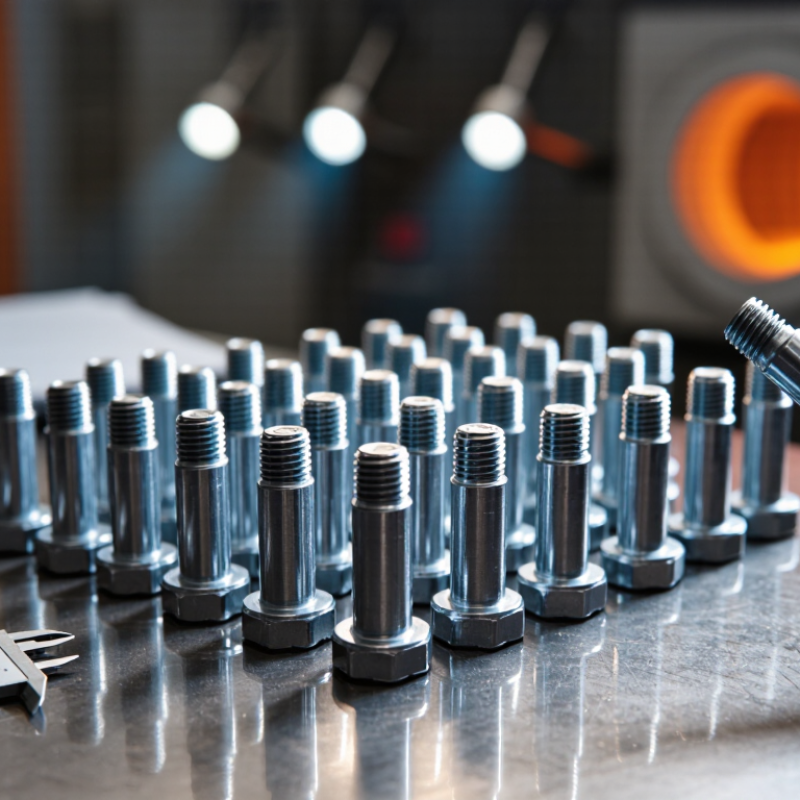
High-tensile stud bolts are threaded steel fasteners designed to resist substantial pulling forces. Unlike a headed bolt, a stud has no head; nuts secure it at one or both ends. It passes through aligned holes in parts such as flanges, engine housings, and structural joints. Small detail. Material grade and heat treatment affect strength, ductility, and fatigue resistance.
Tightening the nuts stretches the stud slightly. That elastic stretch creates preload, pressing the joined surfaces together. This clamping force helps prevent separation and can limit slipping under load. The stud does not simply “hold weight.” Load sharing depends on joint stiffness, thread engagement, and contact surfaces. A torque wrench helps control installation, but torque alone cannot confirm exact tension. Lubrication and surface condition can change the result.
Choosing a stud means matching its dimensions and strength to the joint’s temperature, load, and operating conditions. Correct nut engagement matters, too; exposed threads are not a substitute for adequate engagement. Real joints are less tidy than drawings. Corrosion, uneven surfaces, or repeated tightening may alter performance, so inspection should be part of maintenance. Extra torque is not always extra safety.
| Topic | Specification or data | What it means in practice |
|---|---|---|
| What a stud bolt is | A threaded fastener, commonly threaded at both ends or along its full length, used with nuts. | One end may be fitted into a tapped hole, or the stud may pass through components and be secured with nuts. The exact arrangement depends on the joint design. |
| How the joint works | Tightening the nut stretches the stud and creates tensile preload, which compresses the joined parts. | The resulting clamp force helps keep the joint together under service loads. Applied torque is only an indirect estimate of preload because thread and bearing-surface friction vary. |
| ASTM A193 Grade B7 | For diameters up to 2½ in: minimum tensile strength 125 ksi (about 862 MPa); minimum yield strength 105 ksi (about 724 MPa). | A chromium-molybdenum alloy-steel bolting grade commonly specified for pressure equipment and elevated-temperature service. Confirm the applicable standard edition, size range, and service requirements. |
| B7 strength by larger size | ASTM A193 B7 minimum tensile strength is 115 ksi (about 793 MPa) for diameters over 2½ in through 4 in, and 100 ksi (about 689 MPa) for diameters over 4 in through 7 in. | The specified minimum strength decreases across these larger diameter ranges. Check the standard and product documentation for the corresponding yield requirements and dimensional limits. |
| ISO property class 8.8 | For nominal diameters up to 16 mm, the class indicates a minimum tensile strength of 800 MPa and a nominal yield-strength ratio of 0.8. | A metric mechanical property class under ISO 898-1. Required values can vary with diameter; verify the standard’s table for the specific size and product form. |
| ISO property class 10.9 | For nominal diameters up to 16 mm, the class indicates a minimum tensile strength of 1,040 MPa and a minimum yield strength of 940 MPa. | A higher-strength metric property class than 8.8. Suitability depends on the joint design, size, temperature, environment, and applicable product requirements. |
| Strength versus corrosion resistance | “High tensile” describes mechanical strength; it does not, by itself, specify corrosion resistance. | Choose material, coating, and lubrication to suit the environment and assembly requirements. Coatings and lubricants can affect friction and tightening results. |
| Checks before selection | Confirm standard and grade, diameter, thread pitch, length, material, nut compatibility, coating, temperature, and required documentation. | Use the project specification and engineering calculations to establish the required preload and tightening method. Do not compare grades without checking their standards and size-dependent requirements. |
Strength figures are representative standard minimums for the stated size ranges; verify the current applicable standard and product documentation before specifying or installing fasteners.
It is a threaded steel fastener without a head. Nuts secure it through aligned holes in flanges, housings, or structural joints.
Tightening stretches the stud slightly, creating preload that clamps the joined surfaces. Fit matters. Joint stiffness and surface contact affect load sharing.
No. Torque helps control installation, but lubrication and surface condition can change the resulting tension. More torque is not always safer.
Confirm diameter, thread pitch, length, material grade, temperature, and operating load. Check nut engagement, too; exposed threads alone do not ensure a secure fit.
Steel is checked, cut, threaded, and heat-treated. Tests may check tensile strength, proof load, hardness, dimensions, and thread fit.
Request material certificates, heat-treatment records, and lot-specific test results. Check that the listed size and test methods match your order. Paperwork can still miss things.
They secure pipe flanges, steel connections, pumps, crushers, and engine assemblies. Some installations face vibration, pressure, or changing temperatures.
Corrosion protection may need special attention. Check coating thickness and thread fit, since a coating that is too thick can make assembly difficult. Real joints are messier than drawings.
A High Tensile Stud Bolt is a threaded fastener designed to create a strong, reliable connection in assemblies exposed to substantial loads. Its performance depends on more than tensile strength: material selection, heat treatment, thread dimensions, and suitable grades and standards all affect how it behaves in service. Understanding these factors helps buyers choose a stud bolt that matches the required load, environment, and installation conditions.
When evaluating Chinese stud bolt manufacturers, consider their production capabilities, material traceability, dimensional control, inspection procedures, and testing practices. Manufacturing may include forming, heat treatment, threading, and surface finishing, followed by checks for mechanical properties and dimensional accuracy. Chinese manufacturers serve a wide range of industries, including energy, construction, machinery, and transportation. Comparing technical documentation, quality systems, delivery capacity, and application experience can help identify a supplier suited to a project’s requirements.