
Call: +91 91723 33437 Email: [email protected] Address: Mumbai, India
0%

Choosing the best China Titanium Stud Bolt manufacturer requires more than comparing prices or browsing polished product pages. Buyers need evidence of material control, machining experience, inspection discipline, and dependable communication. A qualified supplier should explain titanium grade options, thread standards, dimensional tolerances, surface finishes, and application limits clearly.

Details matter. A reliable manufacturer can provide material certificates, dimensional inspection reports, and traceable production records. Its technicians should understand how titanium reacts during cutting, threading, heat exposure, and assembly. Sample bolts should fit smoothly, without damaged threads, uneven surfaces, or suspicious discoloration. Small defects can create major installation problems later.

Not every supplier will be perfect.

That is worth admitting. Some factories may offer strong machining but limited export experience. Others may communicate well but lack consistent quality documentation. A practical evaluation should compare samples, production capacity, inspection methods, packaging, lead times, and after-sales support. Factory photographs are useful, but independent verification is stronger. Video audits, third-party inspections, and pilot orders can reduce uncertainty.

This guide examines how to identify a capable China Titanium Stud Bolt manufacturer and supplier. It focuses on real purchasing concerns, including corrosion resistance, strength requirements, thread accuracy, customization, and long-term supply stability. The right partner should not simply promise premium products. It should demonstrate repeatable performance through records, testing, and responsive technical support. Careful questions may slow the buying process slightly. They can also prevent expensive mistakes.
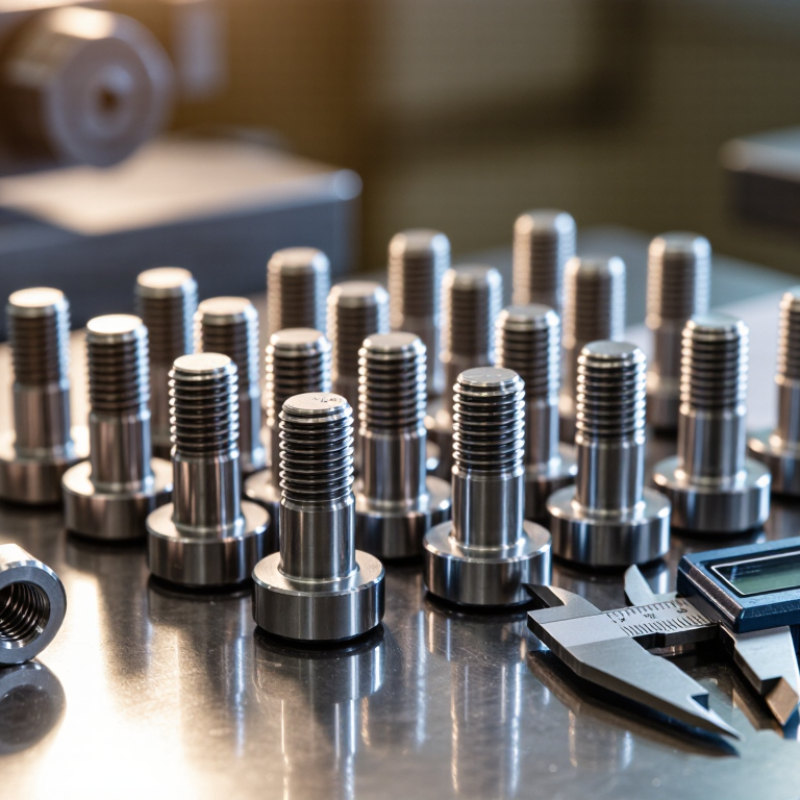
China Best Titanium Stud Bolt Manufacturer Supplier?

Titanium Stud Bolts: Definition, Design, and Core Properties

China Best Titanium Stud Bolt Manufacturer Supplier?

Titanium stud bolts are threaded fasteners with threads on both ends and an unthreaded center section. One end enters a tapped hole, while the other receives a nut. Their design supports strong, controlled clamping in flanges, pressure equipment, heat exchangers, and marine assemblies. Common materials include commercially pure titanium and titanium alloy grades, selected according to strength, corrosion exposure, and operating temperature.

The main advantage is a high strength-to-weight ratio. Titanium also resists seawater, chlorides, and many chemical environments. Its low density can reduce assembly weight noticeably.

However, titanium threads can gall during installation, especially under high pressure and poor lubrication. Use clean threads, suitable anti-seize compounds, and controlled torque. Do not copy steel torque values.

A dependable supplier should verify thread size, pitch, length, grade, surface condition, and mechanical properties. Material certificates and dimensional reports make inspection easier.

Practical testing may include hardness checks, visual inspection, and torque-tension evaluation. Stud bolt ends should be properly chamfered to prevent thread damage. This detail is easy to underestimate.

No design is perfect; even a correct grade may fail when preload, temperature, or joint movement is ignored. Careful drawings and application data remain essential.

Titanium Grades and Their Suitability for Stud Bolt Applications

China Best Titanium Stud Bolt Manufacturer Supplier?

Titanium Grades and Their Suitability for Stud Bolt Applications

Choosing a titanium stud bolt begins with the service environment, not the lowest quotation. Grade 2 offers excellent corrosion resistance and reliable forming performance. It suits chemical equipment, marine assemblies, and moderate-load flanges. Its strength is limited, however. Designers should avoid using it where high preload is essential.

Grade 5, or Ti-6Al-4V, provides much higher tensile strength and fatigue resistance. It is suitable for aerospace fixtures, pressure equipment, and lightweight structural connections. The alloy is harder to machine and more sensitive to galling during installation. Controlled lubrication and compatible nuts are necessary. Grade 9 offers a useful balance between strength, ductility, and formability. It can serve demanding pipe and heat-exchanger assemblies.

For highly corrosive conditions, Grade 7 adds palladium and improves resistance in reducing chemical environments. Grade 23, known as ELI, provides enhanced fracture toughness and lower interstitial content. It may fit critical applications requiring greater reliability. Yet, grade selection alone cannot guarantee performance. Thread geometry, surface finish, clamping length, and operating temperature also matter.

A capable Chinese manufacturer should provide heat-lot traceability, material certificates, dimensional reports, and tensile test results. Ask for controlled thread inspection. Ask about anti-seizure treatment. In real procurement, drawings are sometimes incomplete, and assumptions create costly rework. I have seen buyers specify Grade 5 while overlooking galvanic contact with steel. That detail deserves a second review.

China Best Titanium Stud Bolt Manufacturer Supplier? – Titanium Grades and Their Suitability for Stud Bolt Applications
Titanium Grade Typical Composition Minimum Tensile Strength Minimum Yield Strength Relative Density Corrosion Resistance Strength and Service Characteristics Stud Bolt Suitability Typical Applications
Grade 1 Commercially pure titanium; very low alloy content 240 MPa 170 MPa Approximately 4.51 g/cm³ Excellent in oxidizing, neutral, and mildly reducing environments Excellent ductility and formability; lowest strength among commercially pure grades Good for light-duty service Heat exchangers, chemical processing equipment, low-load flanges, and corrosion-resistant assemblies
Grade 2 Commercially pure titanium; higher strength than Grade 1 345 MPa 275 MPa Approximately 4.51 g/cm³ Excellent general-purpose corrosion resistance, including seawater and many chloride environments Balanced strength, ductility, weldability, and availability Excellent general-purpose choice Marine equipment, chemical piping, heat exchangers, pumps, valves, and moderately loaded stud bolts
Grade 3 Commercially pure titanium; higher oxygen-strengthened grade 450 MPa 380 MPa Approximately 4.51 g/cm³ Excellent resistance in many aqueous and chemical environments Higher strength than Grades 1 and 2, with somewhat lower ductility and formability Good for higher-load CP titanium designs Chemical processing, marine structures, pressure-containing components, and higher-load fastening systems
Grade 4 Commercially pure titanium; highest-strength CP grade 550 MPa 485 MPa Approximately 4.51 g/cm³ Excellent corrosion resistance comparable to other commercially pure grades Highest strength among CP grades; reduced formability compared with Grades 1 and 2 Excellent where CP titanium is required at higher loads Marine, chemical, aerospace, and industrial fastening applications requiring high corrosion resistance
Grade 5 Ti-6Al-4V alpha-beta alloy 895 MPa 828 MPa Approximately 4.43 g/cm³ Very good corrosion resistance in seawater, chlorides, and many process environments High strength-to-weight ratio; lower ductility and more difficult machining than CP grades Preferred for high-strength stud bolts Aerospace structures, offshore equipment, high-performance marine systems, pressure vessels, and high-load joints
Grade 7 Commercially pure titanium with approximately 0.12–0.25% palladium 345 MPa 275 MPa Approximately 4.51 g/cm³ Enhanced resistance in reducing acids and crevice-corrosion conditions compared with unalloyed titanium Similar mechanical behavior to Grade 2 with improved chemical-environment capability Excellent for aggressive chemical service Chemical reactors, acid service, heat exchangers, piping, and corrosion-critical stud bolt assemblies
Grade 9 Ti-3Al-2.5V alpha-beta alloy 620 MPa 483 MPa Approximately 4.48 g/cm³ Very good corrosion resistance in marine and industrial environments Intermediate strength with better formability and weldability than Grade 5 Good for moderate-to-high-load applications Hydraulic tubing, aerospace components, marine systems, and lightweight bolted assemblies
Grade 23 (Ti-6Al-4V ELI) Extra-low-interstitial version of Grade 5 825 MPa 759 MPa Approximately 4.43 g/cm³ Very good corrosion resistance with improved fracture toughness and ductility Lower interstitial content improves toughness and suitability for demanding fatigue or low-temperature service Excellent for critical and fatigue-sensitive joints Medical equipment, cryogenic service, aerospace structures, offshore systems, and critical high-strength fastening
Mechanical-property values are representative minimum values commonly associated with ASTM titanium product specifications and may vary by product form, diameter, heat treatment, and applicable standard. For stud bolts, confirm the required specification, thread dimensions, proof or tensile requirements, surface condition, and material certificate before production. Titanium threads are susceptible to galling; compatible nut materials, suitable lubrication, controlled installation torque, and clean thread surfaces are recommended.

Manufacturing Processes Used by Titanium Stud Bolt Suppliers

A reliable titanium stud bolt supplier depends on controlled manufacturing, not attractive claims. Titanium offers high strength, low density, and strong corrosion resistance. However, it reacts quickly to heat, friction, and surface contamination.

Production often begins with certified titanium bar, checked for chemistry, diameter, and internal defects. CNC turning forms the shank and ends with controlled cutting speeds. Sharp tools help reduce work hardening. Heat matters. Excessive cutting temperature can damage threads and weaken dimensional stability. Some suppliers use thread rolling when the grade and geometry allow it. Rolling can improve fatigue resistance, but poor setup may distort the thread profile. Machined threads remain useful for certain sizes and specifications.

After forming, parts may receive stress relief or cleaning under carefully controlled conditions. Titanium particles should not be mixed with unsuitable metal residues. That detail is easy to overlook. Suppliers should inspect pitch diameter, thread angle, length, and surface condition with calibrated equipment. Visual checks alone are insufficient. Hardness testing, dimensional reports, and material certificates support dependable quality decisions. Lot identification should remain attached from raw material to final packing.

In practical production, small errors spread. A dull tool can create torn thread roots. Inconsistent heat treatment can alter performance between batches. For this reason, experienced manufacturers review failed samples instead of hiding them. Process records, operator training, and documented corrective actions reveal whether a supplier truly controls titanium stud bolt manufacturing. Reliable delivery begins with repeatable evidence.

Quality Standards and Testing for Reliable Titanium Stud Bolts

Reliable titanium stud bolts begin with traceable material, not attractive certificates. ASTM F468 covers nonferrous studs and defines mechanical requirements by titanium grade and product size. For Grade 5, typical requirements include approximately 895 MPa tensile strength, 825 MPa yield strength, and 10% elongation. These values must be verified by tensile testing under ASTM E8/E8M.

Material identity requires more than a supplier declaration. A handheld X-ray fluorescence check can confirm titanium and alloying elements, while laboratory testing detects nitrogen, oxygen, iron, and hydrogen contamination. The 2025 USGS Mineral Commodity Summaries identifies titanium sponge, scrap, and processing capacity as important supply variables. Therefore, heat numbers should connect the sponge or mill source to each finished stud bolt.

Dimensional inspection should measure thread pitch, major diameter, length, and runout. Thread gauges catch damaged crests that calipers may miss. Surface inspection under strong lighting can reveal folds, laps, or machining tears near the first engaged thread. Salt spray results alone can mislead; titanium performance depends on crevice design, contamination, and the service environment. One practical weakness remains: many inspection plans test a sample, not every critical feature. Require mill certificates, lot-based tensile results, hardness records, dimensional reports, and a clear nonconformance process before installation.

Titanium Stud Bolt Material Strength Comparison

The chart compares minimum room-temperature tensile and yield strength requirements for commonly used titanium grades under ASTM B348/B348M material specifications. Grade 5 provides substantially higher strength than commercially pure Grade 2 and Grade 7. Reliable stud bolts should also be verified through dimensional inspection, chemical composition checks, and mechanical testing in accordance with applicable ASTM F606/F606M procedures.

How to Select the Best Titanium Stud Bolt Manufacturer and Supplier

Selecting the best titanium stud bolt manufacturer and supplier requires more than comparing prices. Start by confirming the titanium grade, thread specification, dimensions, and required strength. Ask for material certificates, inspection reports, and batch traceability. A reliable supplier should explain whether the bolts meet recognized standards and how each lot is tested.

Review the manufacturer’s production experience with precision threading and corrosion-resistant fasteners. Examine sample threads under magnification. Clean, even crests matter during installation. Ask about dimensional inspection, surface treatment, packaging, and storage protection.

In practical purchasing work, a polished website is not proof of manufacturing capability. Factory audits, video inspections, or independent testing can reveal useful details. Lead times should be realistic, not merely attractive.

Tips: Request a sample before placing a large order. Compare the certificate with the actual marking. Confirm tolerances in writing. Ask how rejected parts are handled. Check communication speed during a technical discussion; slow replies may become costly later. Do not choose solely by the lowest quotation. Some buyers overlook packaging, then discover damaged threads after shipment. I have also seen specifications change between the quotation and final drawing, so every revision deserves careful review. A dependable supplier welcomes questions and provides consistent evidence, even when the order is small.

FAQS

What is a titanium stud bolt?

It has threads on both ends and a smooth center section. One end enters a tapped hole, while the other holds a nut.

Where are titanium stud bolts commonly used?

They suit flanges, pressure equipment, heat exchangers, marine assemblies, and other corrosion-exposed structures.

Why choose titanium instead of steel?

Titanium offers high strength with lower weight. It also resists seawater, chlorides, and many chemical environments.

Can titanium threads gall during installation?

Yes. Threads can gall. Use clean threads, suitable anti-seize compound, and controlled torque during assembly.

Should steel torque values be used for titanium studs?

No. Titanium and steel behave differently during tightening. Confirm torque values for the specific grade, thread, lubrication, and joint design.

Which tests help verify titanium stud bolt quality?

Tensile testing verifies strength and elongation. Hardness checks, dimensional inspection, thread gauges, and visual inspection reveal additional problems.

How can material identity and traceability be confirmed?

Review heat numbers, mill certificates, and lot records. X-ray fluorescence can confirm alloying elements, while laboratory tests detect contamination.

What dimensions require careful inspection?

Check thread pitch, major diameter, length, runout, and thread condition. Strong lighting can reveal tears near the first engaged thread.

How should a supplier be evaluated?

Request samples, certificates, inspection reports, tolerances, and batch traceability. Factory audits or independent testing may reveal more than polished websites.

What purchasing mistake should buyers avoid?

Do not choose only by the lowest quotation. Confirm every drawing revision, protect threads during shipping, and ask how rejected parts are handled.

Conclusion

A Titanium Stud Bolt is a high-performance threaded fastener designed for applications that require low weight, excellent corrosion resistance, and reliable mechanical strength. Different titanium grades offer varying levels of strength, ductility, temperature resistance, and corrosion performance, making grade selection essential for industries such as chemical processing, marine engineering, energy, and aerospace equipment. The right choice depends on load conditions, operating environment, temperature, and compatibility with connected materials.

Reliable titanium stud bolts are produced through controlled forging, machining, threading, heat treatment when required, and surface finishing. Professional suppliers should maintain strict process control and perform inspections such as dimensional checks, hardness testing, tensile testing, thread verification, and material composition analysis. When selecting the best manufacturer and supplier, buyers should evaluate technical expertise, production capacity, quality management, customization capabilities, documentation, delivery reliability, and after-sales support to ensure consistent performance and long-term service life.

Charlotte

Charlotte

Charlotte is a professional marketing specialist who brings a deep understanding of the company’s products and the needs of the people who use them. She regularly contributes expert articles to the company website, turning product knowledge and industry insights into clear, practical guidance. Her......