
Call: +91 91723 33437 Email: [email protected] Address: Mumbai, India
0%

Choosing a Stainless Steel Stud Bolt in 2026 starts with the conditions it must withstand. A bright, polished stud can look suitable on a workbench and still fail in a hot, wet, or chloride-rich installation. Match the alloy to the environment, not just the product photo. Check temperature, chemical exposure, load, vibration, and maintenance access before comparing grades.

Corrosion specialist Roger Francis is a recognized authority on stainless steel corrosion. I can’t verify a direct quotation from him on stud-bolt selection, so I won’t invent one. A practical editorial paraphrase of corrosion-engineering guidance is: “Choose stainless steel for the service environment, not its appearance.” Treat that as a selection principle, not a verbatim quote.

Then examine the details that are easy to overlook. Confirm thread size, pitch, length, required strength, and nut compatibility against the drawing. Review the material certificate and applicable specifications; “stainless” alone does not identify an alloy or guarantee performance. For example, a stud exposed to coastal spray may need a different grade from one used indoors. Installation matters, too. Galling can occur when stainless threads are run together dry or forced under high torque. Use approved assembly practices, and verify torque requirements with the project engineer.

Small details matter. A mismatched nut can undermine a carefully chosen stud. This guide will help buyers compare grades, specifications, and real service conditions in 2026. Some choices remain uncertain without testing. Be willing to revisit assumptions when field evidence disagrees.
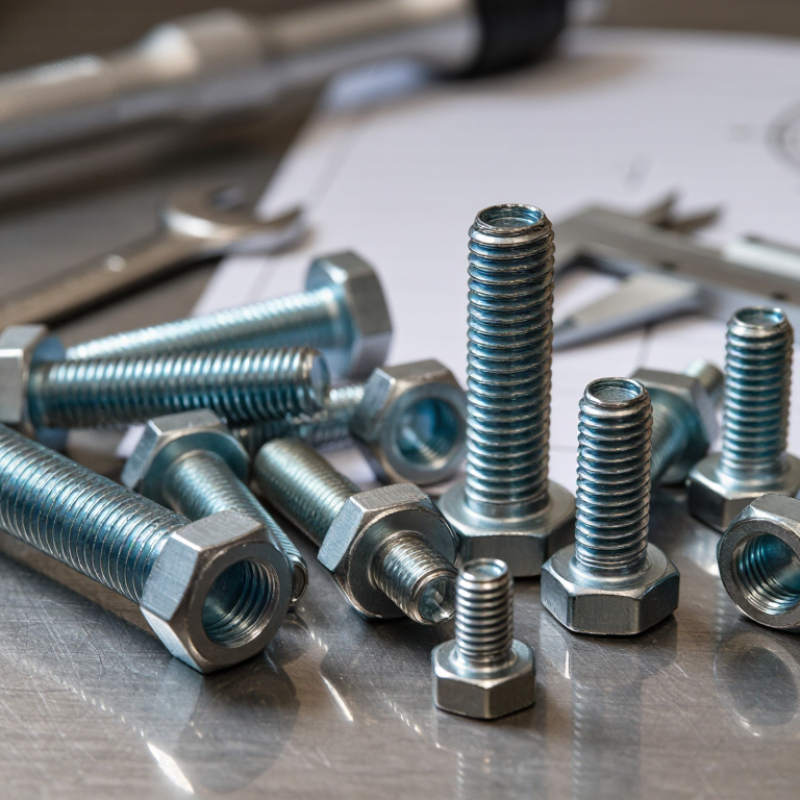
How to Choose Stainless Steel Stud Bolts in 2026

Define the Application and Operating Conditions

Before selecting stainless steel stud bolts, define the joint’s job and the materials it connects. Note whether the assembly carries steady tension, repeated vibration, or occasional impact. A flange on a warm pump has different needs from a handrail exposed to rain and salt spray. Record the required bolt diameter, thread engagement, available clearance, and any maintenance limits. Details matter.

Next, map the operating conditions where the bolts will actually sit. Consider temperature changes, moisture, cleaning chemicals, process fluids, and contact with dissimilar metals. Stainless steel resists many forms of corrosion, but it is not immune in every environment. Check the material grade against the specific exposure, and verify strength requirements with the equipment design or a qualified engineer. Account for installation, too: excessive tightening can damage threads or distort a joint. I would recheck assumptions about “mild” exposure; a small leak or trapped residue can change the picture.

Tips: Write down the normal and worst-case conditions before comparing grades. Include temperature, chemical contact, vibration, and inspection access. If a specification is uncertain, pause and confirm it rather than choosing by appearance alone. A clear application note helps suppliers and maintenance teams give more useful recommendations.

Choose a Stainless Steel Grade and Check Material Compatibility

Choosing a stainless steel grade starts with the environment, not the label. Grade 304 suits many indoor and mild outdoor settings. Grade 316 contains molybdenum, which improves resistance to chloride exposure. Better, not invulnerable. Salt spray, trapped moisture, and cleaning chemicals can still cause pitting or crevice corrosion. Consider the actual fluid, temperature, and time the stud bolts remain wet.

Check every connected material, including nuts, washers, flanges, and coatings. Dissimilar metals in a damp, conductive environment may create galvanic corrosion. A carbon-steel plate beside a stainless stud can be a concern, especially where water collects. Matching stainless grades can help, but it does not solve every compatibility issue. Small gaps matter. So do deposits under a washer.

Confirm the required strength and applicable project specifications before ordering. Review material certificates and verify that the supplied grade matches the specified grade. For chemical service, compare the process fluid against reliable corrosion data or consult a materials specialist. Duplex grades may suit some demanding conditions, but they require deliberate selection and compatible components. A detail that is easy to overlook: the stud may resist corrosion while the joint around it does not. Recheck the whole assembly.

How to Choose Stainless Steel Stud Bolts in 2026 — Choose a Stainless Steel Grade and Check Material Compatibility
Stainless Steel Grade Typical Bolting Specification Approximate Alloy Composition Suitable Service Conditions Compatibility Checks Limitations and Selection Notes
304
UNS S30400
ASTM A193 Grade B8 is a common pressure-service designation. Confirm the required class, heat treatment, dimensions, and certification. Typically 18–20% chromium and 8–10.5% nickel; maximum carbon is generally 0.08% for Type 304. Indoor and general atmospheric service, many dry environments, and some freshwater or mildly corrosive applications. Check exposure to chlorides, cleaning chemicals, moisture traps, and dissimilar metals. Use compatible nuts and washers where practical. Not a reliable choice for seawater, salt spray, or chloride-rich crevices. Chlorides can cause pitting and stress-corrosion cracking under susceptible conditions.
316
UNS S31600
ASTM A193 Grade B8M is a common pressure-service designation. Confirm the required class and certified material condition. Typically 16–18% chromium, 10–14% nickel, and 2–3% molybdenum; maximum carbon is generally 0.08% for Type 316. More demanding atmospheric and chemical environments than 304, including many applications with intermittent exposure to chlorides. Verify chemical concentration, temperature, exposure duration, and whether deposits or crevices can form. Consider the materials of the mating flange, nut, and washer. Molybdenum improves resistance to pitting compared with 304, but 316 is not immune to chloride attack and is not automatically suitable for continuous seawater service.
316L
UNS S31603
Specify the applicable bolting standard and mechanical property class explicitly. Do not assume that a 316L product is automatically equivalent to ASTM A193 Grade B8M. Similar chromium, nickel, and molybdenum ranges to 316, with carbon limited to 0.03% maximum. Applications requiring the corrosion characteristics of a low-carbon 316 alloy, especially where welding or heat exposure could cause sensitization concerns. Confirm that the stud, nuts, washers, and welded components have suitable, documented material specifications. Check the required strength for the joint design. The lower carbon content can reduce carbide precipitation risk after welding; it does not make the alloy immune to chloride corrosion or guarantee a particular fastener strength.
Duplex 2205
UNS S32205
May be specified under ASTM A1082/A1082M for applicable high-strength duplex bolting. Confirm the exact grade, product form, and required mechanical properties. Approximately 22% chromium, 5% nickel, 3% molybdenum, and 0.14–0.20% nitrogen; exact limits depend on the applicable specification. More demanding chloride-containing environments where higher strength and improved resistance to pitting and crevice corrosion than 304 or 316 may be needed. Check that the mating components are compatible with the duplex alloy and joint design. Review galvanic effects, fabrication requirements, temperature limits, and the specified strength class. Not universally immune to seawater corrosion or chloride stress-corrosion cracking. Use only when the design, material standard, and service conditions have been reviewed by a qualified engineer.
Selection checklist: Match the grade to the actual chemicals, chloride level, temperature, moisture, and crevice conditions; verify the governing bolting specification and mechanical property class; and check compatibility with the flange, nuts, washers, and process fluid. Stainless steel threads can gall, particularly when stainless components run against each other, so consider a compatible lubricant or anti-seize compound and verify the tightening procedure. For critical pressure or safety applications, use certified material test reports and have the selection checked against the applicable design code.

Determine Stud Bolt Size, Thread, and Configuration

How to Choose Stainless Steel Stud Bolts in 2026

Determine Stud Bolt Size, Thread, and Configuration

Start with the joint, not the bolt bin. Check the equipment drawing or existing fastener for nominal diameter, length, and thread pitch. A caliper can help confirm diameter, while a thread-pitch gauge distinguishes similar-looking threads. Measure length using the convention specified for the stud; end styles can change what “length” means. Small measurement errors matter. A stud that is too short may leave insufficient nut engagement, while an oversized one can interfere with nearby parts.

Match the thread to both the tapped hole and the nut. Coarse and fine threads are not interchangeable, even when their diameters match. Never force a nut onto a stud; resistance may signal mismatched pitch or damaged threads. Choose the stainless grade for the actual environment, considering moisture, cleaning chemicals, and temperature. For example, 316 stainless is often considered for chloride exposure, but the full assembly and service conditions still matter. Verify the specified material and documentation rather than relying on appearance.

Then select the configuration: fully threaded, or a stud with one or two threaded ends and a defined unthreaded section. Confirm thread engagement, available clearance, and nut style against the joint drawing. It is easy to focus on grade and overlook fit. That happens. Record the dimensions and thread details before ordering, especially when replacing a stud from an older assembly.

Compare Standards, Manufacturing Quality, and Traceability

How to Choose Stainless Steel Stud Bolts in 2026

Compare Standards, Manufacturing Quality, and Traceability

Start by matching the standard to the service conditions, not just the bolt’s appearance. ASTM A193 grades such as B8 and B8M specify material and mechanical requirements for certain pressure and temperature applications. ISO 3506 covers stainless steel fasteners using a different designation system. Check the specified grade, thread dimensions, and compatible nut requirements. Standards are not interchangeable by name alone.

Manufacturing quality shows up in details. Look for clean, consistent threads, straight studs, and surfaces without cracks or deep tool marks. Ask how heat treatment and inspection are controlled when the specification requires them. Request material test reports that identify the heat number and match the delivered lot. A polished certificate can still leave gaps if its numbers do not connect to the actual parts. That detail is easy to overlook.

Verify Supplier Documentation and Installation Requirements

A reliable stainless steel stud bolt starts with paperwork that matches the part in your hand. Ask for a material test report tied to the heat or lot number, not a generic grade sheet. Check that the stated alloy, dimensions, and mechanical properties match your purchase specification. A certificate may look complete yet refer to a different batch. That mismatch matters.

Review the supplier’s quality documents and confirm who issued them. Where a certificate claims compliance with a particular standard, verify the exact edition and scope. Check thread form, diameter, length, and any specified finish against the drawings. Keep the documents with the project records. Small details are easy to lose. I would also question any unexplained gap between the order, label, and test report; a tidy document pack is not proof by itself.

Installation requirements deserve the same scrutiny. Confirm the required thread engagement, nut and washer compatibility, and whether lubrication is specified. Stainless steel threads can gall, especially when fitted dry or driven too quickly. Do not assume one torque value suits every grade, size, or joint. Ask the engineer or supplier for an approved installation method when the specification is unclear. Then record the chosen method. It may feel overly cautious, but correcting a seized stud on site is worse.

How to Choose Stainless Steel Stud Bolts in 2026

Minimum tensile strength by austenitic stainless-steel property class (ISO 3506-1), in MPa

Selection note: Verify the material grade, property class, applicable standard and heat or lot traceability in the supplier’s documentation. These tensile-strength values are not design loads; confirm the required bolt size, service conditions and installation procedure for your application. Use appropriate anti-galling measures and follow specified torque requirements.

FAQS

How should I choose a stainless steel grade for stud bolts?

Start with the environment. Grade 304 often suits mild conditions, while 316 may better resist chloride exposure. Still, no grade is invulnerable.

Can stainless steel studs corrode near salt water?

Yes. Salt spray, trapped moisture, and cleaning chemicals can cause pitting or crevice corrosion. Check where water collects.

Should connected parts use the same material?

Check the studs, nuts, washers, flanges, and coatings together. Dissimilar metals in damp areas may increase galvanic corrosion. Tiny gaps matter.

How do I confirm stud bolt size and thread?

Check the equipment drawing or existing fastener. Use a caliper for diameter and a thread-pitch gauge for thread spacing. Measure carefully.

What happens if the thread pitch does not match?

The nut may resist turning or damage the threads. Never force it. Similar-looking threads can differ.

How do I choose stud length and configuration?

Confirm length, nut engagement, clearance, and end style against the joint drawing. A stud that is too long may hit nearby parts.

What quality documents should I request?

Request material records that identify the heat number and match the delivered lot. Check bundle markings against the paperwork. I would recheck this.

Is a visual inspection enough to verify the material?

No. Clean threads and smooth surfaces can reveal obvious defects, but appearance cannot confirm alloy composition. Critical applications may need independent testing.

Conclusion

Choosing a Stainless Steel Stud Bolt in 2026 starts with understanding the application and operating conditions. Consider the loads, temperature range, moisture, chemicals, and exposure to corrosive environments. These factors help determine which stainless steel grade is suitable and whether it is compatible with the connected materials, reducing the risk of corrosion or premature failure.

Next, confirm the required diameter, length, thread type, pitch, and end configuration against the equipment design. Compare applicable standards and assess manufacturing quality, dimensional consistency, and material traceability. Before installation, review supplier documentation, including material and inspection records, and follow the specified tightening method and installation requirements. Careful checks at each stage help ensure the stud bolt fits correctly and performs reliably in its intended service.

Charlotte

Charlotte

Charlotte is a professional marketing specialist who brings a deep understanding of the company’s products and the needs of the people who use them. She regularly contributes expert articles to the company website, turning product knowledge and industry insights into clear, practical guidance. Her......