Industrial Threaded Rods can look simple on a parts list: a long steel bar, threaded end to end. The choice is less simple once a support frame carries a vibrating pump or a rack sits in a damp washdown area. Diameter, thread pitch, material, grade, length, and coating all affect fit and performance. A rod that matches the drawing may still be wrong for the actual load or environment. Details matter.
Bolted-joint expert John H. Bickford is known for his work on how bolted joints behave. Paraphrasing a principle from that field: “A dependable joint depends on more than the strength of one fastener.” Treat that as a reminder, not a direct quotation. Check how the rod works with its nuts, washers, connected materials, and installation method. For critical or changing loads, have a qualified engineer review the connection.
This guide explains how to compare Industrial Threaded Rods for your project, from material and dimensions to corrosion resistance and load requirements. Picture a rod passing through a steel plate, with only a few threads extending beyond the nut. That small detail can affect assembly. So can a coating that adds thickness to the threads. Product tables help, but they cannot capture every site condition. The first specification may need revision. Measure the installation, confirm the required strength, and verify compatibility before ordering.
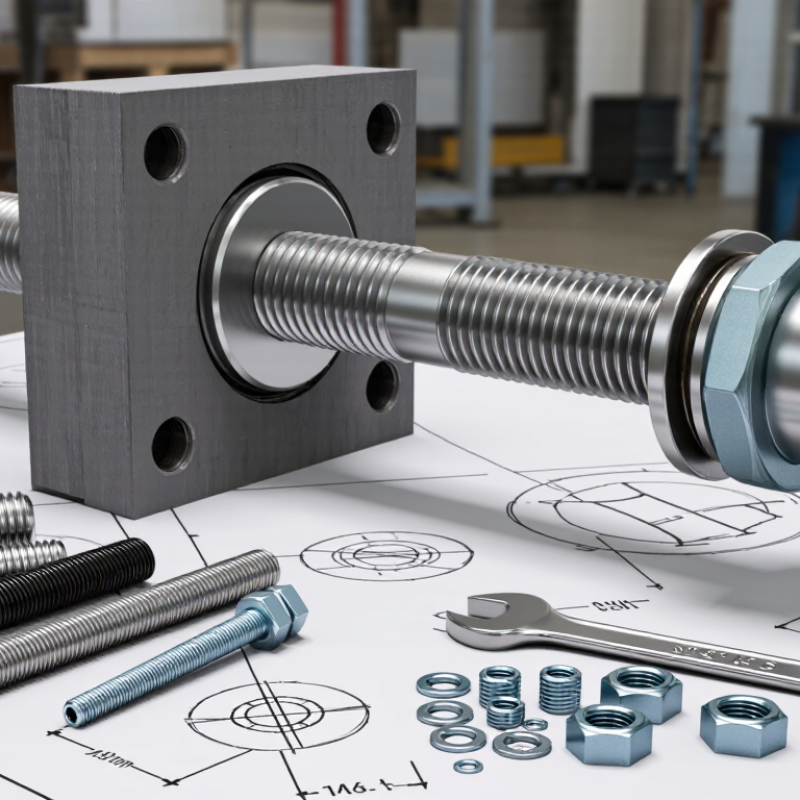
Identify Project Requirements and Operating Conditions
Before choosing an industrial threaded rod, define what it must do. Will it suspend a pipe, join machine frames, or anchor equipment? Record the expected load, rod span, connection points, and available installation space. A short support inside a dry workshop faces different demands from a long rod exposed to rain or cleaning chemicals. Small details matter. Note nearby heat sources, moisture, salt, and chemical exposure. These conditions can affect both the rod material and its protective finish. Measure the required length carefully, including nut engagement and washers. A rushed measurement can leave too little usable thread.
Next, consider how the load behaves during operation. Steady weight is not the same as vibration, repeated movement, or sudden impact. Check whether the rod could experience bending, and confirm that connected parts and the supporting structure can carry the same loads. Do not judge capacity by diameter alone; material grade, thread form, unsupported length, and installation all matter. Verify specifications from reliable technical documentation, and use an appropriate safety factor. If the rod supports overhead equipment or a critical assembly, have the design reviewed by a qualified engineer. I would also check whether cutting the rod exposes unprotected metal, since that small oversight can invite corrosion. The best choice may still need revisiting once the real site conditions are known.
Choosing Anchor Rod Strength for Your Project
Minimum specified yield strength for ASTM F1554 anchor rod grades
ASTM F1554 specifies minimum yield strengths of 36, 55, and 105 ksi for Grades 36, 55, and 105, respectively (approximately 248, 379, and 724 MPa). Select a grade based on the project’s design loads and applicable requirements. Also assess corrosion exposure, operating temperature, installation conditions, and material compatibility; strength alone does not determine suitability.
Compare Rod Materials and Protective Coatings
Material choice starts with the environment, not the catalog description. For dry indoor frames, carbon steel threaded rods often provide reliable strength at a practical cost. Stainless steel can suit damp locations, but the grade matters. Type 304 handles ordinary moisture well; chlorides from coastal air or cleaning products can still cause pitting. Type 316 offers better resistance in those conditions, though it may cost more. Looks can mislead. Check the required load and temperature, too, since corrosion resistance alone does not determine suitability.
Protective coatings add a second decision. Zinc-plated rods work for many indoor applications, but their thin coating may not last in persistent wetness. Hot-dip galvanizing provides a thicker layer and is often considered for outdoor exposure; however, the coating can affect thread fit. Confirm that nuts match the rod’s coating and dimensions before ordering. Epoxy coatings can offer a barrier against specific chemicals, but damaged areas may expose the steel beneath. During installation, avoid scraping coated threads with tools, and inspect cut ends for exposed metal. I would not choose by finish alone. A small sample tested in the actual environment can reveal problems a specification sheet may not show.
How to Choose Industrial Threaded Rods for Your Project — Compare Rod Materials and Protective Coatings
Selection note: Final capacity depends on the rod diameter, thread size, grade, engagement length, installation, and loading conditions. Verify the applicable product specification and engineering requirements before selection.
Select Diameter, Length, and Thread Specifications
How to Choose Industrial Threaded Rods for Your Project
Select Diameter, Length, and Thread Specifications
Choosing industrial threaded rod starts with diameter, length, and thread details—not a guess from an old assembly. Estimate the loads, including tension, vibration, and side forces. A thicker rod may help, but strength also depends on material, thread engagement, and unsupported length. For critical connections, check calculations against project requirements and consult a qualified engineer if loads are uncertain.
Set length by measuring the full assembly: plates, nuts, washers, and required thread engagement. Leave enough exposed thread for secure nut engagement, but avoid excessive overhang that can catch or bend. Thread pitch and series must match the nuts and tapped parts. Metric and inch threads are not interchangeable. A pitch gauge can help verify an existing part; visual matching can fool you. A close-looking match can still cause rework.
Tips: Check material compatibility with moisture, chemicals, and temperature. Mark the cut length before trimming, then deburr the end so a nut starts cleanly. Confirm the thread class or tolerance on the drawing, and test-fit one rod before ordering a full quantity.
Match Rod Capacity to Loads and Installation Needs
Choosing industrial threaded rod means matching rated capacity to the actual load and installation conditions. ASTM F1554-20 specifies minimum yield and tensile strengths for anchor-rod grades: Grade 55 provides 55 ksi and 75 ksi, while Grade 105 provides 105 ksi and 125 ksi. These are material properties, not safe working loads. Do not size by tensile strength alone.
List tension, shear, vibration, and any shock loading before selecting a rod. For concrete anchorage, ACI 318-19 Chapter 17 addresses steel strength, concrete breakout, pullout, and side-face blowout. Embedment depth, edge distance, base-plate thickness, and installation access can change the controlling limit. A stronger rod will not fix weak concrete or inadequate embedment. Even careful calculations can miss field conditions; verify the substrate and loads on site.
Tips: Check the project drawings and applicable standards, then confirm rod grade, diameter, thread engagement, and corrosion protection. Leave room for washers and nuts. Record installation details. Small fit issues matter.
Verify Quality Standards and Supplier Documentation
Before ordering industrial threaded rods, identify the required material grade, diameter, thread pitch, coating, and service conditions. Match these details to the project specification, not just a supplier’s product description. Where applicable, ISO 898-1 sets mechanical property requirements for bolts, screws, and studs. Confirm that the quoted grade and test results cover the exact rod form and size you need.
Ask for a material test report and a certificate of conformity. Check that each document names the grade, heat or lot number, dimensions, and applicable standard. The heat number should match the product marking or packaging label. World Steel Association’s World Steel in Figures 2024 reports 1,888.2 million tonnes of crude steel production in 2023. That figure describes the scale of supply, not the quality of any individual rod. Traceable records help connect the delivered item to its stated material and test results.
Read the documents closely. A polished certificate can still omit a key detail. Check whether testing was performed by the manufacturer or an independent laboratory, and clarify any missing information before installation. For critical assemblies, verify mechanical properties and coating requirements against the engineer’s specification. Keep the reports with inspection records. Small gaps matter. A mismatched lot number, for example, can make later verification difficult.
Conclusion
Choosing Industrial Threaded Rods starts with understanding the project’s purpose and operating conditions. Consider the environment, exposure to moisture or chemicals, temperature changes, and the type of structure or equipment being assembled. These factors help determine whether a particular rod material and protective coating can provide suitable durability and corrosion resistance. Next, specify the required diameter, length, and thread type so the rod fits the connection and installation method.
The rod’s capacity should match the expected loads, including any demands created during installation and use. Check that the selected dimensions and material are appropriate for the application, and allow for practical factors such as available clearance and fastening components. Before purchasing, review quality standards and supplier documentation to confirm that product specifications are clear and consistent. A careful comparison of requirements, materials, dimensions, capacity, and documentation can help you choose a rod that is suitable for the project and reliable in service.