Selecting a reliable Hastelloy Stud Bolt manufacturer requires more than comparing prices or polished websites. Performance depends on alloy grade, thread accuracy, heat treatment, and traceability. In demanding environments, a small dimensional error can cause leakage, galling, or premature joint failure.
This guide examines ten established manufacturers serving international industrial markets. The evaluation considers material expertise, production capacity, inspection procedures, certifications, customization, and delivery reliability. It also considers how clearly each supplier documents mill certificates, hardness results, and chemical composition. Those details matter when fasteners face acids, chlorides, high temperatures, or repeated maintenance cycles.
Real engineering experience often reveals differences that catalog pages hide. A manufacturer may offer Hastelloy C276, C22, or B2, yet provide limited evidence of consistent quality. Another supplier may have excellent testing but weaker global support. No list is flawless. Buyer requirements change by application, region, and project risk.
The featured companies are assessed through a practical lens. Their ability to control thread fit, surface finish, packaging, and batch identification receives careful attention. Inspection records should be readable and linked to the delivered components. That is not glamorous. It is essential.
Readers should use this overview as a starting point, not a substitute for technical verification. Confirm the required grade, dimensions, standards, operating conditions, and documentation before placing an order. A strong supplier communicates clearly, admits limitations, and supports decisions with evidence. Reliability begins there.
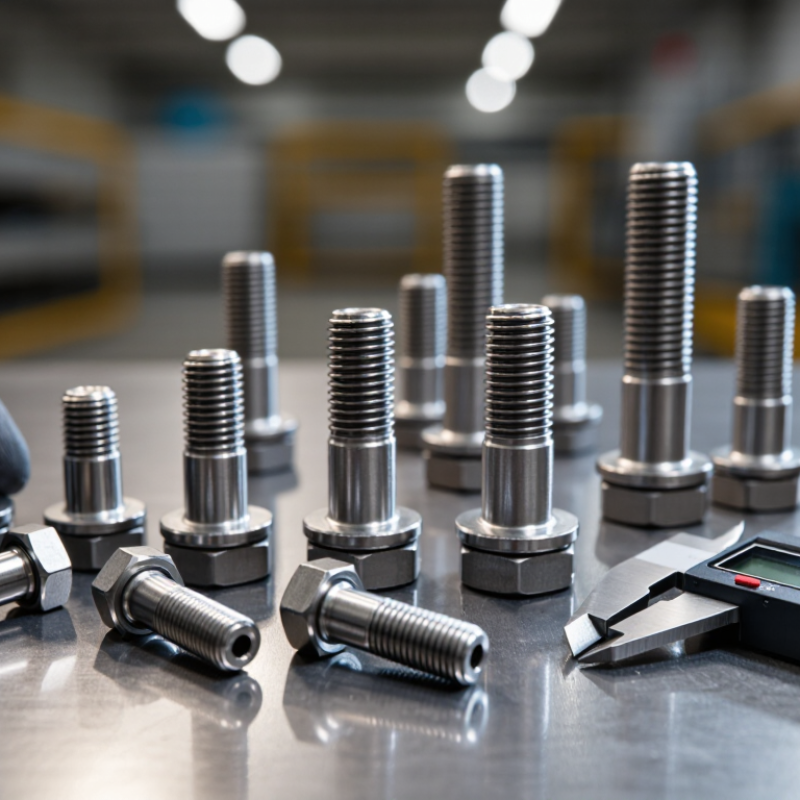
Hastelloy stud bolts use nickel-based alloys designed for severe corrosion and heat. Their performance depends on grade, temperature, stress, and the process fluid. C-276 is widely selected for mixed acids, chlorides, and wet chemical environments. C-22 offers strong resistance to oxidizing media and localized corrosion. B-2 performs well in reducing acids, especially hydrochloric acid. These grades are not interchangeable.
Material certificates should confirm chemical composition, heat treatment, mechanical properties, and traceability. Experienced buyers also check thread accuracy and surface condition. Rough threads can increase galling during installation. Matching nuts are important. Nickel alloys may seize when dry, so technicians often use a compatible lubricant and controlled torque. Torque values must reflect the lubricant’s friction factor.
Applications include pressure vessels, reactor covers, scrubbers, heat exchangers, piping flanges, and chemical injection systems. In coastal plants, chloride exposure can make ordinary stainless steel an unreliable choice. However, a high-alloy stud bolt cannot correct poor flange alignment or excessive tightening. That point is sometimes overlooked. Grade selection is also less simple than a supplier chart suggests. Weld fumes, stagnant fluids, and crevices can change the corrosion risk. Engineers should review operating records, not only laboratory data, before approving a specification. Small details matter.
This chart compares the approximate nominal chromium, molybdenum, tungsten, and iron content of widely used Hastelloy grades. Values are shown as weight percentages and rounded from commonly published alloy specifications; nickel, the balance element, is not plotted. C-276 and C-22 are commonly selected for broad chemical-process corrosion resistance, B-2 for reducing environments, C-2000 for combined oxidizing and reducing acids, and G-30 for highly oxidizing chemical service. Actual stud bolt selection should consider temperature, media concentration, stress, thread design, and applicable ASTM or ASME specifications.
How to Evaluate Global Hastelloy Stud Bolt Manufacturers
Evaluating Hastelloy stud bolt manufacturers requires more than comparing prices. Start with material traceability, technical capability, and documented inspection controls. A reliable supplier should provide heat numbers, chemical analysis, mechanical test results, and full dimensional records. These documents should match the purchase specification and applicable ASTM or ASME requirements.
Nickel supply affects delivery risk. The USGS Mineral Commodity Summaries 2024 reported global nickel mine production of approximately 3.6 million metric tons in 2023. However, mined nickel is not the same as certified fastener material. Ask how each manufacturer manages alloy billets, forging, heat treatment, and subcontracted testing. ISO 9001 certification is useful, but it does not prove every product is suitable for sour service or high-temperature operation. Request evidence linked to the exact lot.
Tips: Check whether test certificates identify the melt, batch, and inspection agency. Confirm hardness testing locations. Review calibration dates for torque tools and gauges. Ask for sample nonconformance reports, if available.
Communication also reveals manufacturing maturity. Can the supplier explain thread tolerances, galling prevention, and coating compatibility in clear terms? Can it control small and repeated orders? Independent inspection may be worthwhile for critical equipment. A low quotation can hide weak traceability or delayed testing. No checklist is perfect. That is the uncomfortable part. Evaluate evidence, not confident promises.
Global manufacturer evaluation matrix based on verifiable technical, quality, traceability, and supply-chain criteria
| Rank | Evaluation Dimension | What a Qualified Manufacturer Should Demonstrate | Recommended Evidence to Request | Relevant Standard or Reference | Suggested Weight |
|---|---|---|---|---|---|
| 1 | Material Grade and Chemistry Control | Uses the purchaser-specified nickel-based alloy grade and controls chemistry within the applicable product specification. | Heat-analysis report, positive material identification record, and independent laboratory report when required. | ASTM B574, ASTM B564, or the exact grade specification stated in the purchase order. | 18% |
| 2 | Mechanical Performance | Verifies tensile strength, yield strength, elongation, hardness, and any purchaser-specified proof-load requirements. | Certified tensile, yield, elongation, reduction-of-area, and hardness test results linked to the material heat. | Applicable ASTM product specification and project engineering requirements. | 15% |
| 3 | Dimensional and Thread Accuracy | Maintains specified diameter, length, thread form, pitch, class, chamfer, runout, and end condition. | Inspection plan, calibrated thread gauges, dimensional inspection report, and sample measurements. | ASME B1.1 for Unified Inch threads or ASME B1.13M for Metric threads. | 12% |
| 4 | Heat Treatment and Metallurgy | Applies the required solution annealing, stabilization, or other treatment and prevents unauthorized rework. | Heat-treatment chart, furnace calibration records, batch identification, and metallographic results where specified. | Specified alloy product standard and purchaser-approved heat-treatment procedure. | 12% |
| 5 | Corrosion and Service-Environment Suitability | Can explain material suitability for chlorides, acids, high-temperature service, sour service, and other project-specific environments. | Compatibility statement, corrosion-test data when applicable, and engineering review of operating conditions. | NACE MR0175/ISO 15156 for applicable oil and gas sour-service conditions. | 11% |
| 6 | Non-Destructive Examination | Provides the required inspection for surface cracks, laps, seams, or internal discontinuities according to the order. | Liquid penetrant, magnetic-particle, ultrasonic, or other NDE reports with acceptance criteria and inspector identity. | Purchase-order requirements and the applicable ASTM or ASME examination method. | 9% |
| 7 | Traceability and Documentation | Maintains continuous traceability from raw material through machining, testing, packing, and shipment. | Heat number, lot number, material certificate, inspection release note, packing list, and certificate of conformity. | EN 10204 Type 3.1 or Type 3.2 certification when specified. | 8% |
| 8 | Quality Management System | Operates documented controls for purchasing, production, inspection, nonconformance, corrective action, and calibration. | Current quality certificate, audit report, calibration register, and nonconformance procedure. | ISO 9001 certification from an appropriately accredited certification body. | 6% |
| 9 | Manufacturing Capacity and Delivery Reliability | Has suitable machining capacity, controlled subcontracting, realistic lead times, and contingency planning for repeat orders. | Capacity statement, production schedule, on-time delivery history, and documented subcontractor controls. | Project-specific supply agreement and approved vendor requirements. | 5% |
| 10 | Packaging, Marking, and Export Support | Protects finished threads from impact and contamination and provides clear marking for grade, size, lot, and quantity. | Packaging specification, corrosion-protection method, photographs before shipment, labels, and export documents. | Purchase-order packaging instructions and applicable transport regulations. | 4% |
Note: The weighting is a neutral procurement framework. Final supplier ranking should be based on verified documentation, technical compliance, sample inspection, audit results, and project-specific service conditions.
Top 10 Hastelloy Stud Bolt Manufacturers Worldwide
The top 10 Hastelloy stud bolt manufacturers worldwide are often judged by material control, machining accuracy, and inspection discipline. Reliable producers work with nickel-based alloys designed for heat, chlorides, acids, and demanding process equipment. Their workshops usually maintain controlled forging temperatures, clean storage areas, and traceable production records. Small details matter.
Experienced buyers should examine alloy certificates, heat numbers, thread measurements, and hardness results before approval. Stud bolts must match the application, not simply the purchase description. Common Hastelloy grades can behave differently during machining, installation, and exposure to aggressive media. A strong manufacturer explains these differences clearly. That builds trust.
Independent inspection can reveal issues hidden by polished packaging. Check thread fit with calibrated gauges, surface defects under suitable lighting, and dimensional reports from verified equipment. Ask how suppliers prevent mixed lots and protect threads during transport. A manufacturer may offer excellent technical data yet communicate poorly during urgent changes. That weakness deserves attention. Rankings are useful, but they can still oversimplify real performance. Delivery consistency, responsive engineering support, and honest handling of nonconforming parts often matter more than impressive factory photographs. In practice, the best choice depends on service conditions, required certification, order volume, and the supplier’s willingness to document every critical step.
When comparing the top ten Hastelloy stud bolt manufacturers worldwide, inspect standards before production scale. Qualified suppliers should identify the alloy grade, heat condition, thread class, and traceability route. ASTM F468 can support nonferrous fastener requirements, while ASME B18.31.2 addresses stud dimensions and configurations. For sour-service applications, NACE MR0175/ISO 15156 may be essential.
Testing should include chemical analysis, tensile strength, hardness, thread inspection, and dimensional checks. Each heat should carry a material test report, not just a polished certificate. The ISO Survey 2023 recorded over 1.26 million ISO 9001 certificates globally. Certification signals a controlled system, but it does not guarantee every shipment. The AMPP IMPACT study estimated annual corrosion costs near 3.4% of global GDP. That figure makes corrosion testing a commercial decision, not paperwork.
Tips: Request independent laboratory results for critical orders. Check calibration dates. Review failed-batch records when available. A supplier promising zero variation deserves careful questions. Even strong factories miss details sometimes. Salt exposure, galling, and hydrogen-related damage can appear after installation. My practical concern is simple: many evaluations overvalue certificates and undervalue sample inspection. Ask for witness testing, full lot traceability, and clear acceptance limits before comparing quotations.
Choosing the right Hastelloy stud bolt supplier requires more than comparing prices. The supplier must understand your alloy, temperature range, pressure, and installation method. Ask for the exact grade, heat treatment records, chemical analysis, and mechanical test results. A certificate without traceable heat numbers deserves careful review.
Experienced suppliers can recommend thread dimensions for corrosive service and warn about galling during installation. Request positive material identification, dimensional inspection, and calibrated thread-gauge reports. Check whether each stud matches the specified diameter, pitch, length, and tolerance. Small errors can create major flange alignment problems.
Traceability matters. Reliable suppliers should link every batch to raw material records, inspection reports, and packing labels. Confirm their quality system, testing laboratory, and ability to control subcontracted processes. Packaging should protect threads with caps and moisture-resistant materials, especially during ocean transport.
Do not rely on polished documents alone. Site conditions often differ from the original specification. A supplier may answer quickly yet miss a critical chloride exposure or thermal-cycle detail. That weakness is worth discussing before purchase. Ask technical questions and assess the clarity of the response. The best choice is not always the lowest quotation; it is the supplier that can prove consistency before the bolts reach your maintenance team.
Review material control, machining accuracy, inspection discipline, and production traceability. Small details often matter.
Request chemical analysis, heat treatment records, mechanical test results, and traceable heat numbers. Documents should match the physical batch.
Heat numbers connect finished bolts with their original raw material records. Without them, certification becomes harder to verify.
Use calibrated thread gauges and verify diameter, pitch, length, and tolerance. A smooth-looking thread may still fail inspection.
Ask about galling during installation, especially in corrosive or high-temperature service. Thread design and installation methods can reduce this risk.
Use thread caps, dry wrapping, and moisture-resistant packaging. Ocean transport needs extra attention.
Not always. A slightly higher price may include stronger testing, clearer records, and more reliable technical support.
Inspect surface defects, dimensions, thread fit, hardness, and material identity. Polished packaging proves very little.
No. Rankings can simplify a complicated decision. Delivery consistency and honest handling of nonconforming parts may matter more.
Tell the supplier about new temperatures, pressures, chlorides, or thermal cycles. Fast replies help, but complete replies matter more.
This article provides a practical guide to Hastelloy Stud Bolt products, covering their material characteristics, common grades, corrosion resistance, and key applications in chemical processing, power generation, oil and gas, marine engineering, and other demanding industries. It explains how alloy selection depends on temperature, pressure, media exposure, mechanical loads, and installation conditions, helping readers understand why Hastelloy fasteners are chosen for severe service environments.
The article also presents a structured approach to evaluating global manufacturers without focusing on individual brand names. It discusses production capabilities, dimensional accuracy, traceability, testing procedures, international manufacturing standards, and quality certifications. In addition, the overview of the top 10 Hastelloy Stud Bolt manufacturers is intended to help buyers compare technical expertise, customization options, delivery reliability, and quality control. The final section offers practical advice for selecting a supplier that can meet project specifications, documentation requirements, long-term performance expectations, and overall budget considerations.