
Choosing among the Top 10 Monel Stud Bolt Manufacturers for Global Buyers requires more than comparing prices. Monel alloys are valued for their resistance to seawater, chlorides, and demanding chemical environments. However, a familiar alloy name does not guarantee dependable fasteners. Buyers must examine the actual grade, thread accuracy, heat treatment, surface condition, and documentation behind every shipment.
Materials authority Mars G. Fontana wrote, “Corrosion is the deterioration of a material as a result of reaction with its environment.” This principle remains highly practical when selecting a Monel Stud Bolt for offshore platforms, marine pumps, heat exchangers, and chemical-processing equipment. A qualified manufacturer should provide mill test certificates, chemical composition reports, dimensional inspection records, and traceable heat numbers. Compliance with relevant ASTM, ASME, or customer specifications also matters. Small details matter.
This guide evaluates manufacturers through technical capability, production consistency, testing discipline, customization support, and international delivery experience. It considers Monel 400 and Monel K-500 applications, along with common diameter, length, thread, and coating requirements. Reliable suppliers should explain whether they forge, machine, inspect, and package each stud bolt under controlled procedures. Packaging deserves attention too; damaged threads can undermine an otherwise excellent product.
No ranking is perfect. Some suppliers publish limited factory data, while others provide impressive claims without enough evidence. That uncertainty deserves honest scrutiny. Global buyers should request samples, verify certificates, clarify lead times, and review service records before placing critical orders. The manufacturers below offer useful starting points, not automatic approvals.
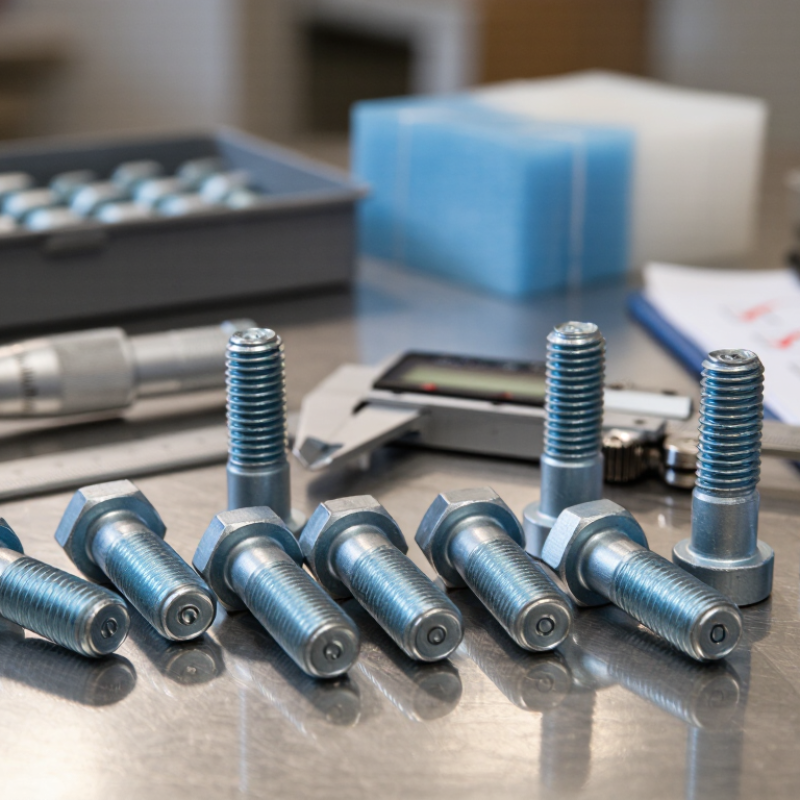
Monel stud bolts are nickel-copper fasteners designed for demanding environments. They resist seawater, salt spray, and many chemical solutions. Common grades include Monel 400 and Monel K-500. Monel 400 provides strong corrosion resistance and reliable toughness. K-500 offers higher strength through age hardening. That difference matters in loaded joints.
For global buyers, grade selection should match temperature, pressure, and service chemistry. Monel 400 often suits marine piping and chemical equipment. K-500 can support higher mechanical loads, but its performance depends on correct heat treatment. Both grades can experience galling during installation. Controlled tightening, clean threads, and suitable lubricants reduce this risk. Do not assume corrosion resistance makes every application safe. Oxidizing media and elevated temperatures need careful review. No grade is perfect.
Tips: Request material certificates and heat-number traceability. Check tensile strength, yield strength, hardness, and thread dimensions. Confirm applicable ASTM or ASME requirements before purchase. Inspect surface condition, because small thread damage can weaken a joint. In my experience, buyers sometimes focus only on alloy names. That is a mistake. Manufacturing quality, inspection records, and storage conditions also influence service life. A dry, protected package is valuable, especially when bolts travel through humid ports. One detail is often overlooked: verify whether the nut material matches the stud’s strength and corrosion behavior.
Material and specification reference for evaluating Monel stud bolt offerings. No manufacturer or brand data is included.
| Selection Point | Material or Grade | UNS Designation | Typical Chemical Composition | Key Mechanical or Physical Data | Corrosion and Service Characteristics | Common Stud Bolt Uses | Relevant Standards or References |
|---|---|---|---|---|---|---|---|
| 1. General-purpose nickel-copper alloy | Monel 400 | N04400 | Nickel minimum 63%; copper approximately 28–34%; iron maximum 2.5%; manganese maximum 2.0%; carbon maximum 0.30%; silicon maximum 0.50%. | Density is approximately 8.80 g/cm³. Melting range is approximately 1,300–1,350°C. Mechanical values depend strongly on product size and heat treatment. | Excellent resistance to seawater, brine, hydrofluoric acid, and many alkaline media. Generally resistant to chloride-induced stress-corrosion cracking. | Marine piping, seawater pumps, chemical equipment, heat exchangers, valves, and general corrosion-resistant bolting. | ASTM B164 for nickel-copper alloy rod and bar; ASTM F467 for nonferrous mechanical fasteners where applicable. |
| 2. High-strength precipitation-hardenable grade | Monel K-500 | N05500 | Nickel minimum 63%; copper approximately 27–33%; aluminum approximately 2.3–3.15%; titanium approximately 0.35–0.85%; iron maximum 2.0%. | Higher strength than Monel 400 after solution treatment and age hardening. Typical aged-product tensile strength may exceed 1,000 MPa, depending on specification and section size. | Combines good seawater and chemical resistance with improved strength. Suitable for high-load service, but heat treatment and hydrogen exposure controls are important. | High-load marine studs, pump shafts, oil and gas equipment, valve components, and nonmagnetic fastening applications. | ASTM B865 for precipitation-hardening nickel-copper-aluminum alloy bar, commonly used as a material reference for K-500 products. |
| 3. Machinable fastener grade | Monel R-405 | N04405 | Similar base chemistry to Monel 400, with controlled sulfur typically added to improve machinability. | Machinability is improved compared with standard Monel 400. Strength and ductility vary with product form and condition. | Retains much of the corrosion resistance of Monel 400, although sulfur additions can make it less suitable for some severe corrosion environments. | Machined studs, threaded components, valve parts, fittings, and applications requiring improved thread production efficiency. | ASTM B164 and applicable fastener specifications should be checked for dimensional, chemical, and mechanical requirements. |
| 4. Cold-worked strength option | Monel 400, cold-worked condition | N04400 | Nickel-copper alloy with the standard Monel 400 chemistry; strength is increased through controlled cold working. | Higher yield and tensile strength than the annealed condition, with reduced elongation. Exact values depend on the cold-reduction level. | Maintains the alloy’s broad resistance to seawater, brine, and many chemical solutions. Forming and installation loads must be considered. | High-strength studs where age hardening is not desired and moderate-to-high corrosion resistance is required. | ASTM B164 or the purchaser’s approved material specification; mechanical condition should be stated on the purchase order. |
| 5. Annealed ductility option | Monel 400, annealed condition | N04400 | Standard nickel-copper composition with a heat treatment selected to maximize ductility and workability. | Typical minimum tensile strength for annealed bar is commonly specified around 550 MPa, but actual requirements depend on the applicable standard and product size. | Good resistance to seawater and hydrofluoric-acid environments. Annealed material is easier to form and less likely to suffer thread damage during machining. | Large-diameter studs, custom fasteners, flanges, pressure equipment, and installations requiring improved ductility. | ASTM B164, ASTM F467, and the project’s pressure-equipment or piping specification. |
| 6. Nonmagnetic-service requirement | Monel 400 or Monel K-500 | N04400 or N05500 | Both grades are nickel-copper alloys; K-500 also contains aluminum and titanium for precipitation hardening. | Magnetic response is generally low, but it can vary with cold work, heat treatment, geometry, and test method. Verification testing may be required. | Useful where corrosion resistance and controlled magnetic permeability are needed, such as marine, electronic, and instrumentation environments. | Nonmagnetic studs for marine sensors, electrical equipment, offshore instruments, and specialized pressure assemblies. | Specify the required maximum relative permeability and test method rather than relying only on the alloy name. |
| 7. Seawater and splash-zone service | Monel 400 | N04400 | Nickel-copper alloy with a copper content of approximately 28–34%. | Good mechanical performance over a wide temperature range, subject to the selected product condition and design code. | Strong resistance to flowing seawater and marine atmospheres. Crevice design, deposits, stagnant seawater, and galvanic couples still require engineering control. | Shipbuilding, offshore platforms, seawater piping, desalination equipment, marine pumps, and heat-exchanger bolting. | ASTM B164 material requirements plus applicable marine, piping, or offshore project specifications. |
| 8. High-load marine or oilfield service | Monel K-500, age-hardened | N05500 | Nickel-copper alloy strengthened by aluminum and titanium additions during precipitation heat treatment. | Age-hardened product can provide substantially higher yield and tensile strength than Monel 400. Final values must be confirmed by the material certificate. | Good resistance to seawater and sour-service-related environments when correctly specified. Hardness, hydrogen exposure, and cathodic protection conditions must be reviewed. | Offshore fasteners, high-load valve studs, pump components, oilfield tools, and marine hardware. | ASTM B865 or an approved equivalent specification; sour-service requirements should be stated separately when applicable. |
| 9. Thread and dimensional compatibility | Monel stud bolts, custom or standard configuration | Usually N04400 or N05500 | Chemistry must match the ordered UNS grade and the governing material standard; plating or coating should be separately identified. | Thread dimensions, tolerance class, proof load, tensile area, and tightening limits must match the mating flange, nut, and design code. | Direct contact with carbon steel, stainless steel, or aluminum can create galvanic-corrosion concerns in conductive electrolytes. | ASME B16.5 and B16.47 flange assemblies, pressure vessels, heat exchangers, and industrial piping systems. | ASME B1.1 for Unified inch threads, ASME B1.13M for metric threads, ASTM F467 for nonferrous fasteners, and project-specific flange standards. |
| 10. Procurement and quality-control checkpoint | Any approved Monel stud bolt grade | Confirm N04400 or N05500 | Require heat or lot traceability, chemical analysis, and confirmation of nickel, copper, iron, manganese, carbon, silicon, and any strengthening elements. | Review tensile strength, yield strength, elongation, hardness, dimensions, thread gauges, and heat-treatment condition against the purchase specification. | Material certificates alone do not replace application review for temperature, chloride concentration, hydrogen exposure, crevice corrosion, or galvanic compatibility. | Global sourcing, critical maintenance spares, pressure-boundary assemblies, and corrosion-resistant replacement fasteners. | Request certificates such as EN 10204 3.1 when required, along with inspection reports, dimensional records, and applicable nondestructive testing documentation. |
Technical note: Mechanical properties, allowable stresses, corrosion performance, and applicable standards vary with product form, diameter, heat-treatment condition, temperature, and jurisdiction. Always verify the latest material and fastener specification before purchase or installation.
They are made for demanding environments with seawater, salt spray, and chemical solutions. They suit marine piping, chemical equipment, offshore systems, and heat exchangers. No alloy is perfect.
Grade 400 offers strong corrosion resistance and dependable toughness. Grade K-500 provides higher strength through age hardening. Its performance depends on correct heat treatment. That detail matters.
Review temperature, pressure, mechanical load, and service chemistry before ordering. Check whether the environment contains oxidizing media. Elevated temperatures require additional technical review. Do not choose by alloy name alone.
Use clean threads, controlled tightening, and a suitable lubricant. Inspect the stud and nut before assembly. Small thread damage can create serious installation problems. Slow tightening helps.
Request material certificates, heat-number traceability, and batch inspection records. Check tensile strength, yield strength, hardness, and thread dimensions. Confirm applicable ASTM or ASME requirements. Certificate authenticity still needs verification.
No. Corrosion resistance does not remove temperature, pressure, or installation risks. Oxidizing chemicals may affect performance unexpectedly. Repeated heating can also change thread surfaces. Assumptions can be expensive.
The supplier should control alloy sourcing, forging, threading, heat treatment, and surface finishing. Its workshop should use calibrated gauges and controlled furnaces. Clear inspection records are essential. Polished surfaces alone prove little.
Check nut compatibility, washer fit, storage conditions, and thread engagement. A matching nut should suit the stud’s strength and corrosion behavior. Moisture-protected packaging matters during long sea transport. I might overlook storage too.
This guide to the Top 10 Monel Stud Bolt manufacturers helps global buyers understand how to evaluate reliable suppliers of corrosion-resistant fastening products. It explains the characteristics of Monel alloys, including common grades, strength, durability, and resistance to seawater, chemicals, and high temperatures. The article also reviews essential manufacturing standards, inspection procedures, material traceability, dimensional accuracy, thread quality, and certification requirements that support consistent product performance.
In addition, the guide compares leading manufacturers according to production capacity, machining technology, customization services, quality control, packaging, and international supply coverage. Buyers will learn how to assess technical specifications, request drawings and test reports, compare quotations, confirm lead times, and place orders with greater confidence. By considering application conditions, required standards, batch consistency, and after-sales communication, purchasers can select a suitable Monel Stud Bolt supplier for demanding industrial projects.