
Manufactured under strict ISO 9001:2015 quality controls and tested for creep ductility, tensile strength, and microstructural stability under elevated operational temperatures.
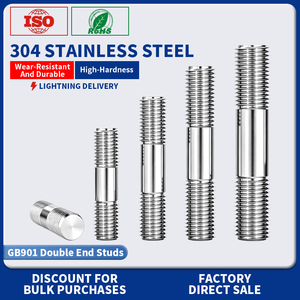
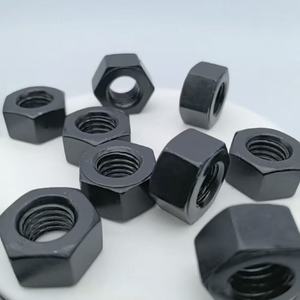
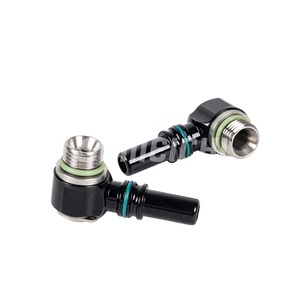
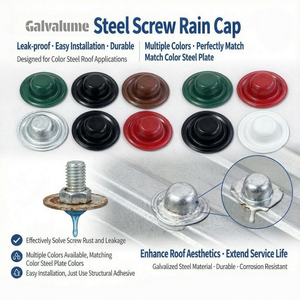
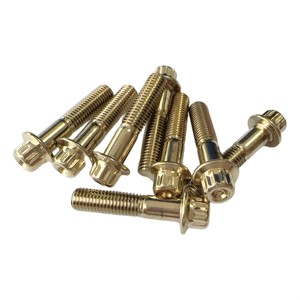
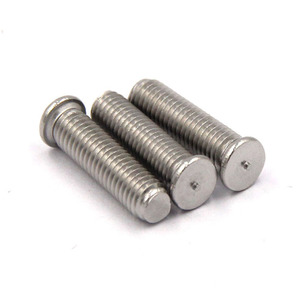
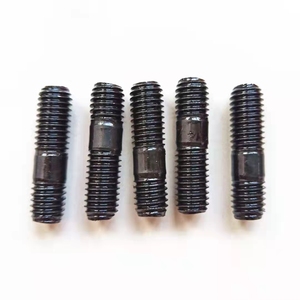
In high-pressure, high-temperature (HPHT) operational environments—such as steam turbine casings, petrochemical catalytic crackers, offshore flare towers, and nuclear power heat exchangers—fasteners are subject to hostile mechanical and thermal degradation mechanisms. Maintaining joint tightness requires thorough engineering control over creep deformation, thermal relaxation, microstructural phase shifts, and high-temperature oxidation.
Selecting fasteners for operational environments exceeding 400°C (752°F) requires balancing tensile strength against thermal expansion coefficients and long-term creep ductility. Standard carbon steels experience dynamic strain aging and rapid loss of yield strength above 370°C. Therefore, specialized alloy steels and nickel-base superalloys are required:
Under European Pressure Equipment Directive (PED) 2014/68/EU, fasteners utilized in pressure-retaining assemblies must comply with essential safety requirements (ESR Annex I, Section 4). Our manufacturing facilities undergo rigorous audits to issue Particular Material Appraisals (PMA) and certified EN 10204 Type 3.1 chemical and mechanical inspection documents.
The matrix below provides engineers and procurement directors with precise performance metrics across industry-standard high-temperature materials:
| Alloy Specification | Material Type | Max Temp Limit (°C / °F) | Min Tensile Strength (MPa) | Creep Rupture Resistance | Primary Industrial Applications |
|---|---|---|---|---|---|
| ASTM A193 B7 | AISI 4140 Cr-Mo Steel | 425°C / 797°F | 860 MPa (125 ksi) | Moderate | Refinery Piping, Standard ASME Flanges |
| ASTM A193 B16 | Cr-Mo-V Alloy Steel | 540°C / 1004°F | 860 MPa (125 ksi) | High | High-Pressure Steam Boilers & Turbines |
| ASTM A193 B8M (Cl. 2) | AISI 316 Strain Hardened | 580°C / 1076°F | 760 MPa (110 ksi) | Moderate-High | Chemical Processing & Marine Flanges |
| ASTM A453 Gr. 660 | A286 Fe-Ni-Cr Superalloy | 700°C / 1292°F | 895 MPa (130 ksi) | Very High | Gas Turbines, Jet Engines, Power Plants |
| Inconel 718 (N07718) | Ni-Cr Precipitation Hardened | 704°C / 1300°F | 1240 MPa (180 ksi) | Extreme | Nuclear Reactors, Aerospace Thermal Shields |
| Inconel 625 (N06625) | Ni-Cr-Mo Solution Annealed | 982°C / 1800°F | 830 MPa (120 ksi) | Extreme (Anti-Oxidizing) | Waste Incineration, Chemical Reactors |
As global industries transition toward hydrogen combustion, supercritical CO2 power generation, and ultra-deepwater oil extraction, fastener procurement protocols are evolving rapidly.
Traditional cadmium and silver plating are being phased out due to REACH and RoHS environmental directives. Future procurement prioritizes multi-layer PTFE/Xylan 1424 coatings, electro-deposited Zinc-Nickel (Zn-Ni), and micro-layered ceramic coatings that prevent high-temperature thread galling up to 850°C while offering superior corrosion resistance.
Enterprise EPC contractors now demand digital traceability. Procurement contracts increasingly specify Direct Part Marking (DPM) or embedded micro-RFID tags on stud bolt heads. This allows field technicians to instantaneously verify heat numbers, mill test certificates (MTCs), and torque limits using handheld mobile devices.
With green hydrogen production and ammonia co-firing plants expanding globally, fasteners face combined risks of high-temperature hydrogen attack (HTHA) and hydrogen embrittlement. B2B buyers are shifting from conventional low-alloy steels to low-magnetic permeability Nickel Superalloys (Inconel 718 and Hastelloy C276) for extreme environment protection.
Our manufacturing complex combines automated hot forging, precision CNC thread rolling, and in-house heat treating facilities to produce fasteners that exceed international quality benchmarks.
Roll-threaded stud bolts feature continuous grain flow, yielding up to 30% higher fatigue resistance compared to cut threads, preventing fatigue failures under dynamic load cycling.
Controlled-atmosphere quenching and tempering furnaces ensure homogenous grain refinement and precise hardness compliance across batch lots, meeting strict ASTM A193 and ISO 898-1 standards.
Equipped with Optical Emission Spectrometers (OES) for PMI chemical verification, hydraulic tensile machines, Charpy impact testers (-196°C to +20°C), and ultrasonic flaw detectors.
Our fasteners are produced strictly in accordance with global dimensional and engineering standards:
Technical guidance for engineering departments and commercial procurement teams regarding high-temperature fastener selection, compliance, and ordering.
Every shipment of CE-certified fasteners includes an EN 10204 Type 3.1 Inspection Certificate detailing raw material heat identification, melt source, chemical composition verified via Optical Emission Spectroscopy (OES), room-temperature and elevated-temperature tensile testing, yield strength, elongation, area reduction, surface hardness (HBW/HRC), and impact testing (Charpy V-Notch). For critical pressure applications under PED 2014/68/EU, Type 3.2 certificates co-validated by an independent notified body (TÜV, DNV, Lloyd's Register) are available upon request.
While both ASTM A193 Grade B7 (AISI 4140 Cr-Mo) and Grade B16 (Cr-Mo-V) are chromium-molybdenum alloy steels, Grade B16 contains added Vanadium (0.25-0.35%) and higher Aluminum controls. Vanadium forms fine vanadium carbide dispersions within the martensitic matrix, which significantly increases resistance to stress relaxation and creep deformation at elevated temperatures. Grade B7 is suitable up to 425°C (800°F), whereas Grade B16 maintains high mechanical load capacity up to 540°C (1000°F), making B16 the preferred choice for high-pressure power generation steam turbines.
Stainless steel and nickel-alloy fasteners are susceptible to thread galling during assembly and thermal cycling. For operations up to 260°C, fluoropolymer coatings like PTFE / Xylan 1424 provide low friction coefficients (µ = 0.06 to 0.08) and consistent torque-tension relationships. For higher operating temperatures (up to 850°C), inorganic ceramic coatings, high-purity micro-fine copper or nickel antiseize pastes, electroplated Zinc-Nickel (Zn-Ni), or silver plating (AMS 2410) are applied to insulate mating threads and prevent solid-state cold welding.
Class 1 fasteners are carbide solution treated (annealed), yielding excellent corrosion resistance and non-magnetic characteristics, but lower tensile strength (minimum 515 MPa / 75 ksi). Class 2 fasteners undergo strain hardening (cold working) following carbide solution treatment, which significantly increases minimum tensile strength up to 760 MPa (110 ksi) for sizes up to 3/4 inch. Class 2 is specified when higher bolt preloads are required to maintain joint seal integrity under dynamic pressure pulses.
In environments containing wet Hydrogen Sulfide (H2S), high-strength fasteners are susceptible to Sulfide Stress Cracking (SSC). NACE MR0175 mandates strict hardness ceilings to mitigate cracking risks. For instance, ASTM A193 B7M studs and ASTM A194 2HM heavy hex nuts are specifically tempered to achieve a maximum hardness limit of 22 HRC (237 HBW). Every batch of B7M/2HM fasteners undergoes 100% hardness testing to guarantee compliance with sour service safety requirements.
Yes. Our precision machine shop produces custom-engineered fasteners, including DIN 2510 necked-down (waisted) flange studs, heavy 12-point flange bolts, metric fine-thread rods, socket cap screws, custom anchor bolts, and specialized spherical washer sets. Custom manufacturing capabilities support thread pitches up to M100 / 4-inch nominal diameter, with tight dimensional tolerances controlled via CNC turning and threading.
Send your project specification, engineering drawings, or RFQ details to our technical sales team. Receive competitive factory-direct pricing, material test reports, and estimated lead times within 24 hours.