
Precision-engineered fasteners compliant with ASTM, ASME, DIN, and NORSOK M-650 standards for extreme subsea and platform environments.
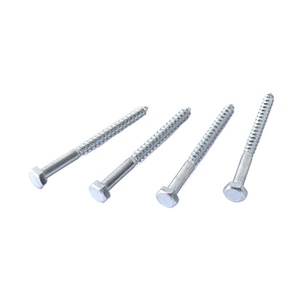
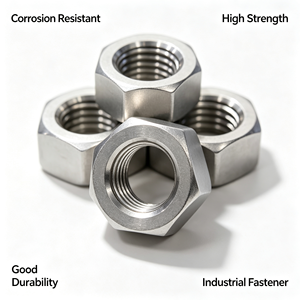
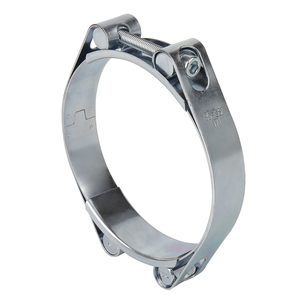
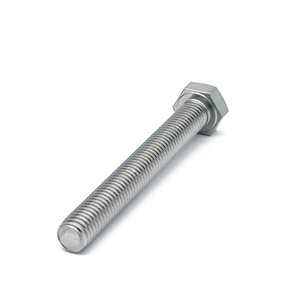
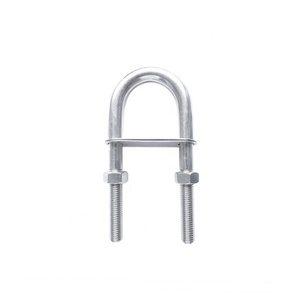
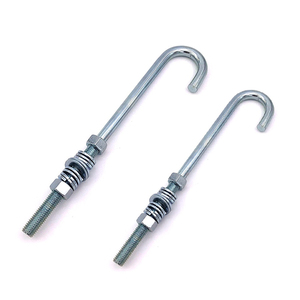
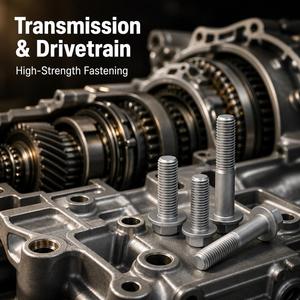
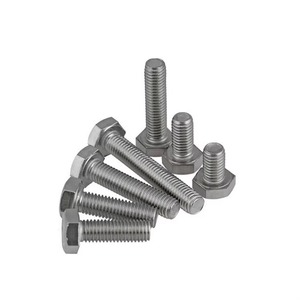
Offshore oil rigs, semi-submersible drilling platforms, Floating Production Storage and Offloading (FPSO) units, and fixed jacket structures operate under some of the most aggressive environmental stressors on the planet. Mechanical fasteners installed on offshore platforms face simultaneous exposure to hyper-saline ocean spray, extreme mechanical fatigue induced by heavy wave action, cyclic thermal expansion, high structural tension, and severe chemical attack from sour gas (H2S) environments.
In offshore structural engineering, fastener integrity is paramount. A single bolting failure on a high-pressure subsea blowout preventer (BOP), structural riser clamp, or deck-mounted crane foundation can precipitate catastrophic catastrophic environmental spills, structural collapse, and millions of dollars in unscheduled downtime. As a premier CE certified offshore rig fasteners manufacturer and exporter, our metallurgical engineering processes are calibrated to comply with rigorous international maritime and energy standards, including DNV-ST-F101, NORSOK M-650, API 20E (BSL-1, BSL-2, BSL-3), and ASME Section VIII directives.
Engineering Information Gain: Unlike standard marine fasteners, true offshore rig grade bolting requires strict control over microstructural phase balances (e.g., 40–60% ferrite-austenite ratio in Super Duplex 2507) and vacuum-melted high-alloy chemistry to completely eliminate intermetallic phase precipitation such as Sigma (σ) and Chi (χ) phases during thermal processing.
Building upon decades of metallurgical manufacturing heritage headquartered in major industrial manufacturing hubs with comprehensive export networks spanning over 24 countries (including the UAE, Saudi Arabia, Qatar, Kuwait, US, UK, Germany, and Australia), our manufacturing complex integrates advanced hot forging, precision CNC thread rolling, controlled-atmosphere heat treatment, and specialized surface coating operations under a single roof.
Our quality assurance management system operates under ISO 9001:2015 accreditation, reinforced by European Pressure Equipment Directive (PED 2014/68/EU) CE certifications. Every batch of offshore fasteners undergoes comprehensive mechanical, non-destructive, and chemical testing:
100% XRF optical emission spectrometry verification on all raw bars and finished fasteners to ensure exact elemental alloy compliance before dispatch.
Continuous ASTM B117 neutral salt spray test monitoring exceeding 5,000 hours for multi-layer Dacromet, PTFE/Xylan, and Zinc-Nickel protective systems.
Full-scale room temperature and cryogenic Charpy V-notch impact testing (-196°C), elevated temperature tensile testing, and micro-hardness profiling.
Selecting the correct fastener grade requires balancing tensile yield strength against critical pitting corrosion resistance. The table below details our primary offshore rig fastener material offerings, manufactured precisely to imperial (UNC/UN8) and metric ISO thread standards:
| Material Grade | UNS / Alloy Standard | Yield Strength (Min. ksi / MPa) | PREN Rating | Primary Offshore Application |
|---|---|---|---|---|
| Super Duplex 2507 | UNS S32750 / EN 1.4410 | 80 ksi / 550 MPa | ≥ 42.0 | Subsea manifolds, seawater pumps, riser clamps, FPSO topsides |
| Duplex 2205 | UNS S31803 / S32205 | 65 ksi / 450 MPa | ≥ 35.0 | Deck structures, marine engine mounts, coastal piping flanges |
| Stainless Steel 316 / A4-80 | AISI 316 / EN 1.4401 | 116 ksi / 800 MPa (Cold worked) | 23.0 - 25.0 | Rigging hardware, light-duty platform clamps, cable tray fixations |
| ASTM A193 B7 / A194 2H | AISI 4140 Cr-Mo Steel | 105 ksi / 725 MPa | N/A (Coated) | High-pressure, high-temperature process flange bolting (PTFE/Dacromet) |
| Inconel 718 / 625 | UNS N07718 / UNS N06625 | 150 ksi / 1034 MPa (Aged) | ≥ 48.0 | Extreme sour gas (H2S) subsea wellheads & downhole valves |
The global offshore sector is undergoing a profound paradigm shift driven by deepwater oil exploration, the rapid deployment of offshore floating wind platforms, and stringent environmental sustainability regulations. Procurement directors and EPC contractors must navigate several critical emerging trends when specifying structural rig fasteners:
Traditional manual torque-wrench inspection of platform structural joints is increasingly being augmented by digitalized, smart-bolting technologies. Future-ready offshore rigs are adopting fasteners embedded with micro-ultrasonic transducers or piezo-resistive thin films that broadcast real-time residual bolt tension data to platform asset integrity systems. This reduces manual maintenance risk in dangerous splash zones and prevents joint relaxation under dynamic wave loading.
Legacy marine specifications frequently demanded electroplated cadmium coatings due to their superior sacrificial protection and low coefficient of friction. However, environmental directives such as REACH and RoHS have phased out cadmium usage worldwide. Modern procurement strategies heavily prioritize multi-layer chromate-free Dacromet, Geomet, and PTFE/Xylan fluoropolymer barrier coatings capable of enduring 5,000+ hours of continuous salt spray without suffering cathodic disbondment or hydrogen embrittlement.
As offshore exploration pushes past depths of 2,000 meters into high-pressure high-temperature (HPHT) reservoirs, standard 316L stainless steel proves wholly inadequate against localized pitting and crevice corrosion. Super Duplex (UNS S32750/S32760) and Nickel-Chromium superalloys (Inconel 718, Hastelloy C276) have become the default material specification for all critical subsea fixation hardware, guaranteeing a minimum operational service life of 30+ years without maintenance.
In offshore rig construction, the raw alloy composition represents only half of the corrosion prevention equation. Surface coating technologies dictate friction control during tightening and shield the underlying substrate from aggressive marine oxygen cells:
1. Multi-Layer Dacromet / Geomet Flake Coatings: Combining aluminum and zinc flakes bound by inorganic chromate-free matrices, Dacromet offers exceptional thin-film sacrificial corrosion protection without introducing atomic hydrogen during plating (virtually eliminating Hydrogen Embrittlement risk on high-tensile Grade B7 bolts).
2. PTFE & Fluoropolymer (Xylan 1014/1424): Formulated specifically for stud bolts and heavy hex nuts installed on offshore pressure vessels. The extremely low coefficient of friction (µ = 0.06 to 0.08) ensures precise torque-to-tension conversion, enabling uniform gasket seating and preventing thread galling during subsea maintenance operations.
3. Hot-Dip Galvanizing (HDG - ASTM A153): Provides heavy zinc sacrificial coating thickness (> 85 µm) for heavy structural anchor bolts embedded in platform concrete caissons or splash-zone jacket legs.
As an established manufacturer and international exporter, our technical sales engineers collaborate directly with client design teams, EPC project managers, and marine classification society surveyors (DNV, ABS, Lloyd's Register, Bureau Veritas). We manage the complete supply cycle—from raw billet sourcing from accredited steel mills with full heat number traceability to seaworthy export packaging designed to survive rough ocean transit.
Our export documentation package included with every shipment comprises:
A CE mark verifies that the fastener meets European Construction Products Regulation (CPR 305/2011) and Pressure Equipment Directive (PED 2014/68/EU) safety standards. It confirms full traceability, audited factory production control (FPC), and compliance with harmonized standards like EN 14399 (high-strength structural bolting) or EN 10269 (steels for pressure equipment).
AISI 316 has a Pitting Resistance Equivalent Number (PREN) of roughly 24, rendering it susceptible to pitting and chloride stress corrosion cracking (SCC) in oxygen-rich, warm marine splash zones. Super Duplex 2507 has a PREN exceeding 42 and twice the yield strength of 316, preventing premature catastrophic failure under cyclic wave impact.
Thread galling occurs when friction welds micro-asperities on stainless steel or alloy threads under load. We mitigate this through precision CNC thread rolling (providing smooth surface finishes < Ra 0.8 µm), application of anti-galling PTFE/Xylan fluoropolymer coatings, and supplying companion heavy hex nuts with complementary hardness differentials.
NACE MR0175 sets strict material hardness limits and microstructural controls for metals exposed to hydrogen sulfide (H2S) in oil and gas production. Compliance guarantees that fasteners will not fail via sulfide stress cracking (SSC) in sour gas rig operations.
Yes. Dacromet’s zinc-aluminum flake matrix exhibits minimal galvanic potential difference when in contact with hot-dip galvanized structural steel, preventing accelerated bimetallic corrosion while maintaining long-term barrier protection.
Standard fast-track manufacturing lead times range between 2 to 4 weeks depending on raw material grade and coating specifications. All items are packed in heavy-duty wooden cases lined with vapor corrosion inhibitor (VCI) bags and steel strapping for safe container shipping.
Send your project datasheets, MTO (Material Take-Off) lists, or custom manufacturing drawings to our engineering export team today for instant technical appraisal and competitive pricing.
Send an Inquiry