
Engineered for extreme hydrostatic pressure, localized corrosion protection, and critical fatigue tolerance in subsea and offshore environments.
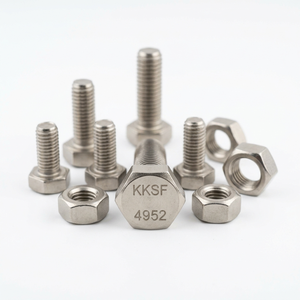
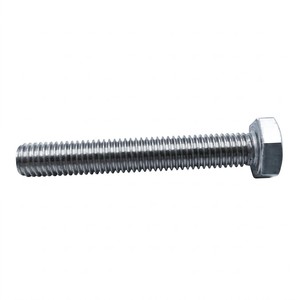
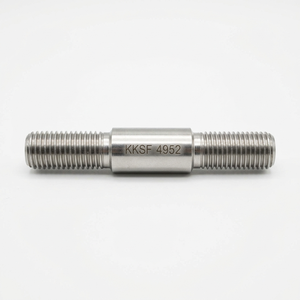
Subsea infrastructures operates under some of the most aggressive environmental stress vectors known to structural engineering. Fasteners deployed in subsea Christmas trees, manifold assemblies, blowout preventers (BOPs), underwater pipelines, and floating offshore wind turbine moorings face simultaneously coupled degradation mechanisms: high hydrostatic pressure, dynamic hydrodynamic load fatigue, bio-fouling, localized crevice pitting corrosion, and hydrogen embrittlement caused by cathodic protection systems (CP-HISC).
As a specialized CE Certified Subsea Fasteners Manufacturer, our factory integrates advanced metallurgy, precision cold heading, thread rolling post-heat-treatment, and specialized barrier coatings to exceed API 20F (BSL-1, BSL-2, BSL-3) and NORSOK M-650 standards. The structural integrity of subsea mechanical joints relies entirely on maintaining targeted preload stress over decades without maintenance accessibility. This whitepaper establishes the material criteria, quality assurance frameworks, and future procurement vectors governing subsea fastener sourcing.
Selecting the optimal material grade for subsea mechanical bolting requires evaluating the Pitting Resistance Equivalent Number (PREN = %Cr + 3.3%Mo + 16%N), yield strength under low ambient temperatures, and galvanic compatibility. Below is our engineering benchmark for subsea fastener specification:
| Material Class | Grade / Alloy | UNS / EN Standard | PREN Rating | Key Subsea Applications |
|---|---|---|---|---|
| Super Duplex Steel | UNS S32750 / 2507 | EN 1.4410 | ≥ 42.0 | Subsea manifolds, flange bolting, seawater injection systems. High resistance to SCC. |
| Nickel-Based Alloys | Inconel 625 / 718 | UNS N06625 / N07718 | ≥ 45.0 | Deepwater riser connections, high-temperature/high-pressure (HPHT) subsea wells. |
| Austenitic Stainless | AISI 316L / A4-80 | EN 1.4404 / DIN 975 | 23.0 - 25.0 | Shallow depth marine rigging, structural U-bolts, cable clamps, subsea control pods. |
| Alloy High Tensile | ASTM A193 B7 / A320 L7 | AISI 4140 / 4142 | N/A (Coated) | Subsea flanges utilizing Xylan/PTFE fluoropolymer barrier coatings against marine corrosion. |
| Specialty Alloys | Nimonic / Hastelloy C276 | UNS N10276 / 2.4952 | ≥ 68.0 | Extremely hostile chemical injection valves and subsea wellhead seals. |
Built on strict ISO 9001 and CE compliance, our manufacturing infrastructure guarantees full physical and chemical traceability from billet to batch delivery.
Our subsea structural bolts and studs carry full CE Certification adhering to EN 14399 and EN 15048 structural bolting assemblies, alongside Pressure Equipment Directive (PED 2014/68/EU) approval for pressurized subsea piping.
Every shipment is accompanied by original Mill Test Reports (MTR) detailing chemical analysis, positive material identification (PMI), tensile testing, Charpy V-notch impact values at sub-zero temperatures, and heat number laser etching.
We operate in-house automated coating lines specializing in Xylan 1424/1014, PTFE, Hot-Dip Galvanizing (HDG per ASTM A153), and multi-layer Fluoropolymer coatings tested to 3,000+ hours of continuous ASTM B117 salt spray exposure.
As offshore operations transition toward deeper waters (>3,000 meters) and integrate floating offshore wind (FOW) platforms, procurement strategies for subsea structural hardware are undergoing radical shifts. Procurement officers and engineering leads must anticipate several key structural trends:
Cathodic Protection Induced Hydrogen Stress Cracking (CP-HISC) remains a dominant failure mode in subsea high-strength steels. Sourcing trends favor specialized heat treatment protocols for Super Duplex (UNS S32750) and Inconel 718 to control phase balances (40-60% ferrite/austenite ratio) and micro-hardness levels under 34 HRC to resist free hydrogen ingress.
Subsea asset operators are demanding digital twin compatibility. Modern subsea fasteners are increasingly specified with direct micro-matrix laser engraving or subsea ROV-readable RFID tags to log installation torque, tension history, and bolt fatigue cycles over a 30-year design life.
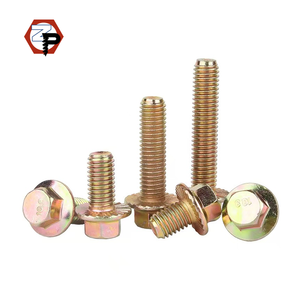
Deepwater installations rely exclusively on Remotely Operated Vehicles (ROVs). Procurement specs now mandate custom bolt heads (such as hex flange serrated bolts or modified drive geometry) optimized for robotic torque tools, reducing underwater subsea intervention time and operational expenditures (OPEX).
Our CE certified subsea studs, heavy hex nuts, threaded rods, and custom flange bolts are routinely deployed across major maritime sector projects worldwide:
Used extensively in subsea Christmas trees, wellhead flanges, manifold piping modules, subsea valves, and riser clamp systems requiring API 20F BSL-2 or BSL-3 qualified bolting.
Critical structural fasteners for semi-submersible hull joints, mooring line shackles, dynamic cable anchor points, and underwater splash zone structural attachments.
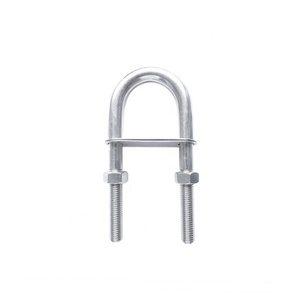
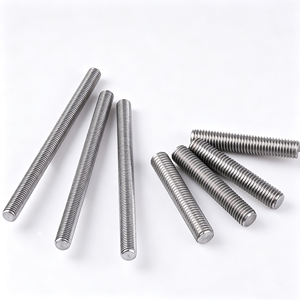
Heavy duty DIN 975 stud rods, U-bolts, and hex nuts used in spool pieces, pipeline end manifolds (PLEMs), pipeline end terminations (PLETs), and subsea hot tap clamps.
High-molybdenum AISI 316L and Super Duplex fasteners for subsea intake strainers, wave energy converters, and coastal seawater reverse osmosis (SWRO) intake lines.
Partner directly with an ISO & CE certified manufacturer. Get detailed technical datasheets, PREN calculations, material mill certificates, and competitive export pricing for your subsea project.