
Explore our CE-compliant, engineering-grade anchoring hardware manufactured for structural steel framing, heavy machinery fixation, subsea infrastructure, and high-load civil engineering construction.
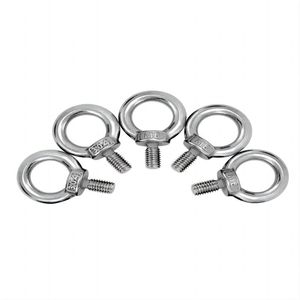
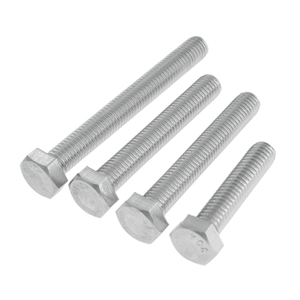
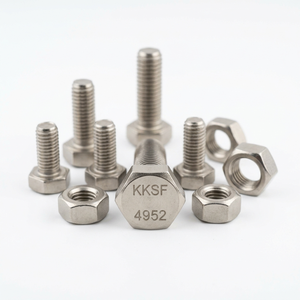
In modern structural engineering, post-installed mechanical anchoring systems form the critical link between load-bearing structural steel members and reinforced concrete foundations. Among torque-controlled expansion anchors, CE Certified Wedge Anchor Bolts (through-bolts) are specified for heavy-duty structural fixings under static, quasi-static, and seismic loading conditions.
As a leading original equipment manufacturer (OEM) and global exporter, our manufacturing facility operates in full compliance with European Assessment Documents (EAD 330232-00-0601) and EN 1992-4 (Eurocode 2 Part 4: Design of fastenings for use in concrete). This technical guide breaks down the physics of mechanical expansion, material selection, critical edge distance calculations, and future procurement standards for structural consulting engineers, procurement directors, and EPC contractors.
A wedge anchor bolt achieves its load resistance through controlled mechanical expansion within a cylindrical drilled hole in concrete. The anchor assembly consists of four precision-machined elements: a cold-formed threaded steel rod with a tapered conical end, a three-piece 360-degree expansion clip (sleeve), a heavy hex nut, and a hardened flat washer.
When specified tightening torque ($T_{inst}$) is applied to the hex nut during installation:
Allows direct drilling through the fixture plate into concrete, eliminating alignment errors and speeding installation up to 40%.
Tested for cracked and non-cracked concrete (C20/25 to C50/60) with guaranteed performance under tension and shear stress.
Choosing the proper wedge anchor grade depends on ambient atmospheric corrosion rates (ISO 9223 categories C1 to CX), embedment depth ($h_{ef}$), dynamic impact requirements, and base material compressive strength.
| Material / Grade Standard | Surface Treatment / Coating | Tensile Strength ($f_{uk}$) | Yield Strength ($f_{yk}$) | Typical Application Environments |
|---|---|---|---|---|
| Carbon Steel Grade 5.8 / 8.8 | Electro-Zinc Plated (ISO 4042 ≥ 5μm) | 500 - 800 MPa | 400 - 640 MPa | Dry indoor facilities, HVAC supports, interior steel column bases |
| Hot-Dip Galvanized (HDG) | ASTM A153 / EN ISO 1461 (≥ 45μm) | 580 - 800 MPa | 450 - 640 MPa | Outdoor industrial yards, highway guardrails, power sub-stations |
| Stainless Steel A2 (AISI 304) | Passivated Clean Surface | 700 MPa | 450 MPa | Humid indoor environments, food processing plants, architectural facades |
| Stainless Steel A4 (AISI 316) | Acid Passivated (Mo ≥ 2.0%) | 700 - 800 MPa | 450 - 600 MPa | Offshore oil rigs, coastal marine structures, chemical processing plants |
| Super Duplex Steel (UNS S32750) | Electropolished (PREN > 40) | 850 - 1000 MPa | 650 MPa | Desalination plants, subsea manifold anchoring, extreme chloride immersion |
| Zinc-Flake Coated Steel | Geomet / Dacromet (1500h Salt Spray) | 800 MPa | 640 MPa | Automotive manufacturing lines, solar tracker foundations, high-humidity zones |
Under EN 1992-4 design methodologies, calculating characteristic load capacity requires analyzing four primary failure modes for post-installed mechanical anchors:
Occurs when applied tensile load exceeds the ultimate tensile resistance of the bolt stud core. Prevented by selecting high-tensile carbon steel (Grade 8.8) or cold-worked A4 stainless steel.
Forms a 90-degree conical fracture envelope starting from the expansion clip depth ($h_{ef}$). Resistance is directly proportional to $f_{ck,cube}^{0.5}$ and effective embedment depth $h_{ef}^{1.5}$.
Occurs if the expansion sleeve fails to bite sufficiently into soft or micro-cracked concrete matrix, causing the tapered mandrel to slip through the clip without expanding further.
Improper spacing ($s < s_{cr,N}$) or installing anchors too close to an unsupported slab edge ($c < c_{cr,N}$) reduces characteristic load capacity due to localized stress concentration.
The global industrial anchor bolt market is undergoing rapid transformation driven by stringent seismic building regulations, sustainable manufacturing mandates, and digital construction technology.
In earthquake-prone regions across Europe, the Middle East, and North America, standard non-cracked concrete anchors are being replaced by Seismic C1 and C2 certified wedge anchors. Category C2 requires rigorous cyclic tension and shear testing during dynamic crack opening up to 0.8 mm, ensuring critical connection integrity during seismic events.
Global EPC contracts increasingly require Environmental Product Declarations (EPDs) verified under ISO 14025. Procurement officers now evaluate scope 1, 2, and 3 carbon emissions. Our factory utilizes recycled alloy scrap, energy-efficient cold forging machinery, and eco-friendly trivalent passivation to lower embodied carbon per unit.
Improper torque setting accounts for up to 65% of mechanical anchor field failures. Next-generation installations rely on adaptive cordless impact tools with integrated torque sensors that automatically stop when reaching target installation torque ($T_{inst}$), eliminating operator error on massive infrastructure jobsites.
Traditional hot-dip galvanizing is facing competition from thin-film Zinc-Aluminum Flake coatings (EN ISO 10683). Delivering 1500+ hours of neutral salt spray resistance without hydrogen embrittlement risk, zinc-flake technology is becoming the standard for marine solar farms and coastal rail networks.
As an ISO 9001:2015 certified wedge anchor bolt factory and exporter, we provide international distributors, structural steel fabricators, and engineering firms with end-to-end quality guarantees and full material traceability.
Every batch of raw wire rod undergoes Spectro chemical composition analysis and mechanical tensile verification. Shipments include full 3.1 mill test certificates linked to heat numbers stamped directly on the anchor head.
Our QC laboratory conducts continuous pull-out testing in C20/25 concrete blocks, micro-hardness profiles, optical 3D thread measurements, and neutral salt spray testing (ASTM B117) to guarantee product durability.
We support customized anchor lengths, special thread pitches, laser branding, private label packaging, and export logistics (FOB, CIF, DDP) to over 24 countries with low MOQ requirements.
Adhering to correct installation steps is imperative. Deviations in hole diameter, cleaning, or torque application dramatically reduce structural pull-out safety margins.
Drill a perpendicular hole using a certified carbide drill bit conforming to DIN 8035. Ensure nominal drill diameter ($d_0$) matches the anchor diameter exactly. Drill to specified embedment depth ($h_1$).
Clean dust and concrete debris from the hole using a compressed air pump (min 4 blows), followed by wire brush cleaning (min 4 strokes), and a final air pump cycle. Residual dust reduces friction lock by up to 40%.
Insert the wedge anchor through the fixture into the hole until the washer rests against the fixture plate. Drive gently with a hammer if needed. Apply specified tightening torque ($T_{inst}$) using a calibrated torque wrench.
Need customized wedge anchor bolt dimensions, ETA compliance certificates, or volume export pricing for your upcoming construction project? Contact our structural engineering sales team today.
Get Catalog