
Explore our heavy-duty threaded stud bolts, hex nuts, and specialized flange fasteners manufactured to rigorous international standards.
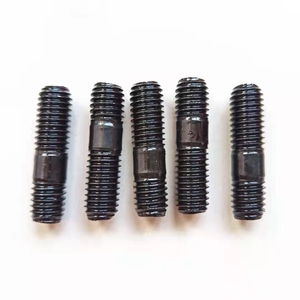
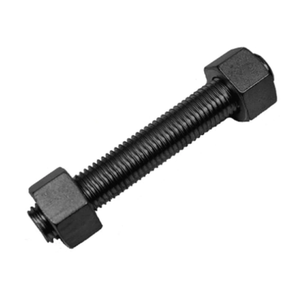
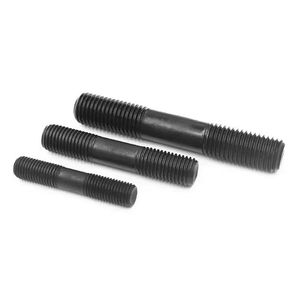
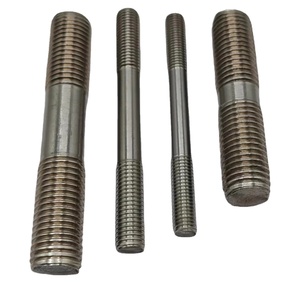
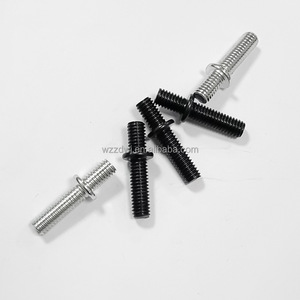
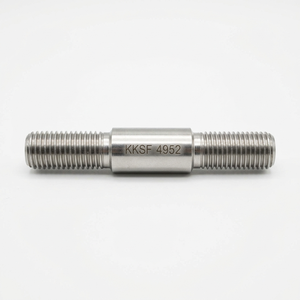
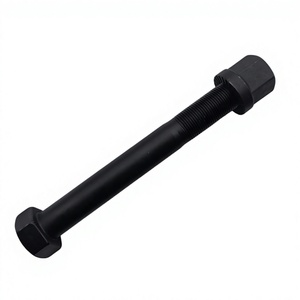
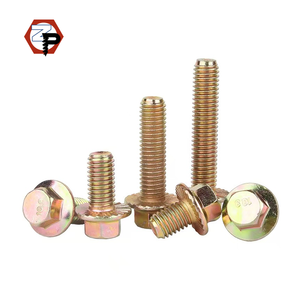
In high-pressure industrial fluid handling systems, pressure vessel connections, and extreme-temperature process loops, the structural integrity of a flanged joint relies entirely on the quality and performance of its stud bolts. Flange stud bolts (often paired with heavy hex nuts) are engineered to maintain predefined clamping loads across fluctuating thermal cycles, violent mechanical vibrations, and aggressive chemical environments. As China’s premier manufacturer and exporter of industrial fasteners, our enterprise delivers high-precision stud bolt solutions designed to meet stringent global standards including ASTM, ASME, DIN, ISO, and GB specifications.
Unlike standard machine hex bolts, flange stud bolts feature full-length continuous threads or double-end threaded studs with an unthreaded center shank. This design optimizes stress distribution across the entire body of the fastener, eliminating stress concentration points inherent in head-to-shank transitions. Consequently, stud bolts resist fatigue failure and micro-yielding under severe pressure pulsations in oil refineries, offshore drilling platforms, chemical synthesis plants, and power generation facilities.
Key Engineering Insight: Achieving a leak-free flanged joint requires precise bolt preload. Thread friction, coating uniform thickness, and metallurgical homogeneity directly determine the conversion of applied tightening torque into effective clamp force across the gasket face.
The choice of material for flange stud bolts dictates their yield strength, impact toughness at sub-zero temperatures, and corrosion resistance against sour gas ($H_2S$), chlorides, and high-temperature oxidation. Our manufacturing facility processes carbon steels, alloy steels, austenitic stainless steels, duplex alloys, and nickel-based superalloys.
Chromium-molybdenum alloy steel is the industry benchmark for medium-to-high temperature and high-pressure pressure vessel bolting:
For chemical process lines, marine environments, and food/pharmaceutical applications where iron contamination and oxide flaking are intolerable:
In extreme thermal environments exceeding 600°C or highly aggressive acidic services, nickel-based superalloys (such as Inconel 718, Inconel 625, and Hastelloy C276) prevent creep elongation, galling, and catastrophic failure.
| Material Specification | Tensile Strength (Min) | Yield Strength (Min) | Temperature Range | Primary Industry Application |
|---|---|---|---|---|
| ASTM A193 B7 | 125 ksi (860 MPa) | 105 ksi (720 MPa) | -29°C to 425°C | Oil Refining, Gas Pipelines, Pressure Vessels |
| ASTM A193 B7M | 100 ksi (690 MPa) | 80 ksi (550 MPa) | -29°C to 425°C | Sour Gas (H2S), NACE MR0175 Sour Service |
| ASTM A193 B16 | 125 ksi (860 MPa) | 105 ksi (720 MPa) | -29°C to 525°C | High-Temp Power Steam Lines, Boilers |
| ASTM A320 L7 | 125 ksi (860 MPa) | 105 ksi (720 MPa) | -101°C to 345°C | Cryogenic LNG Terminals, Low-Temp Services |
| ASTM A193 B8M Cl.2 | 110 ksi (760 MPa) | 95 ksi (655 MPa) | -196°C to 538°C | Chemical Plants, Offshore Marine Flanges |
| Duplex UNS S32205 | 95 ksi (655 MPa) | 65 ksi (450 MPa) | -50°C to 300°C | Desalination, Marine Chloride Pipelines |
| Inconel 718 (UNS N07718) | 185 ksi (1275 MPa) | 150 ksi (1034 MPa) | -250°C to 650°C | Turbines, Subsea Wellheads, Aerospace |
Thread galling and atmospheric corrosion represent the leading causes of bolted joint failure and excessive maintenance downtime during plant turnarounds. To solve these field challenges, our enterprise integrates advanced surface finishing technologies tailored to client operational parameters:
Coating flange stud bolts with PTFE (Polytetrafluoroethylene) or Xylan (such as Xylan 1014 / 1424 blue or green coatings) provides an ultra-low coefficient of friction ($\mu \approx 0.06 - 0.08$). This eliminates thread galling during high-torque hydraulic tensioning, ensures precise torque-to-tension conversion, and delivers exceptional salt spray corrosion resistance exceeding 1,500 to 3,000 hours under ASTM B117 testing.
Hot-dip galvanized stud bolts feature a heavy sacrificial zinc layer (typically 45–65 microns) fused metallurgically to the base steel. Ideal for structural outdoor flanges, power transmission towers, and mining infrastructure, HDG delivers decades of maintenance-free cathodic protection in harsh atmospheric environments.
Offering a high-performance alternative to toxic cadmium plating, Zinc-Nickel alloy electroplating (12–15% Ni content) provides robust scratch resistance, zero hydrogen embrittlement risk when properly stress-relieved, and over 1,000 hours of resistance to red rust in marine environment tests.
As global engineering, procurement, and construction (EPC) contractors shift toward sustainable infrastructure, smart manufacturing, and zero-downtime maintenance models, the international market for flange stud bolts is undergoing three major evolutionary transformations:
Global climate targets are accelerating demand for decarbonized industrial supply chains. Enterprise buyers in Europe, North America, and Australia are increasingly auditing the carbon footprint of raw fastener rod stock. China's top fastener suppliers are adopting electric arc furnace (EAF) steel billets produced with renewable energy, complemented by eco-friendly water-based coating lines that minimize VOC emissions.
Legacy batch sampling methods are being replaced by automated, multi-camera laser optical sorting machines. These systems measure 100% of manufactured stud bolts for pitch diameter accuracy, thread angle integrity, overall length tolerances, and surface micro-cracks at production speeds exceeding 300 pieces per minute. Zero-defect supply chains are becoming mandatory for critical nuclear and subsea applications.
Digitalization is redefining fastener procurement. Leading OEM manufacturers now laser-etch unique QR codes or heat codes directly onto the ends of large-diameter flange stud bolts. Scanning the code provides instant field access to mill test certificates (MTC compliant with EN 10204 3.1 or 3.2), chemical heat analysis, heat treatment time-temperature charts, and NDT inspection records, eliminating paper document loss on site.
Selecting the right manufacturing partner in China is essential for managing project risk, ensuring raw material purity, and maintaining tight construction schedules. Our state-of-the-art production facility combines vertical integration, advanced metallurgical testing, and deep engineering expertise:
Continuous mesh-belt and computer-controlled quenching/tempering furnaces guarantee precise tensile strength, hardness uniformity, and Charpy impact properties across every batch.
Cold and warm thread rolling technology forms smooth, continuous grain-flow threads without cutting metal fibers, improving fatigue life by over 300% compared to cut threads.
Every incoming steel bar and finished alloy fastener undergoes Positive Material Identification (PMI) using X-ray fluorescence (XRF) analyzers to prevent grade mix-ups.
Full material certification accompanies every order, detailing mechanical properties, chemical analysis, grain size, hardness distribution, and non-destructive testing reports.
Custom stud bolt geometry, non-standard thread pitches (UN, UNF, Metric pitch), center holes for hydraulic elongation measurement, and custom lengths made to order.
Seaworthy wooden box packaging, rust-inhibiting VCI oil coatings, thread protective plastic caps, and fast customs clearance serving over 24 industrial markets worldwide.
A flange stud bolt is a headless threaded rod designed to be secured with two heavy hex nuts on opposite sides of a flange joint. Unlike hex bolts, stud bolts provide continuous thread engagement, which eliminates stress concentration at the head-shank junction and allows for more uniform torque distribution during hydraulic bolt tensioning. Furthermore, stud bolts enable easier disassembly during field maintenance, even if one end experiences thread damage.
High-temperature flange stud bolts are primarily governed by ASTM A193 (covering grades such as B7, B7M, B8, B8M, and B16) paired with ASTM A194 heavy hex nuts (Grades 2H, 2HM, 8, 8M). Low-temperature and cryogenic applications are governed by ASTM A320 (Grades L7, L7M, L43) paired with ASTM A194 Grade 4 or Grade 7 nuts tested for sub-zero Charpy impact toughness down to -101°C.
PTFE (fluoropolymer) coating provides dual benefits: superior chemical resistance against salt spray, acids, and alkalis (exceeding 2,000 hours salt spray resistance), and an extremely low coefficient of friction ($\mu \approx 0.06-0.08$). This consistent friction coefficient prevents thread galling, reduces the torque needed to achieve design preload, and ensures clean breakout during maintenance turnarounds without burning or cutting off frozen nuts.
NACE MR0175 / ISO 15156 dictates material selection for equipment exposed to sour gas ($H_2S$) in oil and gas production to prevent Sulfide Stress Cracking (SSC). Compliant Grade B7M studs and 2HM nuts undergo special tempering heat treatment to strictly limit maximum hardness to 235 HBW (22 HRC). 100% of B7M studs must undergo hardness testing to verify compliance prior to deployment.
Every shipment is supplied with a comprehensive quality documentation package, including an EN 10204 3.1 Material Test Certificate detailing raw material heat numbers, chemical composition analysis, tensile/yield/elongation testing, hardness values, Charpy impact test results (where applicable), coating thickness measurement reports, dimensional inspection logs, and 100% PMI verification certificates.
Yes. Our engineering shop manufactures custom stud bolts with non-standard lengths, metric fine pitches, special thread profiles, center drilled holes for ultrasonic strain measurement, double-end step studs, and custom exotic alloy machining (Inconel, Monel, Hastelloy, Titanium) tailored to client technical drawings.
Connect directly with our senior metallurgical and fastener engineering team. Receive detailed pricing, technical specifications, and factory certification reports within 24 hours.