
Explore our precision-machined, high-strength bolting inventory tailored for petrochemical processing, offshore structures, marine engines, aerospace fixtures, and heavy industrial plant construction.
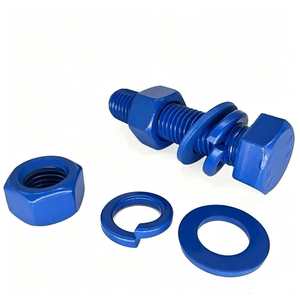
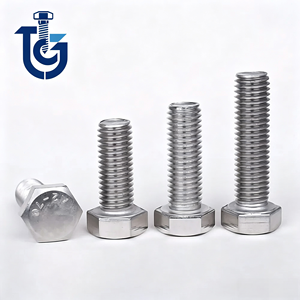
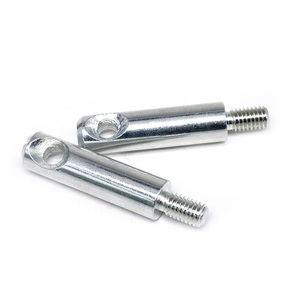
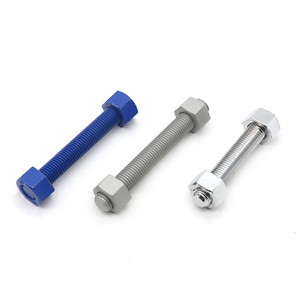
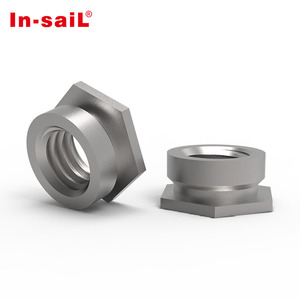
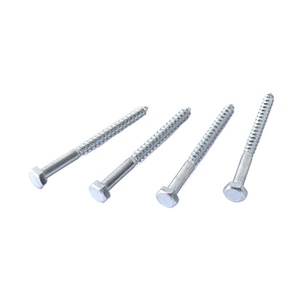
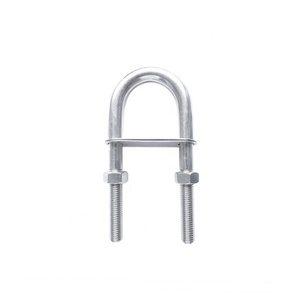
An authoritative technical analysis of property class 8.8 carbon steel structural fasteners, heat treatment transformation, mechanical performance boundaries, and global cross-standard equivalence.
In accordance with ISO 898-1 specifications, the property class designation "8.8" represents two fundamental mechanical parameters. The first digit "8" signifies a nominal tensile strength ($R_m$) of 800 MPa (N/mm²). The second digit "8" indicates that the yield strength ($R_{eL}$) or 0.2% non-proportional elongation proof stress ($R_{p0.2}$) is exactly 80% of the nominal tensile strength, resulting in a minimum yield threshold of 640 MPa. Achieving these mechanical metrics requires controlled medium-carbon steel chemistry (typically 0.25% to 0.55% Carbon content) modified with Manganese, Phosphorus, and Sulfur control, followed by continuous-mesh-belt liquid quenching and tempering heat treatment.
Grade 8.8 fasteners produced in our Chinese manufacturing hubs utilize fully killed, fine-grain steel rods (such as 1035, 10B21, 40Cr, or 35CrMo depending on diameter thresholds). Cold heading wire undergoes spheroidization annealing to ensure zero micro-cracking during high-speed cold deformation. Adding Boron (10B21 grade) enhances hardenability without compromising ductility, allowing complete martensitic transformation throughout the bolt core during oil quenching.
Thermal processing takes place in computer-controlled continuous atmosphere mesh belt furnaces. Bolts are heated above the upper critical temperature ($A_{c3}$ at ~860°C) to form homogeneous austenite, then rapidly quenched in temperature-stabilized polymer or synthetic oil baths to form full tempered martensite. Subsequent tempering at minimum 425°C relieves residual stresses while establishing the precise balance between 800 MPa tensile strength, 12% minimum elongation, and 27 Joules minimum Charpy V-notch impact toughness at -20°C.
| Property Parameter | Property Class 8.8 (ISO 898-1) | ASTM A325 (Structural) | SAE J429 Grade 5 | Property Class 10.9 (Ref.) |
|---|---|---|---|---|
| Nominal Tensile Strength ($R_m$) | 800 – 1000 MPa (116 – 145 ksi) | 830 MPa (120 ksi) min. | 827 MPa (120 ksi) min. | 1040 – 1220 MPa |
| Yield Strength Stress ($R_{p0.2}$) | 640 MPa (93 ksi) min. | 640 MPa (92 ksi) min. | 634 MPa (92 ksi) min. | 940 MPa min. |
| Proof Load Stress | 580 MPa (84 ksi) | 600 MPa (85 ksi) | 585 MPa (85 ksi) | 830 MPa |
| Elongation after Fracture ($A$) | ≥ 12 % | ≥ 14 % | ≥ 14 % | ≥ 9 % |
| Core Hardness Range | 250 – 320 HV / 22 – 32 HRC | 24 – 32 HRC | 25 – 34 HRC | 320 – 380 HV / 32 – 39 HRC |
| Charpy Impact Energy ($KV$) | ≥ 27 J at -20°C | Specified upon request | N/A | ≥ 27 J at -20°C |
Selecting the right protective surface finish is critical to preventing galvanic corrosion, atmospheric rust, chemical degradation, and stress corrosion cracking in high-tensile Grade 8.8 applications.
Conforming to ASTM A153 and ISO 1461, our HDG process applies a thick metallurgical zinc-iron alloy layer (minimum 45–65 µm). Designed for outdoor infrastructure, solar mounting structures, and transmission towers, delivering 30 to 50 years of maintenance-free cathodic protection in industrial environments.
Available in blue-white, yellow, and black trivalent chromium ($Cr^{3+}$) passivations according to ISO 4042. Provides smooth thread engagement, precise torque-tension relationships, and 96 to 480 hours of neutral salt spray resistance (ASTM B117) without micro-crack formation or dimensional overhang.
Engineered specifically for petrochemical flanges, subsea valves, and offshore platforms. Combines organic fluoropolymer chemistry with a corrosion-inhibiting primer to achieve over 1,500 to 3,000 hours of salt spray endurance while offering an extremely low coefficient of friction ($\mu = 0.06 – 0.08$) to prevent galling.
An advanced automotive and defense grade coating featuring 12–15% Nickel alloying. Delivers exceptional heat resistance up to 300°C, zero red rust after 1,500+ hours in salt spray chambers, and minimal risk of hydrogen embrittlement compared to conventional high-thickness zinc plater systems.
Non-electrolytic zinc/aluminum flake protective coatings compliant with ISO 10683. Completely eliminates hydrogen embrittlement risks during plating—making it the preferred surface protection for critical Grade 10.9 and Grade 8.8 structural automotive chassis hardware.
For hybrid assemblies requiring non-magnetic properties or extreme marine acid exposure, we complement our Grade 8.8 carbon line with passivated SUS304 (A2-70) and SUS316 (A4-80) high-strength stainless steel fasteners treated per ASTM A967 standards.
Integrated cold-heading technology, continuous automated heat treatment lines, and ISO/IEC 17025 accredited quality testing laboratories ensure zero-defect shipment integrity.
Our manufacturing complex houses over 120 multi-station cold heading formers capable of producing M4 to M36 fasteners at speeds exceeding 250 pieces per minute. For larger structural diameters (M36 up to M100), automated induction hot-forging stations maintain optimal grain flow orientation through the bolt head-to-shank transition zone. All external threads are formed using precision thread rolling dies after heat treatment, imparting compressive residual stresses into thread roots to enhance fatigue endurance by up to 300% under dynamic loading.
Operating under strict ISO 9001:2015, ISO 14001:2015, and IATF 16949 quality system protocols, every manufacturing lot undergoes rigorous verification. We issue complete EN 10204 3.1 Material Test Reports (MTR) with full heat number traceability. Third-party inspections by SGS, TÜV Rheinland, Bureau Veritas, or Lloyd's Register are routinely supported for international industrial EPC contracts.
Key structural shifts, green steel decarbonization mandates, smart fastening technologies, and supply chain strategies shaping global OEM procurement through 2030.
With the implementation of Europe's Carbon Border Adjustment Mechanism (CBAM) and global ESG framework adoptions, international buyers are requiring lower embedded carbon footprints in imported steel products. Leading Chinese manufacturers are transitioning wire rod sourcing to Electric Arc Furnace (EAF) steel mills powered by green hydrogen and renewable energy grids, decreasing carbon intensity by up to 40% while supplying comprehensive Scope 1, 2, and 3 emissions documentation.
Critical structural joints in offshore wind turbines, high-speed rail, and mega-bridges are rapidly adopting smart bolting solutions. Incorporating piezoelectric sensors, RFID micro-chips, and ultrasound-calibrated load-indicating washers directly into Grade 8.8 and 10.9 assemblies enables real-time tension monitoring during installation and remote strain tracking throughout the structure's operational lifespan.
Global procurement teams are shifting away from multi-tiered trading intermediaries in favor of direct vendor integration with primary Chinese fastener manufacturers. Modern B2B API integrations, VMI (Vendor-Managed Inventory) stocking programs near major international sea hubs (Shanghai, Ningbo, Qingdao), and digital twin production tracking are drastically shortening procurement lead times from 12 weeks down to under 20 days.
As heavy machinery operates under higher pressures, elevated temperatures, and harsher corrosive fluids, standard carbon steels are being replaced by micro-alloyed boron and chromium-molybdenum compositions. Advanced heat treatments allow Grade 8.8 fasteners to maintain high impact notch toughness down to sub-zero temperatures (-40°C to -60°C) without incurring the higher cost of exotic nickel alloys.
Expert answers to standard technical questions encountered by procurement managers, structural engineers, quality inspectors, and global sourcing agents.