
Explore our export-ready range of engineered fasteners, manufactured under rigorous quality control standards conforming to ASTM, ASME, DIN, and ISO specifications for extreme environments.
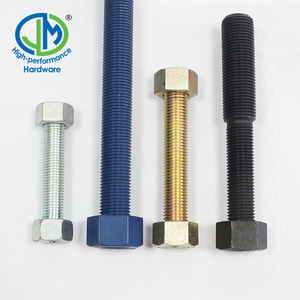
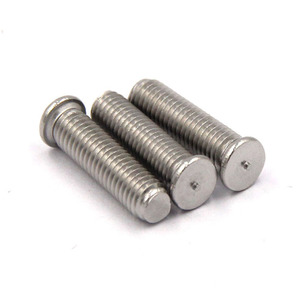
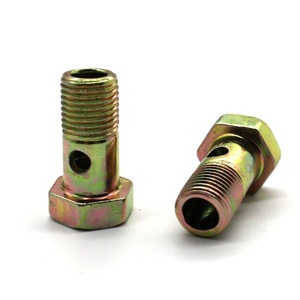
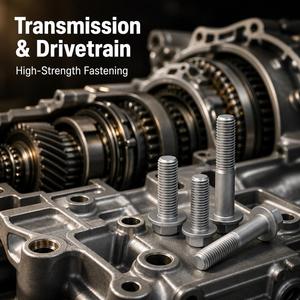
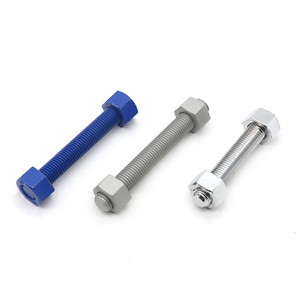
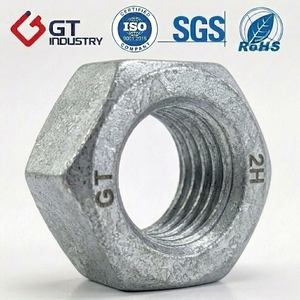
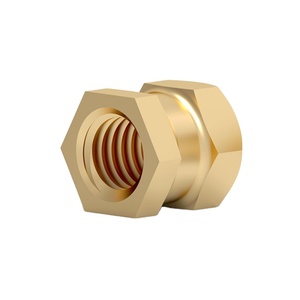
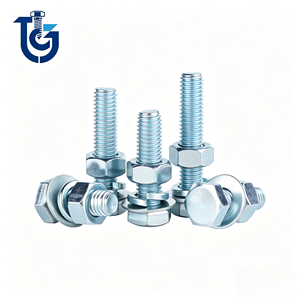
In severe offshore, subsea, and chemical processing environments, structural bolted joints represent critical single-point failure risks. Super Duplex Stainless Steels (SDSS)—principally designated under UNS S32750 (2507), UNS S32760 (Zeron 100), and UNS S32550 (Ferralium 255)—have established themselves as the benchmark alloy class for mechanical fasteners. Designed with a balanced biphasic microstructure comprising roughly 50% body-centered cubic (BCC) ferrite and 50% face-centered cubic (FCC) austenite, these fasteners deliver superior yields coupled with exceptional resistance to localized micro-corrosion.
To quantitatively evaluate the pitting corrosion resistance of Super Duplex alloy grades, metallurgical engineers utilize the Pitting Resistance Equivalent Number (PREN). China's top tier Super Duplex fastener manufacturers enforce strict chemical composition controls during Vacuum Induction Melting (VIM) and Electroslag Remelting (ESR) to guarantee a PREN value exceeding 42.
PREN = %Cr + 3.3(%Mo + 0.5%W) + 16(%N)
Compared to standard austenitic stainless steels like AISI 316L (PREN ~25) or standard duplex UNS S32205 (PREN ~34), Super Duplex fasteners exhibit double the mechanical yield strength (RP0.2 ≥ 550 MPa) paired with immunity to Stress Corrosion Cracking (SCC) in hydrogen sulfide (H2S) enriched sour oil gas fields governed by NACE MR0175 / ISO 15156.
| Alloy Grade / Standard | UNS Number | PREN Rating | Yield Strength (0.2% Proof, MPa) | Tensile Strength (MPa) | Critical Pitting Temp (CPT, °C) | Primary Application Matrix |
|---|---|---|---|---|---|---|
| Super Duplex 2507 | UNS S32750 | 42 - 45 | ≥ 550 | 750 - 1000 | > 60°C | Offshore Platforms, Subsea Trees, Desalination |
| Super Duplex Zeron 100 | UNS S32760 | 43 - 47 | ≥ 550 | 750 - 1000 | > 65°C | FGD Systems, Acid Processing, Marine Hardware |
| Duplex 2205 | UNS S32205 / S31803 | 34 - 36 | ≥ 450 | 650 - 880 | 35°C | Chemical Storage Tanks, Refineries, Piping |
| Austenitic 316L | UNS S31603 | 25 | ≥ 220 | 520 - 680 | 15°C | Low-load architectural, Light industrial |
| Inconel 625 (Nickel Alloy) | UNS N06625 | > 50 | ≥ 460 | ≥ 880 | > 85°C | Extreme HPHT subsea wells, Aerothermal ducting |
As a premier Chinese manufacturer and global exporter of Super Duplex fasteners, our infrastructure bridges advanced metallurgical engineering with high-capacity precision manufacturing. The global industrial sector requires absolute lot-to-lot consistency, short lead times, and zero-defect quality control. Our facility addresses these demands through an integrated supply chain model.
We source 100% of our Super Duplex round bars directly from Tier-1 premium mills with full heat lot chemistry verification. Every incoming bar undergoes Positive Material Identification (PMI) via X-ray fluorescence (XRF) and Optical Emission Spectroscopy (OES) prior to hot forging.
Our solution heat treatment processes (heating within 1080°C–1140°C followed by immediate high-pressure water quenching) are fully qualified under NORSOK M-650 Ed. 4 standards, guaranteeing freedom from brittle intermetallic phases.
Unlike traditional cut threads that sever metallic grain flow lines, our thread profiles are cold rolled on multi-axis CNC rolling equipment. Cold rolling induces compressive residual stresses, boosting fatigue life by up to 300% under cyclic load.
To back our zero-defect export guarantee, every batch of stud bolts, heavy hex nuts, washer rings, and specialized socket screws goes through a dedicated verification loop:
OES analysis, PREN determination, and Microstructure Feritscope testing (ASTM E562 phase fraction evaluation).
Full-scale axial tensile, 0.2% offset yield stress, elongation, hardness (Rockwell C & Brinell), and Charpy V-Notch impact testing at -40°C.
Ferric Chloride Pitting Corrosion Testing per ASTM G48 Method A to prove zero weight-loss at specified design temperatures.
Optical profile projection, pitch diameter checks via 3-wire system, and GO/NO-GO gauge calibration matching ASME B1.1 / ISO 965.
Thickness testing via magnetic induction, Xylan/PTFE adhesion verification (ASTM D3359), and salt spray chamber endurance (ASTM B117).
Generation of EN 10204 3.1 or 3.2 inspection certificates with complete raw material heat number laser-etched onto every bolt body.
Global energy transitions, deepwater oil exploration, and large-scale seawater desalination projects are altering global procurement strategies for high-alloy fasteners. Procurement managers and EPC contractors must align their supply lines with several emerging market trends:
As green hydrogen electrolysis facilities expand worldwide, high-pressure hydrogen embrittlement (HE) becomes a major structural concern. Super Duplex UNS S32750/S32760 fasteners are increasingly specified over standard high-tensile alloy steels due to their low hydrogen permeability and resistance to embrittlement under high pressure.
Offshore drilling is moving deeper into subsea reservoirs exceeding 15,000 psi and operational temperatures over 180°C. Sourcing trends favor heavy hex stud bolts featuring specialized anti-galling multi-layer PTFE or fluoropolymer coatings to prevent thread cold welding during automated remote vehicle installation.
Major industrial operators are shifting toward smart torque tensioning. China suppliers are introducing RFID-embedded bolt heads and precision ultrasonic length measurement protocols, allowing maintenance engineers to track bolt preload and residual stress throughout the asset lifecycle.
Manufacturing techniques for high-performance duplex stainless steels are evolving rapidly. China's industrial sector is investing heavily in next-generation metallurgy and green manufacturing technologies to optimize output, mechanical limits, and sustainability.
Selective Laser Melting (SLM) and Direct Energy Deposition (DED) are being adapted to print custom, non-standard Super Duplex fasteners for specialized flow control valves and nuclear applications with zero scrap waste.
R&D is currently focusing on increasing nitrogen contents (>0.35%) in Super Duplex formulations. Nitrogen boosts austenite stability, elevates PREN ratings beyond 48, and replaces expensive nickel content without sacrificing structural toughness.
Transitioning from traditional hot forging to closed-die warm forging within tight temperature windows (600°C–800°C) refines grain structures, improves dimensional tolerances, and minimizes surface scale oxidation.
Replacement of toxic hexavalent chromium coatings with advanced non-electrolytic zinc-flake (Dacromet/Geomet) and ceramic-matrix PTFE composite layers compliant with REACH and RoHS standards.
This section provides solutions to the technical and logistical questions engineering teams, buyers, and quality control specialists ask when procuring Super Duplex fasteners from China.