
Precision-engineered metric and imperial fasteners manufactured with mill-certified raw materials, full heat number traceability, and standard EN 10204 3.1 documentation.
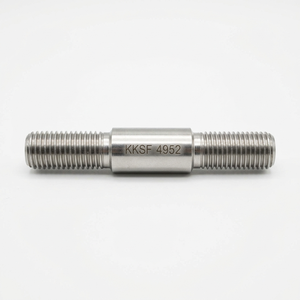
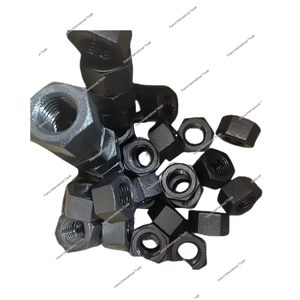
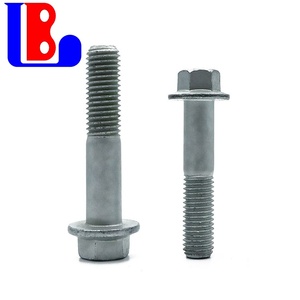
Integrating metallurgical precision, automated multi-station cold forging, and rigorous QA testing to guarantee structural integrity across chemical processing and offshore energy infrastructure.
Every batch of duplex rod stock undergoes Positive Material Identification (PMI) using X-ray fluorescence (XRF) spectroscopy. Fasteners are permanently stamped with grade codes and heat numbers matching EN 10204 3.1 chemical & mechanical mill certificates.
Duplex stainless steels demand exact phase proportions between austenite and ferrite. Our solution annealing processes (1020°C–1100°C followed by rapid water quenching) prevent harmful intermetallic phase precipitates such as Sigma (σ) phase, ensuring optimal pitting and stress-corrosion cracking resistance.
Unlike machined threads that cut grain flow lines, our continuous thread rolling process compresses crystal boundaries. This increases fatigue limit strength by up to 30%, eliminates micro-burrs, and minimizes thread galling under heavy torque load settings.
Our UNS S31803, S32205, and Super Duplex S32750 stud bolts and heavy hex nuts fully comply with hardness limits (max 28 HRC or 32 HRC depending on solution state) specified for hydrogen sulfide ($H_2S$) sour gas extraction and refinery units.
Full spectrum production compliant with ASTM A182, A193, A194, A320, A453, ASME B18.2.1, B18.2.2, DIN 931, DIN 933, DIN 975, and ISO 4014. Custom geometry machined strictly per customer technical drawings.
Export packaging features VCI (Vapor Corrosion Inhibitor) plastic barrier lining, wooden crates, and heavy-duty steel banding. Ensures zero atmospheric surface corrosion or thread damage during ocean freight shipping to 30+ countries.
Duplex stainless steels feature a dual-phase microstructure consisting of approximately equal proportions of austenitic phase ($\gamma$) and ferritic phase ($\alpha$). This unique atomic arrangement combines the high yield strength of ferritic steels with the fracture toughness and localized corrosion resistance of austenitic stainless grades. When utilized in heavy-duty industrial fasteners—such as double-end stud bolts, heavy hex nuts, socket head cap screws, and threaded rods—duplex alloys yield twice the mechanical design strength of conventional AISI 316L stainless steel while delivering exceptional resistance to chloride-induced Pitting and Crevice Corrosion.
The corrosion performance of duplex steel fasteners is quantitatively defined by the Pitting Resistance Equivalent Number formula: $PREN = \%Cr + 3.3(\%Mo + 0.5\%W) + 16\%N$. Standard Duplex UNS S32205 achieves a PREN value exceeding 35, whereas Super Duplex UNS S32750 (2507) and UNS S32760 (Zeron 100) achieve PREN values above 42. High PREN ratings ensure immunity to localized breakdown of the passive chromium-oxide ($Cr_2O_3$) protective film in marine, offshore oil platform, and chemical process piping environments.
| Fastener Material Grade | UNS / EN Number | PREN Value | Yield Strength (MPa Min) | Tensile Strength (MPa Min) | Hardness (Max) | Primary Application Environment |
|---|---|---|---|---|---|---|
| Lean Duplex 2101 | UNS S32101 / 1.4162 | 26 | 450 MPa | 650 - 850 MPa | 290 HBW | Structural Bolting, Water Treatment, Civil Infrastructure |
| Standard Duplex 2205 | UNS S31803 / S32205 / 1.4462 | 35 - 38 | 450 - 550 MPa | 700 - 900 MPa | 32 HRC | Desalination Plants, Chemical Heat Exchangers, Flange Bolting |
| Super Duplex 2507 | UNS S32750 / 1.4410 | ≥ 42 | 550 MPa | 750 - 1000 MPa | 32 HRC | Offshore Subsea Manifolds, FPSO Vessels, High Chloride Equipment |
| Super Duplex Zeron 100 | UNS S32760 / 1.4501 | ≥ 42 | 550 MPa | 750 - 1000 MPa | 32 HRC | Flue-Gas Desulfurization (FGD), Marine Riser Clamp Fasteners |
| Inconel 625 (Comparison) | UNS N06625 / 2.4856 | ≥ 50 | 415 MPa | 830 MPa | 35 HRC | Cryogenic to High Temp (1000°C) Acid Pipelines |
Strategic market analysis for procurement officers, EPC contractors, and global distribution managers navigating changing supply chain dynamics.
Global engineering teams are increasingly replacing 316/316L stainless fasteners with Lean Duplex (UNS S32101) and Standard Duplex (UNS S32205). By leveraging higher yield strengths, design engineers can downsize bolt diameters (e.g., replacing M24 316L studs with M20 Duplex 2205 studs), reducing total structural weight and lowering overall material expenditure without sacrificing joint load capacity.
To eliminate thread galling—a common issue in high-torque stainless assembly—future purchasing trends emphasize factory-applied PTFE, Xylan 1424, or Zinc-Nickel coatings over duplex substrates. Coated duplex stud bolts deliver consistent torque-tension relationships (predictable K-factor friction coefficients around 0.12 to 0.15) while adding secondary barrier protection against salt spray oxidation.
Institutional buyers in Europe and North America now demand digital supply-chain transparency. Leading Chinese manufacturers are integrating QR-code laser marking directly on hex bolt heads and stud ends. Scanning the code links directly to cloud-hosted mill test reports, heat numbers, ultrasonic testing certificates, and third-party inspection (TPI) sign-offs by DNV, Lloyd's Register, or ABS.
Environmental, Social, and Governance (ESG) mandates are driving global EPCs to evaluate the carbon footprint of raw material suppliers. Top-tier China wholesale manufacturers are transitioning to Electric Arc Furnace (EAF) stainless steel mills powered by green energy, reducing embodied carbon intensity per ton of manufactured duplex fasteners by up to 40% compared to traditional blast furnace routes.
The manufacturing landscape for high-grade industrial fasteners has undergone significant technological advancement over the past decade. Historically, specialty duplex fasteners were turned on CNC lathes from bar stock. While CNC machining accommodates small batch sizes, it cuts continuous grain boundaries, leaving micro-grooves that act as stress concentration sites susceptible to fatigue failure and chloride pitting.
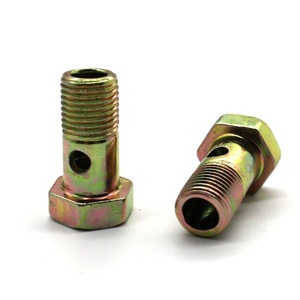
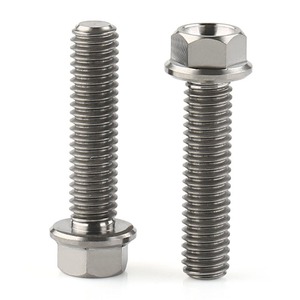
Modern high-volume manufacturing utilizes multi-station cold heading and warm forging equipment. By heating high-alloy duplex wire rods to controlled temperature windows (between 300°C and 500°C), warm forging allows complex fastener geometries—such as heavy hex flange bolts, socket head cap screws, and custom banjo bolts—to be formed at high speeds without work hardening the core microstructure or causing micro-cracking. Combined with thread rolling after final heat treatment, cold-formed duplex fasteners achieve superior grain refinement along thread roots, maximizing tensile fatigue resistance during cyclic pressure loading in subsea equipment.
Furthermore, cryogenic treatment post-solution annealing is emerging as a standard practice for critical subsea fasteners operating in arctic ambient conditions. Cooling duplex fasteners to below -100°C refines the crystal lattice, stabilizing austenite transformation and enhancing Charpy V-notch impact energy absorption down to -40°C or lower.
Detailed answers to technical, mechanical, and commercial queries regarding China wholesale duplex steel fasteners sourcing.
Partner with China's leading wholesale duplex fastener manufacturer. Send your bill of materials, engineering drawings, or RFQ specs for rapid price quotation, material consultation, and EN 10204 sample verification.