Explore our specialized OEM manufacturing capabilities spanning cryogenic alloy studs, heavy hex bolts, anti-corrosion marine hardware, and high-tensile fasteners.
ASTM A320 Grade L7 is the benchmark standard for high-strength alloy bolting designed specifically for low-temperature and cryogenic service environments. Understanding its metallurgical balance and manufacturing tolerances is crucial for high-consequence energy projects.
The standard operational threshold for carbon and standard alloy fasteners is limited by ductile-to-brittle transition temperature (DBTT). Below -20°F (-29°C), conventional carbon steels experience sharp loss of impact toughness, turning susceptible to catastrophic brittle fracture under thermal shock or dynamic pressure swings.
Our Custom OEM ASTM A320 L7 fasteners utilize heat-treated Chromium-Molybdenum alloy steel (AISI 4140/4142 chemical matrix). Through tightly regulated liquid quenching in polymer or oil from austenitizing temperatures (840°C–870°C), followed by precision tempering at a minimum of 1150°F (620°C), we achieve a homogeneous tempered martensite microstructure. This grain refinement ensures high tensile load retention while maintaining remarkable notch toughness in severe sub-zero environments.
Every heat batch of ASTM A320 Grade L7 produced in our factory undergoes Charpy V-Notch impact testing at -150°F (-101°C), consistently achieving lateral expansion > 0.38 mm (15 mils) and absorbed energy exceeding 20 ft-lbs (27 Joules), fully meeting ASME Section VIII Division 1 and ASME B31.3 piping codes.
Precise elemental control prevents micro-segregation during billet hot forging:
Selecting the correct standard avoids catastrophic flange leaks or premature bolt failure. Review how ASTM A320 Grade L7 compares to sister specifications in high-pressure and sub-zero service.
| Specification Grade | Base Metallurgy | Min Yield (KSI / MPa) | Min Tensile (KSI / MPa) | Impact Test Temp | Hardness Limit | Primary Industrial Service |
|---|---|---|---|---|---|---|
| ASTM A320 L7 | Cr-Mo Steel (AISI 4140) | 105 / 725 | 125 / 860 | -150°F (-101°C) | Max 321 HBW (35 HRC) | LNG Vessels, Cryogenic Valves, Arctic Pipelines |
| ASTM A320 L7M | Cr-Mo Steel (AISI 4140) | 80 / 550 | 100 / 690 | -150°F (-101°C) | Max 235 HBW (22 HRC) | Sour Gas (H2S), NACE MR0175 Low-Temp Duty |
| ASTM A193 B7 | Cr-Mo Steel (AISI 4140) | 105 / 725 | 125 / 860 | -20°F (-29°C) | Max 321 HBW (35 HRC) | High Temp / Standard Pressure Flanges |
| ASTM A320 L43 | Ni-Cr-Mo (AISI 4340) | 105 / 725 | 125 / 860 | -150°F (-101°C) | Max 321 HBW (35 HRC) | Heavy Diameters (> 2.5 inches) Low-Temp |
| ASTM A320 B8 Cl.2 | AISI 304 Stainless Steel | 75 / 515 | 110 / 760 | -325°F (-196°C) | Max 321 HBW (35 HRC) | Liquid Nitrogen / Helium Ultra-Cryo Piping |
* Note: A320 L7 and A193 B7 share identical chemistry and tensile profiles, but A320 L7 undergoes strict Charpy impact verification mandatory for sub-zero code compliance.
As global energy infrastructure shifts toward Liquefied Natural Gas (LNG) expansion, Green Hydrogen transport, and subsea carbon capture, OEM procurement requirements are evolving rapidly.
Hydrogen liquefaction occurs at -253°C (-423°F). Modern EPC contractors are mandating enhanced Charpy testing and specialized austenitic / modified alloy bolting combinations to prevent hydrogen embrittlement while maintaining structural elasticity during rapid temperature cycling.
Paper mill test certificates are being replaced by micro-engraved QR codes and laser heat numbers linked directly to digital blockchain quality records. Global buyers demand 100% Positive Material Identification (PMI) on critical offshore flanges.
Environmental regulations (REACH/RoHS) have accelerated the adoption of water-borne Xylan/PTFE coatings and multi-layer Zinc-Nickel (Zn-Ni) passivations. These provide 1,500+ hours salt spray protection without introducing hazardous VOC solvents into the ecosystem.
In cryogenic marine and subsea installations, galvanic corrosion and thread galling are major causes of bolt seizure. We offer customized OEM coating options engineered for zero-friction joint assembly.
Fluoropolymer coatings create a tough, micro-thin lubricating barrier over the alloy steel substrate. This prevents galling during high-torque makeup and ensures smooth breakout during plant maintenance.
Zinc-Nickel alloy plating (12-16% Ni) offers high galvanic resistance without inducing hydrogen embrittlement—a critical factor for high-strength A320 L7 bolts.
As a specialized manufacturer and global exporter of industrial fasteners, our Mumbai facility integrates raw material selection, precision cold/hot forging, heat treatment, thread rolling, and testing under one ISO 9001:2015 certified roof.
Every shipment is accompanied by Mill Test Certificates (MTC) detailing complete chemical heat analysis, mechanical tensile/yield test curves, Charpy V-Notch impact values, and hardness measurements linked to permanent bolt head stampings.
Thread rolling post heat-treatment imparts high fatigue life by creating continuous grain flow lines along thread roots, resisting high-cycle vibration stress common in compressor stations and offshore pumps.
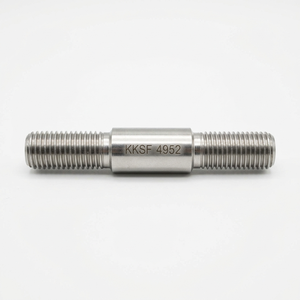
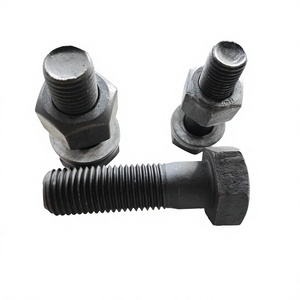
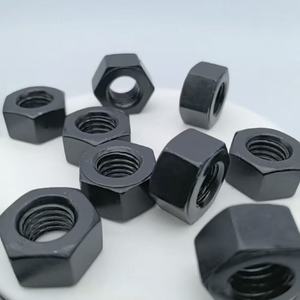
Whether you require extra-long fully-threaded stud bolts for heavy ASME B16.5 / B16.47 flanges, specialized waist-reduced studs for thermal expansion compensation, or custom heavy hex nuts (ASTM A194 7 / 7M), our engineering shop handles tight tolerances with precision CNC equipment.
Expert insights covering procurement specifications, metallurgical differences, and installation guidelines for ASTM A320 Grade L7 fasteners.
While both grades utilize AISI 4140/4142 alloy steel with similar tensile strength requirements (125 KSI min), ASTM A320 Grade L7 requires mandatory Charpy V-Notch impact testing at -150°F (-101°C) to ensure low-temperature toughness. ASTM A193 B7 is intended for high-temperature/standard pressure service and does not mandate sub-zero impact testing.
According to ASTM A320 specifications, Grade L7 stud bolts must be paired with ASTM A194 Grade 7 (or Grade 7M for sour service) heavy hex nuts. Grade 7 nuts are quenched and tempered alloy steel nuts matching the low-temperature impact capabilities of the L7 stud.
Grade L7M is specifically required for low-temperature applications exposed to H2S sour gas environments compliant with NACE MR0175 / ISO 15156. Grade L7M limits maximum hardness to 235 HBW (22 HRC) and minimum yield strength to 80 KSI to prevent sulfide stress cracking (SSC).
Standard ASTM A320 L7 is impact tested down to -150°F (-101°C). For liquid hydrogen service (-253°C) or liquid helium (-269°C), austenitic stainless steel grades such as ASTM A320 Grade B8 Class 2 or strain-hardened B8M Class 2, as well as Nickel alloys like Inconel 718, are recommended due to their face-centered cubic (FCC) crystal structure which exhibits zero ductile-to-brittle transition temperature.
All export shipments include full EN 10204 3.1 Material Test Certificates (MTC), chemical composition breakdown, tensile test data, Charpy V-Notch impact test energy values, hardness test reports, PMI verification, dimensional inspection records, and optional third-party inspection reports (TUV, DNV, SGS, Bureau Veritas).