
Explore our engineered inventory of ASTM A193 B7 alloy studs, high-tensile hex bolts, and specialized OEM connection hardware backed by full heat traceability and EN 10204 3.1 certification.
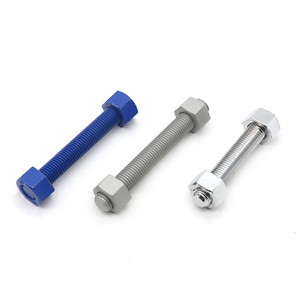
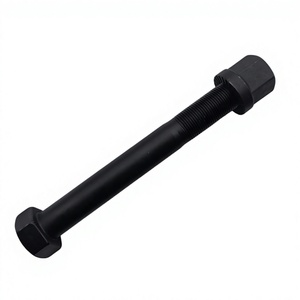
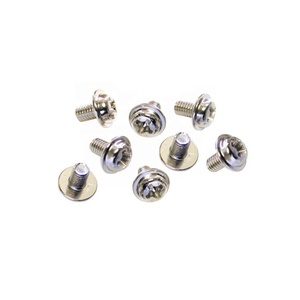
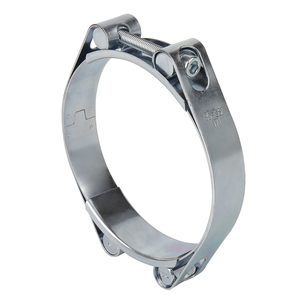
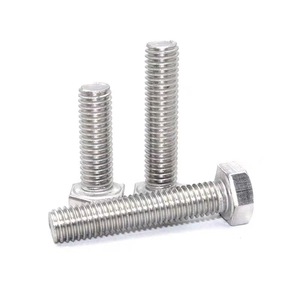
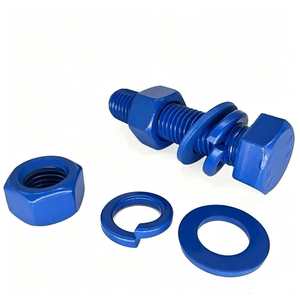
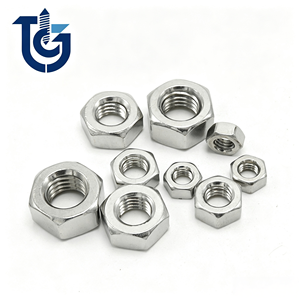
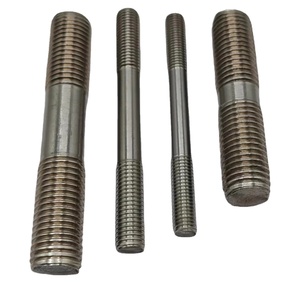
In severe industrial environments, bolting failure is not an option. As a globally recognized ISO-certified OEM manufacturer and exporter, we specialize in high-tensile heat-treated alloy steel stud bolts tailored for ASME pressure vessels, refinery piping manifolds, thermal power units, and subsea pipelines. The standard specification ASTM A193 Grade B7 covers chromium-molybdenum alloy steel (AISI 4140/4142 alloy matrix) heat-treated via liquid quenching and tempering to achieve exceptional yield and tensile thresholds under high-pressure, elevated-temperature conditions.
Our state-of-the-art precision machining facilities combine cold thread-rolling, hot forging, computer-controlled induction heat treatment, and multi-stage surface barrier application to produce fasteners that withstand cyclic fatigue, thermal expansion differentials, and severe chemical attack. Paired with heavy hex nuts manufactured to ASTM A194 Grade 2H, 2HM, or Grade 7 specifications, our complete flange joint systems eliminate joint relaxation and guarantee zero-leak sealing performance.
| Mechanical / Metallurgical Metric | ASTM A193 Grade B7 (Up to 2-1/2") | ASTM A193 Grade B7 (2-1/2" to 4") | ASTM A193 Grade B7M (Sour Service) |
|---|---|---|---|
| Tensile Strength (Min) | 125,000 PSI (860 MPa) | 115,000 PSI (795 MPa) | 100,000 PSI (690 MPa) |
| Yield Strength (0.2% Offset Min) | 105,000 PSI (720 MPa) | 95,000 PSI (655 MPa) | 80,000 PSI (550 MPa) |
| Elongation in 2 inches (Min) | 16 % | 16 % | 18 % |
| Reduction of Area (Min) | 50 % | 50 % | 50 % |
| Max Hardness Threshold | 321 HBW / 35 HRC | 321 HBW / 35 HRC | 235 HBW / 22 HRC (NACE MR0175 compliant) |
| Standard Heat Treatment | Quenched & Tempered @ 1100°F (593°C) min | Quenched & Tempered @ 1100°F (593°C) min | Stress-relieved Quench & Temper @ 1150°F min |
Every production lot is permanently stamped with mill heat numbers, grade identifiers, and manufacturer logos. Complete EN 10204 3.1 material certifications accompany every international sea-freight shipment.
We engineer custom thread pitches (UNJ, Metric Fine, UNC, 8-UN), dual-end threading, specialized chamfers, undercut shanks, and customer-specific print geometries from M6 to M100 and 1/4" to 4" nominal diameters.
Protection against marine, sour gas, and acid corrosion via Blue Fluoropolymer PTFE / Xylan 1014/1424, Hot-Dip Galvanizing (HDG), Electro-Zinc Plating, Zinc-Nickel Alloy coating, and Cadmium passivation.
The international procurement landscape for critical bolting components is undergoing a massive transformation driven by supply chain resilience requirements, stringent environmental mandates, and digital quality monitoring. Modern EPC contractors, project buyers, and refinery maintenance engineers no longer base procurement solely on unit costs—they demand holistic total cost of ownership (TCO) efficiency and long-term risk mitigation.
As energy production shifts toward extreme environments—including deepwater offshore drilling, high-pressure hydrogen transport, and supercritical geothermal power generation—fastener performance standards are being pushed beyond legacy boundaries. ASTM A193 B7 stud bolts remain the structural backbone of industrial joint design, but their evolution is accelerating through advanced surface engineering and metallurgical refinement.
Traditional zinc plating is insufficient for sour gas environments containing hydrogen sulfide ($H_2S$) and wet chloride vapors. Next-generation multi-layer PTFE/Xylan fluoropolymer systems offer friction coefficients as low as 0.06 to 0.08 while passing 3,000+ hours of ASTM B117 salt spray testing. Ceramic-infused barrier coatings are also gaining traction to withstand thermal cycling up to 600°C without flaking or chemical degradation.
For high-strength alloy steel (hardness > 32 HRC), standard electroplating processes carry high risks of Hydrogen Embrittlement (HE). Industry development is pivoting toward mechanical galvanizing, zinc flake systems (Geomet/Dacromet), and post-plating hydrogen bake-out protocols sustained for 24 hours at 190°C–220°C to ensure catastrophic field fracture risk is reduced to absolute zero.
We operate a fully integrated, ISO 9001:2015 accredited fastener manufacturing facility equipped with high-speed automatic cold headers, heavy-duty thread rolling lines, continuous atmosphere heat treatment furnaces, and advanced metallurgical testing labs. Our production team understands that a single compromised stud bolt can trigger catastrophic plant shutdowns. Hence, our quality control procedures strictly enforce testing at every phase of transformation.
Positive Material Identification (PMI) using XRF analyzers on 100% of incoming AISI 4140/4142 bar stock prior to processing.
Unlike cut threads, our continuous cold-rolled threads maintain uninterrupted grain flow lines, increasing fatigue life by over 30%.
Full destructive testing including tensile strength, yield offset, elongation, reduction of area, Charpy V-Notch impact, and hardness profiling.
Heavy-duty wooden crates, VCI anti-corrosion film wrapping, plastic thread protectors, and custom barcoding for rapid inventory scan.
Technical solutions and procurement answers regarding ASTM A193 B7 stud bolt specifications, torque values, coatings, and custom manufacturing capabilities.
ASTM A193 Grade B7 is manufactured from AISI 4140 / 4142 Chromium-Molybdenum alloy steel. Its chemical profile requires Carbon: 0.37 - 0.49%, Manganese: 0.65 - 1.10%, Phosphorus (Max): 0.035%, Sulfur (Max): 0.040%, Silicon: 0.15 - 0.35%, Chromium: 0.75 - 1.20%, and Molybdenum: 0.15 - 0.25%. This composition ensures deep hardenability during liquid quenching.
Grade B7M is specifically modified for sour service environments containing $H_2S$ under NACE MR0175 / ISO 15156 standards. While B7 permits a maximum hardness of 35 HRC (321 HBW), B7M strictly limits maximum hardness to 22 HRC (235 HBW) and minimum yield strength to 80,000 PSI to eliminate sulfide stress cracking (SSC). B7M studs require 100% hardness testing per batch.
Per ASME B31.3 and ASME Section VIII pressure boundary codes, ASTM A193 B7 stud bolts are primarily paired with ASTM A194 Grade 2H heavy hex nuts for standard high-pressure service. For sour environments where B7M studs are used, ASTM A194 Grade 2HM nuts are mandatory. For low-temperature or specialized alloy applications, ASTM A194 Grade 7 or Grade 4 nuts are specified.
ASTM A193 B7 studs are designed for continuous operating temperatures ranging from -29°C (-20°F) up to 425°C (800°F). Above 425°C, thermal creep strength decreases, and high-alloy grades such as ASTM A193 Grade B16 (Cr-Mo-V alloy) or ASTM A453 Grade 660 (A286 stainless superalloy) should be specified.
Blue PTFE / Fluoropolymer coatings provide a ultra-low friction coefficient ($k \approx 0.08$), guaranteeing uniform torque-tension relationship and preventing nut galling during hydraulic tensioning. Furthermore, PTFE coatings exhibit supreme resistance to aggressive chemicals and salt spray while permitting non-destructive breakout. HDG coatings add thickness to threads, requiring overtapping of mating nuts, and have higher friction coefficients ($k \approx 0.15 - 0.20$).
All international export orders include comprehensive documentation packages: EN 10204 3.1 Material Test Certificates (MTC), Raw Material Mill Heat Certificates, Ultrasonic Inspection (UT) reports, Magnetic Particle Inspection (MPI) reports, Thread Gauge Calibration certificates, Coating Thickness measurements, and Third-Party Inspection (TPI) endorsement by SGS, Bureau Veritas, or TÜV upon request.
Consult with our structural bolting engineers, request custom dimension drawings, or receive a competitive factory-direct quote with guaranteed export delivery timelines.
Send an Inquiry