
Precision-engineered studs, heavy hex nuts, and specialized high-tensile bolting for severe duty environments.
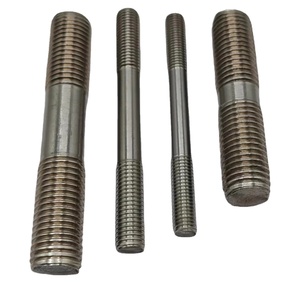
In modern petrochemical refining, flue gas desulfurization (FGD), pharmaceutical synthesis, and subsea oil extraction, mechanical fasteners are exposed to combinations of aggressive chemicals, severe thermal cycling, and high mechanical tension. Standard austenitic stainless steels (such as SS304 or SS316L) and even duplex/super duplex alloys frequently experience catastrophic failure under these extreme operational profiles due to chloride-induced stress corrosion cracking (SCC), localized pitting, or rapid creep deformation.
Custom OEM Hastelloy Stud Bolts represent the pinnacle of nickel-chromium-molybdenum (Ni-Cr-Mo) metallurgical engineering. Designed to maintain structural integrity across cryogenic temperatures up to 1000°F (538°C) and above, Hastelloy fasteners offer an unmatched resistance profile against both reducing and oxidizing acids, wet chlorine gas, hypochlorites, and acetic anhydride solutions.
Selecting the appropriate Hastelloy grade requires balancing mechanical yield stress, Pitting Resistance Equivalent Number (PREN), and specific media chemistry. Below is an engineering overview of the primary Hastelloy alloys manufactured for custom OEM stud bolt applications:
| Hastelloy Grade | UNS / EN Standard | Key Chemical Elements | PREN Value | Primary Technical Advantages |
|---|---|---|---|---|
| Hastelloy C-276 | UNS N10276 / 2.4819 | 57% Ni - 16% Cr - 16% Mo - 4% W | ≥ 68 | Exceptional resistance to ferric/cupric chlorides, wet chlorine gas, and severe localized pitting. Standard for sour gas (H2S) applications. |
| Hastelloy C-22 | UNS N06022 / 2.4602 | 56% Ni - 22% Cr - 13% Mo - 3% W | ≥ 69 | Enhanced resistance to oxidizing aqueous environments, nitric acid, and chemical mixtures containing halide ions compared to C-276. |
| Hastelloy B-2 / B-3 | UNS N10665 / N10675 | 65% Ni - 28% Mo - 1.5% Cr | N/A (Reducing Acid Spec) | Designed specifically for pure hydrochloric acid, hydrobromic acid, and sulfuric acid environments at high temperatures. Minimal Cr content. |
| Hastelloy C-2000 | UNS N06200 / 2.4675 | 59% Ni - 23% Cr - 16% Mo - 1.6% Cu | ≥ 74 | Unique copper addition provides superior performance in sulfuric acid while preserving high Cr/Mo oxidizing resistance. |
| Hastelloy X | UNS N06002 / 2.4665 | 47% Ni - 22% Cr - 18% Fe - 9% Mo | Moderate | High creep-rupture strength and high oxidation resistance in gas turbine, furnace, and aerospace thermal application up to 2200°F (1200°C). |
As a specialized manufacturer and global exporter based in Mumbai, India, our facility operates advanced multi-axis CNC lathes, thread-rolling machines, and atmosphere-controlled heat treatment furnaces dedicated to high-nickel alloy production. OEM procurement demands exact adherence to client engineering drawings, ASME B18.31.2 stud specifications, ASME B16.5 pressure boundary standards, and custom pitch thread requirements.
We utilize cold and warm thread rolling methods rather than cut threads whenever specified. Thread rolling reshapes the grain flow of the Hastelloy bar along the thread contour, increasing fatigue strength by up to 30% and eliminating stress risers that trigger fatigue cracking under high pressure.
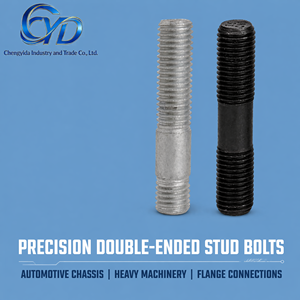
Our OEM manufacturing lines maintain pitch diameter and shank tolerances within ±0.02mm (±0.0008 in). Whether producing full-thread studs, double-end studs, or tap-end studs from M6 to M100 (1/4" to 4"), alignment accuracy ensures effortless nut engagement and uniform clamping force.
To eliminate galling inherent in high-nickel nickel-chromium alloys, we apply specialized anti-seize dry film lubricants, PTFE/Xylan fluoropolymer coatings, electroplated cadmium, or zinc-nickel coatings tailored for marine and offshore installation protocols.
Every custom order undergoes complete 100% thread ring and plug gauge verification (Class 2A/2B or 3A/3B thread fit), optical comparator evaluation, and pitch micrometer testing prior to chemical passivating or coating application.
The global industrial fastener market is undergoing a structural transition driven by decarbonization initiatives, deepwater HPHT (High-Pressure High-Temperature) oilfields, green hydrogen production, and aggressive life-cycle cost reduction strategies. Enterprise buyers are shifting focus from initial procurement cost to total cost of ownership (TCO) and long-term joint integrity.
Electrolyzer units operating under high-pressure hydrogen gas require zero-permeation, embrittlement-resistant fasteners. Hastelloy C-276 and C-22 stud bolts are increasingly specified for hydrogen compressors and CCUS amine reboilers where standard steels experience hydrogen-induced cracking (HIC).
Global EPC contractors now demand 100% digital material traceability. Every Hastelloy stud bolt produced in our manufacturing unit features laser-etched heat numbers, material grades, and QR code integration linked directly to EN 10204 3.1 chemical & mechanical inspection certificates.
Offshore operators are standardizing on NACE MR0175 / ISO 15156 compliant Hastelloy C-276 fasteners for sour service subsea manifolds. This prevents sulfide stress cracking (SSC) in sour gas reserves containing high partial pressures of H2S and CO2.
Stud Bolt India has established itself as an authoritative global manufacturer and exporter of critical-service fasteners. Operating from our state-of-the-art facility in Mumbai, Maharashtra, we combine decades of metallurgical expertise with rigorous quality management protocols.
To guarantee compliance with ASTM B574, ASME SB574, and client-specific OEM engineering standards, our in-house metallurgical laboratory performs comprehensive testing on every heat lot:
Submit your technical engineering drawings, material grade requirements, dimensions (M6-M100 / 1/4"-4"), thread pitch, and target quantities. Our technical sales engineering department will provide a competitive quotation and complete specification review within 24 hours.
Get Catalog