
Explore our specialized catalog of engineered studs, heavy hex nuts, standoff hardware, and precision marine/refinery bolts manufactured to rigid ASTM, ASME, and DIN standards.
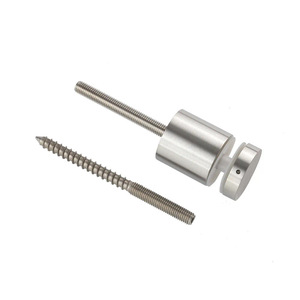
Architectural grade SS304/SS316 precision standoff fasteners designed for heavy curtain wall structural mounting and outdoor signage anchoring.
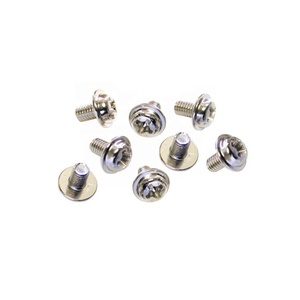
Precision micro-machined steel screws and standoff hardware tailored for custom chassis assembly, motherboards, and control system electronics.
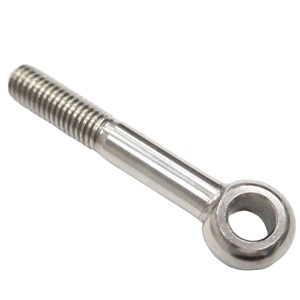
High tensile polished stainless steel eye bolts conforming to DIN 444 standards, ideal for marine rigging, mechanical tensioning, and pipe suspension.
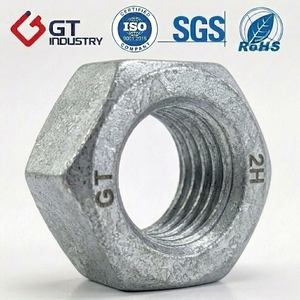
Quenched and tempered high-strength carbon steel heavy hex nuts featuring heavy hot-dip galvanizing for severe atmospheric corrosion protection.
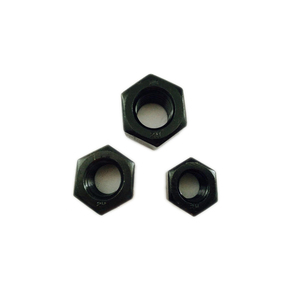
Standard black oxide finished ASTM A194 2H nuts optimized for high-temperature pressure vessel flanges, steam lines, and refinery towers.
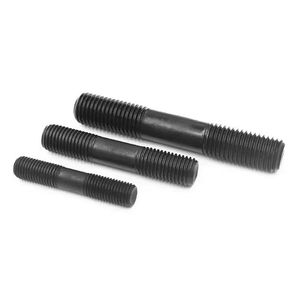
Heavy-duty alloy double end studs designed for high-stress pipeline connections, heat exchangers, and high-pressure chemical fluid manifolds.
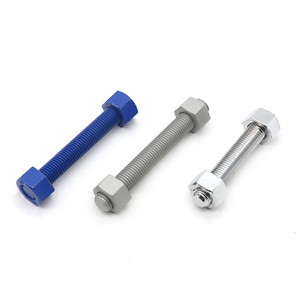
The industry workhorse: Chromium-molybdenum heat-treated full-thread rods paired with 2H nuts for critical high-temperature service.
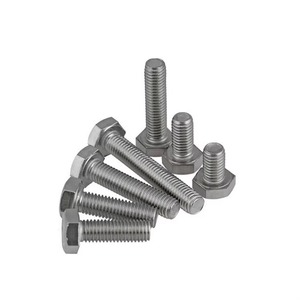
Molybdenum-alloyed austenitic 316 stainless steel hex head machine bolts offering superior resistance to pitting and crevice corrosion in marine environments.
An authoritative analysis of high-temperature creep resistance, hydrogen embrittlement mitigation, and severe corrosion compliance in modern oil refining infrastructure.
Petroleum refining operations subject pressure boundary bolting to sustained operational temperatures ranging from -50°F (-46°C) in low-temperature alkylation units up to 1100°F (593°C) in fluid catalytic cracking (FCC) systems. OEM refinery studs fabricated from ASTM A193 Grade B7 (AISI 4140/4142 alloy) and Grade B16 (Cr-Mo-V alloy) undergo precise liquid quenching and tempering to maintain minimum yield strengths of 105,000 PSI under continuous thermal cycles.
In hydrotreating and sour gas processing units containing hydrogen sulfide ($H_2S$), standard high-strength bolts are prone to Sulfide Stress Cracking (SSC). Custom OEM production implements strict microstructural grain size controls and hardness caps (typically ≤ 22 HRC / 237 HBW) for ASTM A193 Grade B7M studs and ASTM A194 Grade 2HM nuts, ensuring absolute compliance with NACE MR0175/ISO 15156 standards.
Unlike standard cut threads that disrupt grain flow, our factory utilizes cold thread rolling on centerless-ground bar stock. Thread rolling induces compressive residual stresses at the thread root radius (UNJ/UNC profiles to ASME B18.31.2), dramatically increasing cyclic fatigue life and preventing joint relaxation under continuous vibration.
Engineering reference guide for material selection across temperature, pressure, and media constraints.
| ASTM Specification | Material Class / Grade | Tensile Strength (Min) | Yield Strength (Min) | Hardness Limits | Primary Refinery Application |
|---|---|---|---|---|---|
| ASTM A193 B7 | AISI 4140 Cr-Mo Alloy | 125 ksi (860 MPa) | 105 ksi (720 MPa) | 321 HBW / 35 HRC Max | High pressure/temperature pipe flanges, heat exchangers. |
| ASTM A193 B7M | Cr-Mo Low Alloy (Sour Duty) | 100 ksi (690 MPa) | 80 ksi (550 MPa) | 235 HBW / 22 HRC Max | Sour gas ($H_2S$) hydrocrackers, NACE MR0175 compliant. |
| ASTM A193 B16 | Cr-Mo-V Vanadium Alloy | 125 ksi (860 MPa) | 105 ksi (720 MPa) | 321 HBW / 35 HRC Max | Severe thermal service up to 1100°F (593°C), steam turbines. |
| ASTM A193 B8 Cl.2 | AISI 304 Stainless (Strain Hardened) | 110 ksi (760 MPa) | 95 ksi (655 MPa) | 320 HBW / 35 HRC Max | Corrosive chemical fluid transfer, nitric acid processing. |
| ASTM A193 B8M Cl.2 | AISI 316 Stainless (Strain Hardened) | 110 ksi (760 MPa) | 95 ksi (655 MPa) | 320 HBW / 35 HRC Max | Marine refineries, chloride environments, organic acids. |
| ASTM A320 L7 | AISI 4140 Low Temp Alloy | 125 ksi (860 MPa) | 105 ksi (720 MPa) | Impact ≥ 20 ft-lbs @ -150°F | Cryogenic refinery units, LNG terminal piping systems. |
| Inconel 718 (UNS N07718) | Precipitation Hardened Ni-Cr Alloy | 185 ksi (1275 MPa) | 150 ksi (1034 MPa) | 331 - 444 HBW / 36-47 HRC | Extreme pressure, severe sour crude, high corrosion manifolds. |
Key shifts transforming global supply chain strategies, coating technologies, and smart bolting integration through 2030.
Traditional hot-dip galvanizing (HDG) and cadmium electroplating are rapidly being phased out across top-tier Gulf Coast and Middle Eastern refineries due to environmental restrictions and inconsistent torque friction factors ($k$-factor). Modern procurement contracts mandate multi-layer Fluoropolymer/PTFE coatings (such as Xylan 1424 or Whitford coatings).
Information Gain Insight: Advanced PTFE coatings provide an extraordinarily low friction coefficient ($k = 0.12 \pm 0.02$), which ensures exact pre-load tension calculation during hydraulic torque tensioning. Furthermore, PTFE coatings withstand over 3,000 hours of ASTM B117 salt spray exposure without red rust formation, significantly reducing maintenance downtime during turnaround maintenance.
Fugitive volatile organic compound (VOC) emissions at flanged joints account for over 40% of unrecorded refinery leaks. The industry is moving rapidly toward embedded ultrasonic load cell sensors and direct-tension-indicating (DTI) smart washers.
OEM Technology Integration: Next-generation custom stud bolts feature micro-drilled core channels accepting permanent piezoceramic transducers. Maintenance engineers can measure exact residual bolt clamp load wirelessly during live refinery operation, eliminating premature gasket blowouts and preventing catastrophic hydrocracker fires.
As refineries transition to process heavy, high-sulfur opportunity crudes and bio-feedstocks, conventional 316L and B7 materials experience accelerated naphthenic acid corrosion and chloride stress cracking. Procurement volumes for Super Duplex UNS S32750 (2507) and Inconel 625/718 fasteners are expanding at a CAGR of 8.4%.
Material Advantage: Super Duplex alloys boast a Pitting Resistance Equivalent Number (PREN) > 40, enabling continuous operation in aggressive sea-water cooling loops and high-naphthenic distillation bottoms where standard stainless steels fail rapidly.
Counterfeit hardware and falsified Material Test Reports (MTRs) represent a high safety hazard in severe pressure applications. Modern OEM manufacturing requires digital twin tracking where every individual stud and heavy hex nut is laser-etched with a unique QR code or DataMatrix identifier.
Supply Chain Security: Scanning the fastener directly links to the EN 10204 3.1 mill heat certificate, Positive Material Identification (PMI) spectral breakdown, and heat-treatment chart stored on immutable cloud ledger systems, ensuring 100% compliance prior to installation.
From raw alloy billet inspection to seaworthy export packaging, our manufacturing capabilities deliver absolute integrity for zero-defect refinery turnarounds.
Our ISO 9001:2015 certified laboratory is equipped with handheld XRF Spectrometers for 100% Positive Material Identification (PMI), Charpy V-Notch impact testing down to -196°C, Charpy impact towers, optical emission spectrometers, and automatic Rockwell/Brinell hardness testers to verify every heat batch.
Exporting to over 24 countries across the GCC (Saudi Arabia, UAE, Qatar, Kuwait), Europe, Australia, and the Americas. All shipments are treated with anti-rust VCI film, heat-sealed in heavy-duty wooden crates, and compliant with ISPM 15 fumigation standards for seamless ocean/air freight delivery.
Operating multi-axis CNC lathes, automatic double-end stud threaders, and high-speed forging presses. We manufacture custom lengths, non-standard pitch threads (8-UN, UNC, UNF, Metric pitch), oversized tap nuts, and specialized standoff fasteners based on client blueprints within short lead times.
Expert answers to critical engineering, specification, and procurement queries regarding custom refinery fasteners.
Need engineered stud bolts, heavy hex nuts, or specialty exotic alloy fasteners for an upcoming refinery turnaround or project? Our engineering team is standing by to evaluate your drawing or specification sheet.