
Explore our engineering-grade stainless steel stud bolts, full-threaded rods, acorn nuts, and specialized marine & industrial fittings.
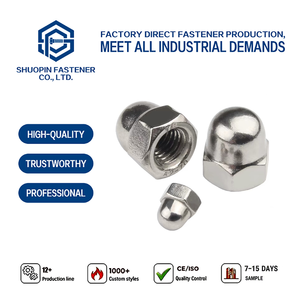
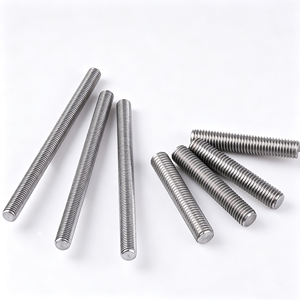
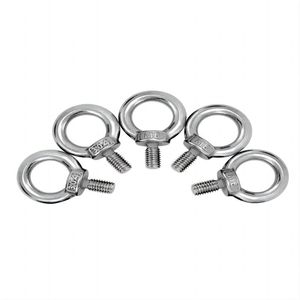
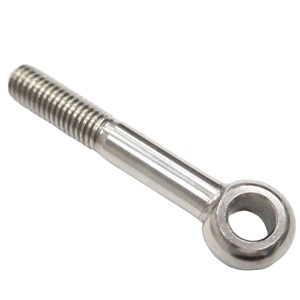
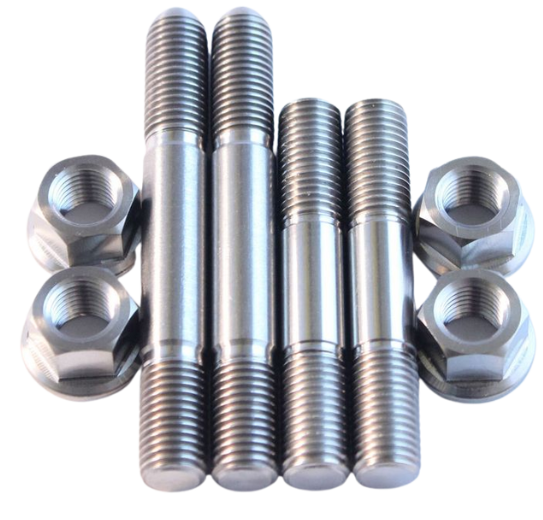
In modern mechanical, chemical, offshore, and structural engineering, threaded fasteners serve as critical load-bearing linkages where mechanical failure is not an option. As a global lead custom OEM stainless steel studs manufacturer and exporter, our engineering facilities bridge the gap between advanced metallurgical science and precise contract manufacturing. Stainless steel stud bolts—encompassing fully threaded rods (DIN 975 / ASME B18.31.2), double-end studs, tap-end studs, and custom-machined OEM variants—are foundational elements across high-pressure flange assemblies, pressure vessels, subsea pipelines, and power generation units.
Understanding the exact search intent of global procurement engineers and quality assurance directors requires addressing the core requirements: mechanical integrity, corrosion kinetics, dimensional tolerance, and material traceability. Standard off-the-shelf fasteners frequently fail under combined thermal cycling, chloride pitting, and severe tensile stresses. Custom OEM manufacturing provides tailored thread pitch configurations (UNC, UNF, Metric Coarse/Fine), targeted heat treatments (Class 1 vs. Strain-Hardened Class 2), and specialized protective surface finishes (PTFE, Xylan, Electropolishing, and Passivation).
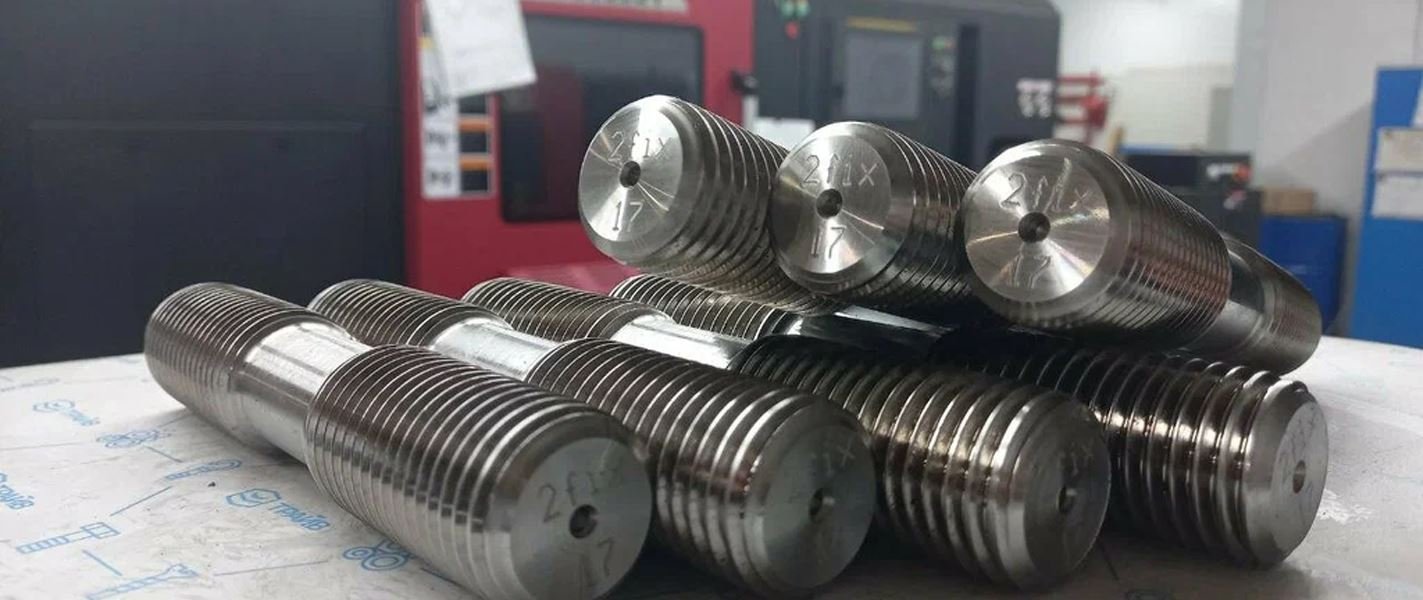
Our OEM manufacturing process prioritizes cold thread rolling over conventional cutting. Thread rolling burnishes the root radius, induces beneficial compressive residual stresses, and eliminates micro-burrs that act as stress concentration sites. This technique enhances fatigue life by up to 300% under cyclic mechanical stress—making our stainless steel studs ideal for high-vibration marine and turbo-machinery environments.
Selecting the appropriate stainless steel alloy involves analyzing mechanical yield strength, PREN (Pitting Resistance Equivalent Number), and environmental temperature ranges:
Below is a comprehensive technical reference table detailing mechanical properties, applicable international standards, and recommended operating environments for our custom OEM stainless steel studs and industrial fasteners.
| Material / Grade Standard | Tensile Strength (MPa) | Yield Strength 0.2% (MPa) | PREN Index | Key International Specifications | Primary Industrial Applications |
|---|---|---|---|---|---|
| ASTM A193 Grade B8 (SS 304) | 515 - 860 | 205 - 690 (Cl.2) | ~19.0 | ASME B18.31.2, DIN 975, ISO 3506-1 A2 | Architectural, General Machinery, Food Equipment |
| ASTM A193 Grade B8M (SS 316) | 515 - 860 | 205 - 690 (Cl.2) | ~25.0 | ASME B16.5, DIN 1587, DIN 444, ISO 3506-1 A4 | Marine Deck Rigging, Offshore Platforms, Chemical Piping |
| Duplex 2205 (UNS S32205) | 655 - 880 | 450 min | ~34.0 | ASTM A1082, EN 10272 1.4462 | Desalination Plants, Chemical Tankers, Heat Exchangers |
| Super Duplex 2507 (UNS S32750) | 750 - 1000 | 550 min | > 42.0 | NORSOK M-630, ASTM A1082 | Subsea Christmas Trees, Offshore Risers, Sour Gas Wells |
| Inconel 718 (UNS N07718) | 1240 min | 1034 min | N/A (Nickel Base) | ASTM B637, API 20F SPEC | Gas Turbines, Cryogenic Fuel Systems, Downhole Tools |
*Note: Custom OEM dimensions, non-standard thread pitches, and special heat treatment states are produced precisely to customer engineering drawings.
We combine advanced metallurgy, automated CNC production lines, and rigorous quality assurance to deliver flawless fastening solutions worldwide.
Every batch of raw stainless steel bar stock undergoes Positive Material Identification (PMI) via X-ray fluorescence spectro-analysis. Full EN 10204 3.1 chemical and mechanical inspection certificates accompany every shipment, guaranteeing heat-number traceability back to the primary steel mill.
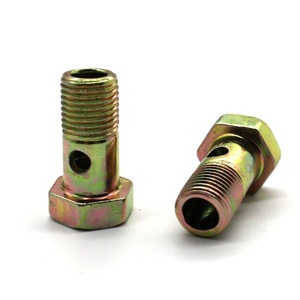
Utilizing high-precision multi-axis CNC swiss turning centers and thread-rolling machinery, we produce non-standard stud lengths, special step studs, custom hollow banjo bolts, and metric/imperial fine pitch configurations strictly according to client CAD blueprints.
Stainless steel threads are inherently susceptible to galling under high-torque makeup. We offer specialized PTFE/Xylan fluoropolymer coatings, Zinc-Nickel plating, passivation, and electropolishing to ensure consistent friction coefficients (k-factor) and smooth joint disassembly.
Exporting to over 24 countries worldwide, all stud orders are coated with anti-corrosion protective wraps, capped at threaded ends, and packed into heavy-duty heat-treated ISPM-15 compliant wooden cases to ensure zero damage during long-distance maritime freight.
Our ISO-certified manufacturing facility operates dedicated testing rigs for proof load testing, ultimate tensile strength testing, Charpy V-notch impact testing at sub-zero temperatures (-196°C for cryogenic service), micro-hardness profile analysis, and salt spray fog testing (ASTM B117) exceeding 1,500 hours without red rust initiation.
This relentless commitment to engineering excellence ensures that every OEM custom stainless steel stud bolt supplied under our brand provides absolute reliability in critical energy, petrochemical, and defense infrastructure.
The global industrial fastener procurement landscape is undergoing a structural paradigm shift. Supply chain leaders, EPC contractors, and global OEM buyers are migrating away from fragmented transactional purchasing toward integrated strategic sourcing models. Key macro trends shaping the procurement of custom OEM stainless steel studs over the next decade include:
Major energy majors and infrastructure developers now demand full digital material passports. Procurement contracts increasingly require machine-readable QR codes etched directly onto stud end-faces or tags. This digital record links directly to cloud-hosted EN 10204 3.1 certificates, ladle chemical analysis, ultrasonic testing reports, and carbon footprint metrics—ensuring total audit transparency throughout the asset's 30+ year lifecycle.
To mitigate geopolitical risks and freight volatility, global buyers are adopting "China+1" and dual-hub sourcing strategies. Establishing reliable procurement pipelines with audited high-capacity OEM manufacturers in emerging industrial centers ensures resilient just-in-time delivery for major capital expenditure (CAPEX) and maintenance turnarounds (OPEX).
ESG directives (such as the European Union’s Carbon Border Adjustment Mechanism - CBAM) are compelling engineering buyers to calculate the embedded carbon footprint of imported steel components. Future procurement specifications will actively weight suppliers utilizing electric arc furnace (EAF) stainless steel production fed by renewable energy, coupled with recycled scrap content exceeding 75%.
Enterprise buyers are connecting their SAP and Oracle ERP systems directly to OEM manufacturers via automated API protocols. This integration enables dynamic pricing requests, automated inventory replenishment for standard DIN 975 rods and ASTM A193 studs, and real-time tracking of manufacturing milestones directly from the CNC shop floor.
As operating environments in clean energy production, deepwater marine exploration, and high-efficiency aerospace push physical limits, stainless steel stud manufacturing is advancing through cutting-edge metallurgical and process innovations:
The integration of Directed Energy Deposition (DED) 3D printing with precision CNC finish-machining enables the creation of complex internal cooling channels within heavy-diameter OEM studs used in high-temperature gas turbines. This hybrid technique prevents bolt relaxation under severe thermal gradients.
Traditional austenitic stainless steels (316L) offer high corrosion resistance but lower yield strength (~220 MPa). Advanced severe plastic deformation (SPD) techniques and nitrogen-strengthened austenitic formulations (such as High-Nitrogen Steels / HNS) allow OEM manufacturers to produce custom studs achieving yield strengths exceeding 900 MPa while retaining full non-magnetic behavior and superior pitting resistance.
Future critical offshore flange assemblies will increasingly incorporate "Smart Studs" equipped with micro-piezoelectric sensors or fiber-optic Bragg gratings integrated along the central axis. These studs transmit real-time bolt tension, clamp load retention, and micro-crack propagation data wirelessly to asset management centers, eliminating manual ultrasonic torque re-tightening during plant operations.
Environmental regulations are phasing out cadmium and solvent-based fluoropolymer coatings. The industry is rapidly transitioning toward water-borne organic nano-composite coatings and PVD (Physical Vapor Deposition) multi-layer ceramic films (TiAlN / CrN) that provide superior wear resistance, friction control (µ = 0.08 - 0.12), and complete zero-VOC compliance.
Clear, authoritative answers to common engineering, quality control, and international trade inquiries.
Contact our engineering sales team today to request technical datasheets, material test reports, or a competitive quote for your custom OEM stainless steel stud requirements.