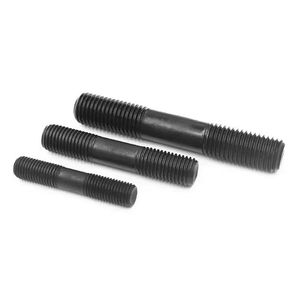
Engineered for extreme structural integrity, high torque resilience, and prolonged service life in severe environments.
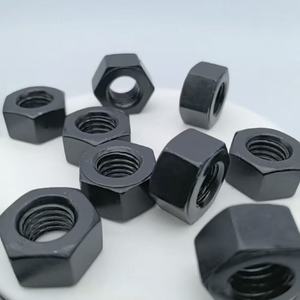
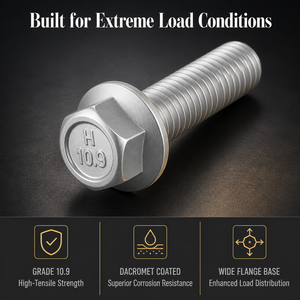
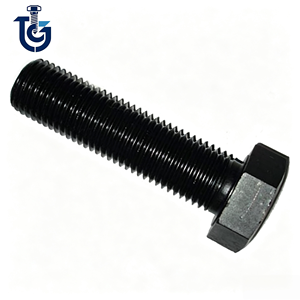
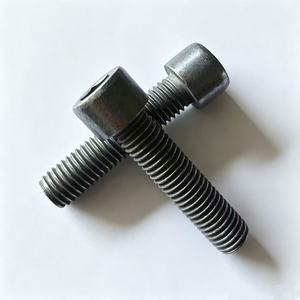
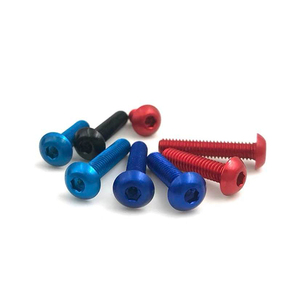
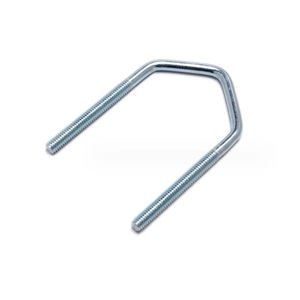
Why Tier-1 EPC contractors, heavy equipment builders, and marine OEMs partner with our manufacturing plants.
We source raw wire rod directly from top-tier steel mills with strict ladle analysis. Every batch undergoes Positive Material Identification (PMI) and microstructural analysis to prevent segregation and inclusion flaws.
Equipped with multi-station automatic cold formers for high-speed precision output (M3-M24) and induction-heated hot forging presses for large-diameter structural bolts up to M100 / 4-inch threads.
High-tensile fasteners (Grade 10.9, 12.9, ASTM A194 2H) undergo automated thermal de-embrittlement baking at 200°C–230°C within 1 hour of electroplating, guaranteeing zero catastrophic delayed failure.
Fully compliant with UNC, UNF, UNR, Metric, and BSW thread profiles. In-house surface treatment lines for Zinc-Nickel alloy, Hot-Dip Galvanizing (HDG), Dacromet, Geomet, PTFE/Xylan, and Black Oxide.
Outfitted with Tensile Strength Testers, Charpy V-Notch Impact Testers, Optical Sorting Machines (up to 50PPM sorting speed), Salt Spray Chambers (ASTM B117), and Eddy Current hardness sorters.
Seaworthy heavy-duty wooden box packaging, custom barcode labeling, containerization consolidation, and rapid export dispatch to over 24 countries with full EN 10204 3.1 documentation.
An authoritative analysis of material selection, heat treatment dynamics, anti-corrosion barrier coatings, and total cost of ownership (TCO) optimization for procurement directors.
Carbon steel remains the bedrock of global structural, energy, automotive, and industrial mechanical assembly due to its versatility, exceptional strength-to-cost ratio, and customizable mechanical properties. The mechanical response of carbon steel fasteners is primarily governed by carbon content, micro-alloying additions (such as Manganese, Chromium, Molybdenum, and Boron), and precise heat treatment cycles.
Fastener grades are classified under international standards such as ISO 898-1, ASTM A193, ASTM A194, ASTM A320, and SAE J429. Understanding the microstructural transition from ferrite-perlite mixtures in low-carbon steels to tempered martensite in quenched and tempered alloy steels is essential for engineering high-reliability joints.
| Specification / Grade | Material Composition | Proof Load / Yield Strength (MPa) | Tensile Strength (MPa) | Hardness Range (HRC / HBW) | Primary Industrial Applications |
|---|---|---|---|---|---|
| ISO 898-1 Class 8.8 | Medium Carbon / Low Alloy Steel | 640 MPa (Yield) | 800 - 1000 MPa | 22 - 32 HRC | Automotive chassis, general machinery, building structures. |
| ISO 898-1 Class 10.9 | Alloy Steel (Cr, Mo, B addition) | 940 MPa (Yield) | 1040 - 1200 MPa | 32 - 39 HRC | Heavy engine blocks, wind turbine hubs, structural steel joints. |
| ISO 898-1 Class 12.9 | High Hardness Alloy Steel (4140/4340) | 1100 MPa (Yield) | 1220 - 1400 MPa | 39 - 44 HRC | Precision hydraulic pumps, aerospace tooling, high-stress dies. |
| ASTM A193 Grade B7 | AISI 4140/4142 Chromium-Moly Steel | 725 MPa (Yield, ≤2.5") | 860 MPa min. | 32 HRC max. | Petrochemical pressure vessels, high-temp ASME flanges. |
| ASTM A320 Grade L7 | AISI 4140 Cr-Mo (Charpy Tested) | 725 MPa (Yield) | 860 MPa min. | Impact ≥27 J at -101°C | Cryogenic valves, subsea pipelines, arctic oil rigs. |
| ASTM A194 Grade 2H | Medium Carbon Quenched & Tempered | N/A (Nut Proof Stress) | 1200 MPa Proof Stress | 24 - 35 HRC | High-pressure heavy hex flange mating nuts. |
Bare carbon steel rapidly oxidizes when exposed to moisture, atmospheric oxygen, sulfur dioxide, and chloride ions. In demanding OEM/ODM applications—such as offshore oil rigs, chemical processing plants, and marine infrastructure—applying high-performance anti-corrosion barriers is mandatory to avoid catastrophic stress corrosion cracking (SCC) and premature joint degradation.
Modern fast-coating technology has advanced beyond basic electrolytic bright zinc plating toward complex multi-layer zinc-flake, zinc-nickel alloy electroplating, and fluoropolymer PTFE systems.
| Coating Technology | Layer Thickness (μm) | Salt Spray Test (ASTM B117) | Max Operating Temp (°C) | Friction Coeff. (μ) Range | Risk of Hydrogen Embrittlement |
|---|---|---|---|---|---|
| Electro-Galvanized Zinc (Clear/Yellow) | 5 - 12 μm | 48 - 96 Hours Red Rust | 120°C | 0.14 - 0.20 | Moderate (Requires 200°C Bake) |
| Hot-Dip Galvanizing (HDG - ASTM A153) | 45 - 85 μm | 500 - 1000 Hours Red Rust | 200°C | 0.18 - 0.24 | Low (Etching precautions needed) |
| Zinc-Nickel Electroplate (12-15% Ni) | 8 - 15 μm | 1000 - 1500 Hours Red Rust | 300°C | 0.12 - 0.18 | High (Mandatory de-embrittlement bake) |
| Zinc Flake (Geomet / Dacromet) | 6 - 15 μm | 1000 - 1800 Hours Red Rust | 300°C | 0.10 - 0.16 | Zero Risk (Non-electrolytic process) |
| PTFE / Xylan Fluoropolymer System | 20 - 35 μm | 1500 - 3000 Hours Red Rust | 260°C continuous | 0.08 - 0.12 | Zero (Pre-baked zinc base layer) |
A primary consideration for high-strength carbon steel fasteners (tensile strength ≥ 1000 MPa or hardness ≥ 32 HRC) is Hydrogen Embrittlement (HE). During acid pickling and electroplating, atomic hydrogen permeates the interstitial grain boundaries of the steel matrix. Under static tensile load, these hydrogen atoms migrate to stress concentration zones (thread roots), leading to sudden, brittle catastrophic failure without prior plastic deformation.
Our OEM/ODM manufacturing protocols strictly follow ISO 4042 and ASTM F1941. High-tensile fasteners undergo baking within 1 to 4 hours after electroplating at temperatures between 200°C and 230°C for a duration of 8 to 24 hours depending on fastener diameter and property class.
Producing defect-free carbon steel fasteners requires tight control over cold forming geometries, thread rolling parameters, and heat treatment atmospheres. Below is our standardized step-by-step OEM/ODM manufacturing sequence:
Key technological, regulatory, and environmental shifts reshaping global B2B supply chain strategy.
Global OEMs in automotive and structural engineering are mandating Scope 3 emissions reductions. Future procurement contracts will prioritize fastener factories utilizing Electric Arc Furnace (EAF) steel produced with renewable energy, alongside low-emissions cold forming processes.
Regulatory mandates in the EU and North America require complete digital material history. Fasteners will feature micro-laser etched QR codes or batch identifiers providing direct cloud access to EN 10204 3.1 Material Test Reports (MTRs), heat numbers, and inspection certificates.
For mission-critical flange joints in wind power, subsea pipelines, and nuclear installations, traditional torque control is giving way to piezoelectric ultrasonic sensors embedded within carbon steel studs, allowing continuous real-time preload telemetry.
How advanced material science and digital manufacturing are driving performance gains.
Adding precise micro-quantities of Vanadium (V), Niobium (Nb), and Titanium (Ti) creates ultra-fine grain structures during wire rod hot rolling. This eliminates the traditional quenching step for Property Class 8.8 bolts, reducing manufacturing energy consumption by up to 35%.
Stringent REACH and RoHS compliance is pushing factories away from hexavalent chromium passivations toward thin-film zinc-flake and ceramic-infused matrix coatings that offer superior 2000-hour salt spray endurance with low thread interference.
Finite Element Analysis (FEA) software simulates metal flow during multi-pass cold heading. This optimizes die cavity design, eliminates micro-folding at thread fillets, and extends tooling life by 40% while permitting complex OEM custom geometry production.
Detailed technical answers to common questions encountered during international OEM/ODM fastener sourcing.
Submit your engineered drawings, bill of materials, or procurement specs today. Our technical engineering team will review your metallurgical requirements and provide a competitive factory-direct proposal.