
Explore our export-grade portfolio of full-thread, double-end stud bolts and heavy hex components manufactured to stringent ASTM, ASME, DIN, and ISO standards.
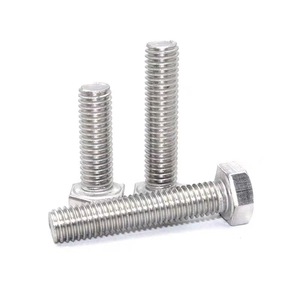
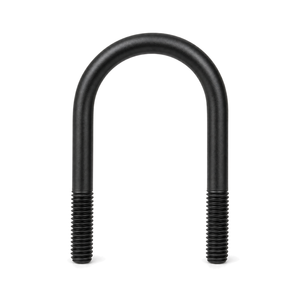
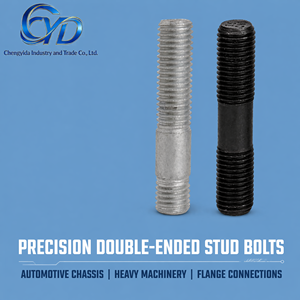
In high-pressure, high-temperature (HPHT) processing environments such as subsea oil fields, petrochemical refineries, gas turbines, and nuclear installations, conventional carbon steel or standard 300-series stainless steel fasteners face rapid mechanical degradation. Creep deformation, stress corrosion cracking (SCC), oxidation, and chloride pitting frequently lead to catastrophic joint failures. As a premier OEM/ODM Inconel stud bolts supplier & exporter, our engineering division manufactures fully certified, precision-machined nickel-chromium superalloy fasteners designed to withstand severe operational pressures and aggressive media.
Inconel alloys—primarily Inconel 600, 625, 718, and X-750—derive their structural integrity from a stable face-centered cubic (FCC) nickel-chromium solid-solution matrix reinforced by molybdenum, niobium, titanium, and aluminum additions. Unlike standard stainless steels, Inconel maintains its tensile strength, yield strength, and impact resistance across temperatures ranging from cryogenic conditions up to 1000°C (1832°F).
Information Gain Insight: Precision thread rolling post-solution annealing increases fatigue resistance by over 35% compared to cut threads, preventing micro-fissure propagation under cyclic thermal shock in flange connections.
Every batch of Inconel stud bolts manufactured at our facility undergoes strict quality control governed by internationally recognized engineering frameworks:
Selecting the optimal Inconel grade requires evaluating operational temperature, chemical exposure, mechanical tensile requirements, and resistance to hydrogen embrittlement.
Solid-solution hardened with molybdenum (8-10%) and niobium (3.15-4.15%). Exceptional resistance to pitting, crevice corrosion, and chloride stress cracking. Ideal for marine hardware, wet scrubbers, and offshore riser flanges.
Precipitation-hardenable nickel-chromium alloy containing iron, columbium, and molybdenum. Yield strength exceeds 1100 MPa. Designed for high-speed gas turbine fasteners, nuclear control rods, and deep-well downhole tools.
Titanium and aluminum additions provide high creep-rupture strength at temperatures up to 700°C (1290°F). Frequently specified for rocket engine thrust chambers, industrial heat-treating fixtures, and high-stress springs.
| Alloy Grade | UNS Designation | Tensile Strength (MPa) | Yield Strength 0.2% (MPa) | Max Operating Temp (°C) | Primary Industrial Intent |
|---|---|---|---|---|---|
| Inconel 600 | N06600 | 550 - 690 | 240 - 340 | 1093°C (2000°F) | Chemical processing, furnace components, nuclear steam generators |
| Inconel 625 | N06625 | 830 - 1000 | 410 - 600 | 982°C (1800°F) | Subsea oil & gas, seawater piping, marine propulsion, flares |
| Inconel 718 | N07718 | 1240 - 1400 | 1030 - 1170 | 704°C (1300°F) | Aerospace engines, HPHT oilfield wellheads, high-tensile bolting |
| Inconel 725 | N07725 | 1200 - 1350 | 960 - 1100 | 650°C (1200°F) | Sour gas (H2S) service, high-strength marine shafting & fasteners |
| Inconel X-750 | N07750 | 1100 - 1280 | 730 - 900 | 704°C (1300°F) | Gas turbines, pressure vessels, nuclear reactor internal bolting |
The global industrial landscape is experiencing a paradigm shift driven by decarbonization, ultra-deepwater drilling, and high-efficiency power generation. Modern procurement teams must navigate these emerging trends to guarantee supply chain resilience and asset integrity.
Hydrogen embrittlement poses a significant risk to conventional steel bolting in high-pressure H2 transport. Inconel 625 and 718 demonstrate near-immunity to hydrogen-assisted cracking, making them the default specified fastener material for electrolyzers, hydrogen storage tanks, and carbon dioxide injection wells.
Major EPC contracts now demand complete digital material passports. Buyers require EN 10204 3.1 or 3.2 inspection certificates backed by Positive Material Identification (PMI), Ultrasonic Testing (UT), and Magnetic Particle Inspection (MPI) to prevent counterfeit materials from entering critical supply chains.
Due to the high nickel content of Inconel, metal-to-metal galling during torque-up is a severe field risk. Future procurement trends emphasize pre-coated Inconel studs utilizing PTFE/Xylan, MoS2 (Molybdenum Disulfide), or ceramic anti-galling coatings to ensure uniform clamp loads and damage-free breakout during maintenance.
Our OEM/ODM manufacturing process integrates strict process validation at every production step. From incoming Spectro chemical verification to final dimensional inspection, we ensure zero-defect delivery for critical bolting packages.
1. Raw Material Verification: Positive Material Identification (PMI) testing on all incoming Inconel round bars to confirm precise chemical weight percentages.
2. Precision Thread Rolling: Unlike thread cutting, thread rolling maintains continuous grain flow, providing higher fatigue strength and superior surface finish.
3. Specialized Heat Treatment: Vacuum solution annealing and controlled age-hardening cycles to optimize tensile, yield, and impact properties.
4. NDT Inspection & Certification: Magnetic particle inspection, liquid penetrant testing, dimensional micro-gauge checks, and hardness testing per ASTM standards.
Expert answers to common engineering, quality assurance, and procurement inquiries regarding Inconel stud bolts and heavy hex nuts.
Every shipment is accompanied by EN 10204 3.1 MTRs detailing exact chemical heat analysis, mechanical tensile/yield testing, hardness numbers, dimensional inspection, and heat treatment batch codes. Third-party inspection reports (TUV, SGS, Bureau Veritas) are available upon request.
While ASTM A193 B7 is carbon alloy steel suitable up to 425°C, and SS 316 offers basic corrosion resistance, Inconel alloys (625/718) provide superior high-temperature strength (up to 1000°C), immune resistance to chloride stress cracking, and exceptional performance in sour gas (H2S) environments.
We manufacture stud bolts, double-end studs, and threaded rods in metric sizes from M6 to M100 and imperial sizes from 1/4" to 4" diameter. Standards conform to ASME B18.31.2, ASME B16.5, DIN 976, ISO 3506, or customer-specific engineering drawings.
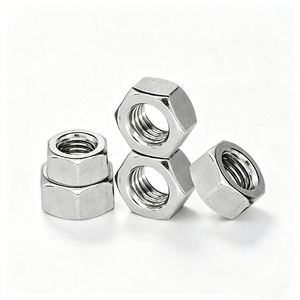
Yes. Complete flange bolting packages include matching heavy hex nuts (ASME B18.2.2 / ASTM A194 Grade 8M, Grade 7, or matching Inconel 625/718 nuts) and hardened flat/spring washers (ASTM F436 / DIN 125) to ensure compatible thermal expansion and corrosion behavior.
We offer PTFE (Xylan 1424 / 1014), zinc-nickel plating, hot-dip galvanizing (HDG), cadmium plating, MoS2 anti-friction coatings, and custom ceramic coatings designed to optimize friction coefficients and prevent thread galling during high-torque assembly.
Standard size inventory for B7, Stainless, and common Inconel studs ships within 3 to 7 business days. Custom OEM/ODM precision-machined orders typically require 2 to 3 weeks depending on raw material bar availability, forging, and specialized heat treatment requirements.
Consult with our metallurgical and fastener engineering team today. Send us your bill of materials, engineering drawings, or operational specs for immediate technical review and competitive export pricing.
Contact Us