
Explore our core range of precision-machined, heat-treated structural bolts, stud bolts, heavy hex nuts, and high-tensile threaded rods manufactured for extreme temperature, pressure, and corrosive operational environments.
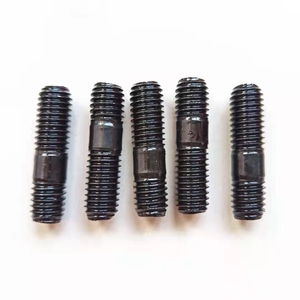
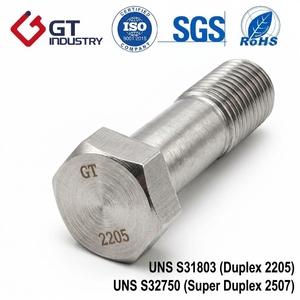
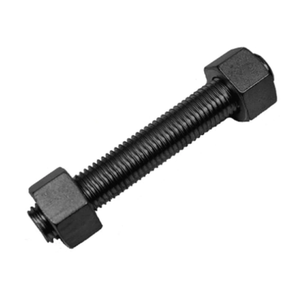
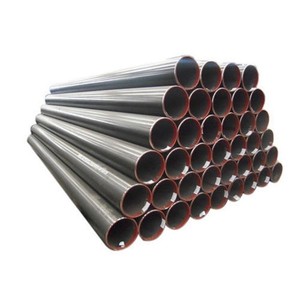
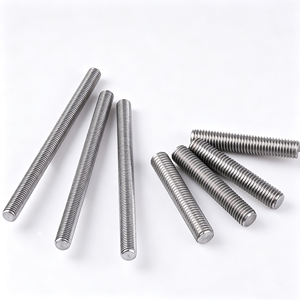
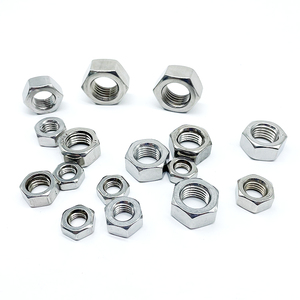
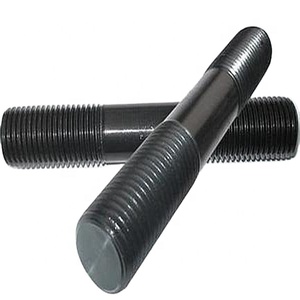
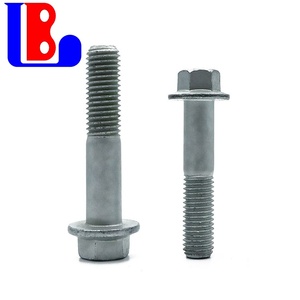
Full-scale manufacturing capabilities tailored precisely to client drawings, non-standard pitch tolerances (UNC, UNF, 8-UN, Metric), custom step studs, and specialized head geometries for heavy machinery, civil bridges, and subsea structures.
Every raw material batch undergoes Positive Material Identification (PMI), spectrographic chemical analysis, ultrasonic flaw detection, and mechanical testing (yield strength, tensile, elongation, Charpy V-notch impact down to -101°C).
Headquartered in Mumbai with seamless supply chain routes serving EPC contractors across the UAE, Saudi Arabia, Kuwait, Qatar, USA, UK, Germany, and Australia. Packed in seaworthy export-ready wooden crates with full heat-number stamping.
Structural bolting requires strict adherence to yield strength ratios, thermal expansion behavior, stress corrosion cracking (SCC) immunity, and torque-tension performance. Below is a comprehensive breakdown of our primary material systems.
| Material Category | Standard & Grade Specs | Tensile Strength (PSI / MPa) | Yield Strength (Min) | Primary Industrial Applications |
|---|---|---|---|---|
| Alloy Steel High-Tensile | ASTM A193 B7 / B7M / B16 ASTM A320 L7 / L7M |
125,000 PSI (860 MPa) | 105,000 PSI (725 MPa) | High-pressure ASME B16.5 flange joint connections, refineries, boilers, and power generation turbines. |
| Heavy Hex Nuts | ASTM A194 Grade 2H / 2HM / 4 / 7 / 8 / 8M | Proof Load: Up to 175,000 PSI | Controlled Hardness (≤ 235 HBW for 2HM) | Mating nuts for high-pressure stud bolts; 2HM grade engineered for sour service (H2S environments). |
| Austenitic Stainless | ASTM A193 B8 (304), B8M (316) Class 1 & Strain Hardened Class 2 |
110,000 PSI (750 MPa) [Class 2] | 95,000 PSI (655 MPa) | Chemical processing plants, marine structures, water treatment facilities, and cryogenic storage tanks. |
| Duplex & Super Duplex | UNS S31803 / S32205 (Duplex 2205) UNS S32750 / S32760 (Super Duplex) |
116,000 – 130,000 PSI (800–900 MPa) | 80,000 – 95,000 PSI (550–650 MPa) | Offshore oil production platforms, subsea manifolds, desalination systems (PREN > 40 for Super Duplex). |
| Nickel Superalloys | Inconel 625 / 718, Monel 400 / K-500 Hastelloy C276 |
140,000 – 185,000 PSI (965–1275 MPa) | 110,000 – 150,000 PSI (758–1034 MPa) | Extreme corrosive environments, hydrofluoric acid alkylation units, aerospace, gas turbines, marine propulsion. |
| Specialty Coatings | Fluoropolymer PTFE / Xylan 1014/1424 Hot-Dip Galvanized (ASTM A153) |
Coating Thickness: 15–45 microns | Salt Spray Resistance: 1000–3000 hrs | Corrosion mitigation for offshore splash zones, subsea pipelines, chemical processing equipment. |
Structural steel bolts used in heavy civil construction, offshore platforms, and pressure vessels must maintain tight mechanical performance parameters under cyclic loading and dynamic stress. Cold forging and CNC thread rolling ensure continuous grain flow along the thread roots, significantly reducing stress concentration points compared to cut threads.
For high-tensile carbon alloy steel such as ASTM A193 Grade B7 (42CrMo), microstructural quenching and tempering achieve elevated yield strength while maintaining ductile fracture energy absorption during seismic or vibration events.
In offshore oil and gas production where hydrogen sulfide ($H_2S$) is present, standard high-strength bolts are vulnerable to Hydrogen-Induced Stress Cracking (HISC) and Sulfide Stress Cracking (SSC). Our specialized ASTM A193 Grade B7M and ASTM A194 Grade 2HM stud bolt and nut sets undergo strict 100% hardness testing, ensuring a maximum hardness of 22 HRC (235 HBW).
Combined with fluoropolymer PTFE (Xylan) coatings, these assemblies deliver low friction coefficients ($\mu = 0.08 - 0.12$) for precise torque-tension assembly without galling.
As global infrastructure, green energy initiatives, and heavy processing plants evolve, supply chain managers and project procurement officers are adapting their sourcing strategies to keep pace with regulatory and material advances.
Global EPC contracts increasingly mandate low-carbon steel fasteners manufactured using Electric Arc Furnaces (EAF) powered by renewable energy. OEM manufacturers providing carbon footprint transparency and Scope 1-3 emission reports gain competitive procurement prioritization.
Manual paper MTRs are being replaced by QR-coded digital heat traceability. Modern procurement requires instant smartphone verification of raw material heat numbers, EN 10204 3.1 certification, chemical spectro analysis, and dimensional inspection sheets directly on-site.
With environmental regulations like REACH and EPA expanding, traditional cad-plating and Cr6+ chromate passivations are obsolete. Sourcing strategies have shifted to electro-plated Zinc-Nickel (Zn-Ni) and multi-layer fluoropolymer coatings offering over 3,000 hours of salt-spray protection.
The rise of green hydrogen storage and transportation requires high-pressure flange fasteners immune to hydrogen embrittlement. Demand is surging for Super Duplex UNS S32750 and strain-hardened austenitic stainless steels certified for high-pressure gaseous hydrogen service.
Technological innovation in structural fastening expands beyond raw metallurgy into smart load monitoring, automated torque control, and extreme-environment surface engineering.
Heavy structural flange connections in offshore wind turbines and critical pressure vessels are integrating embedded ultrasonic transducers. These micro-sensors allow technicians to measure real-time bolt elongation and clamping force without disassembling joints or relying solely on torque wrenches, preventing costly joint failure.
To eliminate surface decarburization and internal stress variations, leading OEM manufacturers utilize computer-controlled vacuum heat treatment furnaces with gas quenching. This guarantees uniform microstructural hardness across large-diameter structural bolts (M36 to M100) used in high-load structural frameworks.
Replacing traditional thread cutting with high-speed CNC thread rolling improves fatigue strength by up to 30%. Integrated multi-camera optical sorting machines inspect 100% of manufactured fasteners for pitch diameter, lead angle deviation, and surface micro-cracks before export packaging.
Detailed engineering answers to standard procurement queries regarding material grades, international standard compliance, export documentation, and custom OEM capabilities.
While both grades are manufactured from AISI 4140/42CrMo chromium-molybdenum alloy steel, their heat treatment parameters and mechanical limits differ significantly:
PTFE/Xylan coating dramatically lowers the coefficient of friction ($\mu$) of fastener threads from standard bare steel ($\mu \approx 0.15 - 0.20$) or hot-dip galvanized steel ($\mu \approx 0.19 - 0.25$) down to a smooth $\mu = 0.08 - 0.12$.
Because friction is reduced, applying standard un-coated torque values to a PTFE-coated stud bolt will cause severe over-tensioning, exceeding the material's yield strength and leading to stud necking or thread stripping. Torque calculations for PTFE-coated fasteners must incorporate the reduced nut factor ($K$-factor $\approx 0.11 - 0.13$) to achieve accurate target bolt tension without overloading the flange assembly.
Every export order dispatched from our facility includes full quality documentation to satisfy EPC inspectors and third-party agencies (TUV, DNV, Bureau Veritas, SGS, Lloyd's Register):
Service temperature dictates material grade selection:
We operate dedicated CNC turning centers, automatic thread rolling machinery, and hot-forging presses capable of producing custom structural fasteners from M6 to M100 (1/4" to 4" diameter) and lengths up to 3,000 mm. We manufacture custom step studs, collar bolts, heavy anchor bolts, spherical washers, and special pitch configurations directly to customer CAD drawings or project datasheets.
Need precise pricing, EN 10204 3.1 MTR samples, or custom manufacturing advice for your upcoming structural project?