
Explore our OEM/ODM custom product range manufactured to strict ASTM, ASME, DIN, and ISO standards with full material traceability.
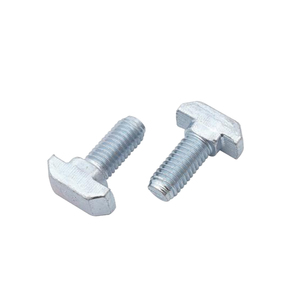
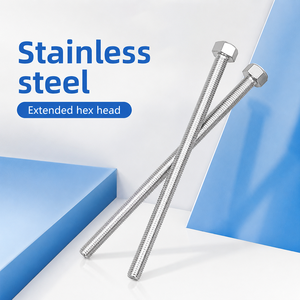
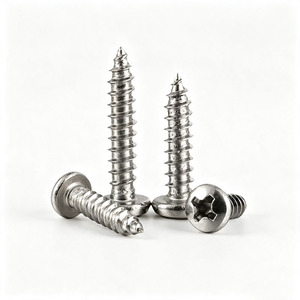
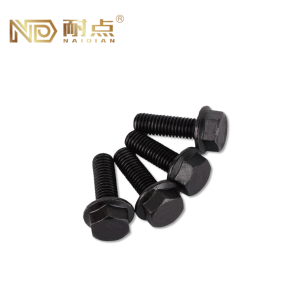
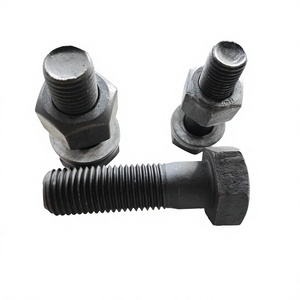
In high-stress industrial applications—spanning aerospace propulsion systems, deepwater subsea trees, chemical processing reactors, and marine desalination plants—fastener selection dictates structural integrity and operational safety. Standard austenitic stainless steel (such as 304 or 316) and high-tensile alloy steels (such as ASTM A193 B7) often fail when subjected to localized chloride pitting, stress corrosion cracking (SCC), or extreme power-to-weight constraints.
As a specialized OEM/ODM Titanium Stud Bolts Manufacturer & Factory, our facility bridges metallurgical science with precision CNC machining. Titanium stud bolts possess a unique combination of high specific strength (strength-to-weight ratio), exceptional galvanic and environmental corrosion resistance, and low thermal expansion coefficients. This technical whitepaper establishes the empirical criteria for selecting, custom-manufacturing, and deploying titanium stud bolts across critical engineering sectors.
Information Gain Insight: Unlike standard steel bolts that rely on applied sacrificial zinc or cadmium coatings to resist environmental degradation, titanium develops an instantaneous, self-healing, adherent titanium oxide ($\text{TiO}_2$) passivating film upon exposure to oxygen. This inert film renders titanium stud bolts practically immune to atmospheric marine corrosion, wet chlorine, oxidizing acids, and subsea micro-biological attack.
Understanding the microstructural phase transformations of titanium is vital for procurement engineers. Titanium fasteners are broadly classified into Commercially Pure (CP) alpha alloys, alpha-beta alloys, and near-beta alloys:
Below is the empirical technical data comparison utilized by structural engineers when specifying custom OEM/ODM titanium stud bolts against standard high-tensile industrial fasteners.
| Specification / Material Grade | Yield Strength (0.2% offset, MPa) | Tensile Strength (Min, MPa) | Density ($\text{g/cm}^3$) | Max Operating Temp (°C) | Primary Corrosion Environment |
|---|---|---|---|---|---|
| Titanium Grade 2 (CP Unalloyed) | 275 - 450 | 345 - 520 | 4.51 | 400°C | Seawater, Wet Chlorine, Nitric Acid |
| Titanium Grade 5 (Ti-6Al-4V) | 828 - 910 | 950 - 1100 | 4.43 | 450°C | Marine, Aerospace, Hydrocarbons |
| Titanium Grade 7 (Ti-0.2Pd) | 275 - 410 | 345 - 500 | 4.51 | 400°C | Reducing Acid Solutions, Hot Brine |
| ASTM A193 Grade B7 (Alloy Steel) | 725 - 800 | 860 - 980 | 7.85 | 425°C | Non-Corrosive Hydrocarbons (Requires Coating) |
| Inconel 718 (UNS N07718) | 1030 - 1170 | 1240 - 1400 | 8.19 | 650°C | Extreme High Temp, Sour Gas ($\text{H}_2\text{S}$) |
| Super Duplex S32750 (2507) | 550 - 750 | 750 - 1000 | 7.80 | 250°C | High Chloride Seawater, Offshore Oil |
Manufacturing titanium stud bolts demands specialized machinery and strict thermal control. Titanium's low modulus of elasticity and high chemical reactivity at elevated temperatures introduce manufacturing challenges such as tool galling, work hardening, and spring-back during machining operations.
Our OEM factory utilizes cold thread rolling machines for titanium studs. Thread rolling realigns the grain structure along the thread contour rather than severing it, yielding a 300% increase in fatigue endurance limits and smooth surface finish (Ra < 0.4 µm).
Titanium-on-titanium contact can lead to thread galling under high pre-loads. We provide OEM surface modifications including Type II Anodizing (AMS 2488), Physical Vapor Deposition (PVD) Titanium Nitride (TiN) coating, and micro-thin Molybdenum Disulfide ($\text{MoS}_2$) dry film lubricants.
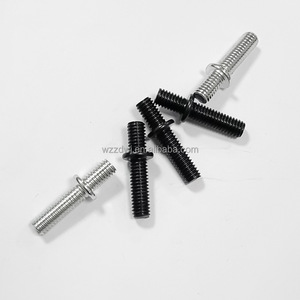
We manufacture custom double-end studs, tap-end studs, continuous threaded rods, and reduced-shank studs to exact customer blueprints, maintaining tight dimensional tolerances down to ±0.005 mm on CNC Swiss turning centers.
Every production batch of titanium stud bolts undergoes comprehensive non-destructive testing (NDT) and destructive testing in compliance with ISO 9001:2015 and AS9100D quality management systems:
The global industrial fast-tracking towards decarbonization, offshore green hydrogen generation, deepwater energy exploration, and aerospace electrification is driving unprecedented demand for lightweight, corrosion-resistant fastening systems.
Offshore wind turbines located in aggressive marine atmospheric conditions (C5-M environment) are shifting toward Titanium Grade 5 studs for critical nacelle and splash-zone structural flange connections to eliminate costly offshore maintenance cycles over 30-year design lives.
Commercial aircraft manufacturers and space launch operators are replacing heavy nickel superalloys with high-strength Grade 5 and Grade 23 (Ti-6Al-4V ELI) titanium stud bolts to achieve critical payload weight savings and withstand extreme thermal cycling.
Modern OEM procurement contracts increasingly favor manufacturers incorporating closed-loop titanium scrap recycling. Our factory recycles 100% of titanium CNC turnings and swarf back into vacuum arc remelting (VAR) ingot production, reducing the carbon footprint of raw material synthesis.
Technical guidance compiled by our senior metallurgical sales engineers to address common procurement and installation inquiries.
Titanium alloys possess a micro-thin passive oxide layer that can friction-weld during high-speed power wrench assembly. To prevent galling, our factory recommends pairing Grade 5 stud bolts with lubricated heavy hex nuts (such as PTFE-coated nuts), applying anti-seize paste containing molybdenum disulfide ($\text{MoS}_2$) or nickel, and specifying our proprietary Type II Anodized surface treatment.
We manufacture titanium studs in strict accordance with ASTM F468 (Standard Specification for Nonferrous Bolts, Hex Cap Screws, and Studs), ASTM B348 (Titanium and Titanium Alloy Bars), ASME B18.31.2 (Continuous Thread and Double-End Studs), DIN 938, DIN 939, DIN 976, and custom aerospace/military specifications (NAS / AS / MS standards).
Titanium Grade 2 and Grade 5 maintain structural strength up to approximately 400°C to 450°C. Above 500°C, titanium experiences rapid oxygen absorption, leading to surface embrittlement. For continuous service temperatures exceeding 550°C, our engineering team recommends high-temperature nickel superalloys such as Inconel 625 or Inconel 718.
All export shipments include full EN 10204 Type 3.1 Material Test Certificates detailing chemical composition analysis, room-temperature tensile and yield testing, elongation, hardness values, dimensional inspection logs, and heat treatment charts. Third-party inspection (TPI) by DNV, TUV, Lloyd's Register, or SGS is available upon request.
Standard catalog sizes in Grade 2 and Grade 5 are maintained in stock for immediate dispatch. Custom OEM/ODM orders requiring specialized CNC Swiss turning, non-standard thread pitches, or surface treatments typically carry a lead time of 2 to 3 weeks depending on batch volume and mill bar stock availability.
Consult with our technical sales engineers, submit your engineering drawings, or request immediate pricing and material certification for your global project.