
In modern petrochemical complexes, subsea oilfields, heavy power generation facilities, and offshore structural assemblies, mechanical integrity hinges on the quality of critical bolted connections. Alloy steel fasteners represent the apex of high-tensile, thermal-resistant structural hardware. Designed to operate beyond the structural thresholds of carbon steel and standard austenitic stainless steel, these specialized fasteners are meticulously formulated with alloying elements—including Chromium, Molybdenum, Nickel, and Vanadium—and subject to controlled thermal quenching and tempering to achieve exceptional mechanical performance.
The structural reliability of high-grade alloy steel fasteners stems from their controlled microscopic phase transformations during heat treatment. Chromium enhances hardenability, oxidation resistance, and elevated-temperature strength. Molybdenum prevents temper embrittlement while enhancing creep strength under continuous thermal exposure. When heat-treated in accordance with standards such as ASTM A193, ASTM A194, ASTM A320, and ISO 898-1, alloy steel bolting components provide superior proof load ratings, yield strength ratios, and fatigue endurance limits.
Browse our featured industrial fastener range manufactured to strict international specifications (ASTM, ASME, DIN, ISO). All items feature full material heat traceability and EN 10204 3.1 certification availability.
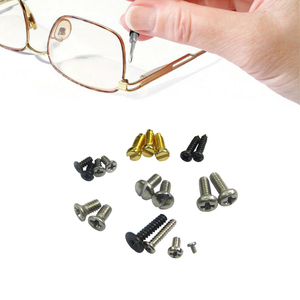
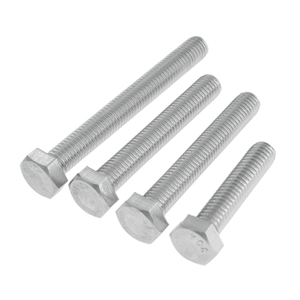
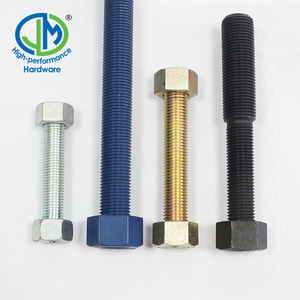
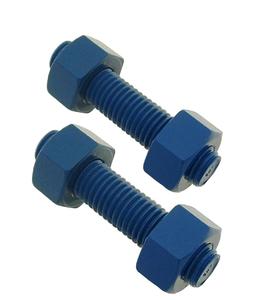
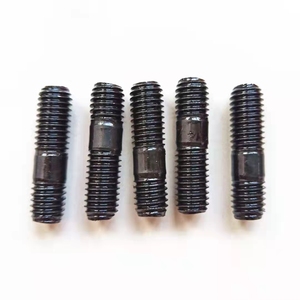
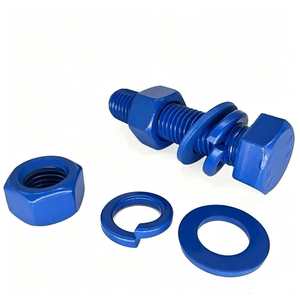
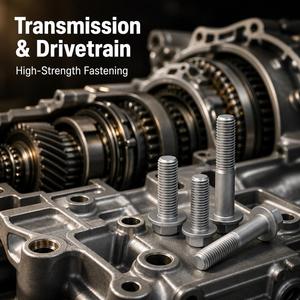
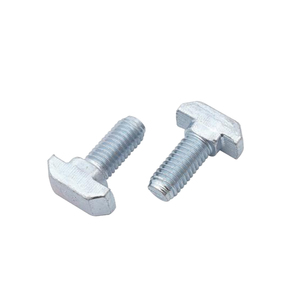
Engineering purchasing decisions require absolute clarity regarding yield strengths, operating temperature limits, and applicable standard specifications. The matrix below outlines primary alloy steel grades utilized in severe service environments.
| Specification Grade | Material Composition | Tensile Strength (Min) | Yield Strength (Min) | Thermal Range (°C / °F) | Primary Industrial Application |
|---|---|---|---|---|---|
| ASTM A193 B7 | AISI 4140 / 4142 Cr-Mo Steel | 125 ksi (860 MPa) | 105 ksi (720 MPa) | -30°C to 425°C (-22°F to 800°F) | Petrochemical flanges, valve bonnets, pressure vessels |
| ASTM A193 B7M | Modified Cr-Mo (Controlled Hardness) | 100 ksi (690 MPa) | 80 ksi (550 MPa) | -30°C to 425°C (-22°F to 800°F) | NACE MR0175 / ISO 15156 Sour Gas (H2S) service |
| ASTM A193 B16 | Cr-Mo-V Alloy Steel | 125 ksi (860 MPa) | 105 ksi (720 MPa) | Up to 595°C (Up to 1100°F) | High-temperature steam turbines, power boilers |
| ASTM A320 L7 | AISI 4140 Low-Temp Alloy | 125 ksi (860 MPa) | 105 ksi (720 MPa) | -101°C to 345°C (-150°F to 650°F) | Cryogenic storage, LNG terminals, arctic pipelines |
| ASTM A453 Gr 660 | A-286 Iron-Base Superalloy | 130 ksi (895 MPa) | 85 ksi (585 MPa) | Up to 700°C (Up to 1300°F) | High-stress jet engines, gas turbine exhaust manifolds |
| Property Class 10.9 | Medium Carbon Alloy Steel | 1040 MPa (151 ksi) | 940 MPa (136 ksi) | -40°C to 300°C (-40°F to 570°F) | Automotive suspension, structural steel joints |
Based in Mumbai, India, our state-of-the-art fastener production complex integrates advanced cold headers, hot-forging presses, thread rolling equipment, continuous heat treatment lines, and automated surface finishing systems.
Every raw material heat lot undergoes Positive Material Identification (PMI), chemical spectro-analysis, and ultrasonic testing (UT) to verify absolute freedom from internal inclusions or micro-fissures prior to forging.
Our thread profiles are generated using precision cold rolling dies. Cold thread rolling preserves uninterrupted grain flow lines along the thread flanks, increasing fatigue strength by up to 30% compared to cut threads.
We provide proprietary barrier coatings including Fluoropolymer PTFE/Xylan 1424, Hot-Dip Galvanizing (HDG per ASTM A153), Electro-deposited Zinc-Nickel (Zn-Ni), and Chromate-Free Dacromet for 5000+ hour salt spray protection.
Orders are shipped with EN 10204 3.1 Material Test Certificates, proof load test reports, micro-hardness charts (Vickers/Rockwell), dimensional verification, and third-party inspection sign-offs (SGS, TUV, Bureau Veritas).
As global energy sectors undergo transition and structural designs demand higher payload-to-weight ratios, the alloy steel fastener procurement landscape is undergoing significant technological and operational evolution.
The emergence of Industry 4.0 has driven the adoption of "smart" alloy steel stud bolts equipped with piezoelectric sensors and RFID microchips. These embedded tension sensors allow maintenance engineers to measure real-time bolt elongation and clamp load retention without disassembling critical piping flanges, reducing downtime during refinery turnarounds.
High-strength alloy steel fasteners (tensile strength ≥ 1000 MPa / Rockwell C33) are vulnerable to Hydrogen Embrittlement (HE) when electroplated. The industry is rapidly shifting toward non-electrolytic zinc flake coatings (such as Dacromet and Geomet) and eco-friendly PTFE finishes that eliminate acid pickling steps, protecting critical high-tensile hardware against sudden brittle fractures.
International EPC contractors are enforcing strict Scope 3 carbon emission disclosures. Modern alloy steel fastener manufacturers are integrating electric arc furnace (EAF) steel billets produced with renewable energy into their supply chains, achieving up to 45% reduction in embedded carbon footprint for major infrastructure projects.
When auditing industrial fastener suppliers for major energy and construction tenders, procurement heads must evaluate technical capabilities against strict qualification metrics.
Clear answers to crucial engineering and procurement inquiries regarding alloy steel bolting standards, coatings, torque specs, and material selection.
Need custom dimensions, specialized coatings, or urgent export delivery for your project? Contact our engineering sales team in Mumbai today for competitive factory-direct pricing and material support.