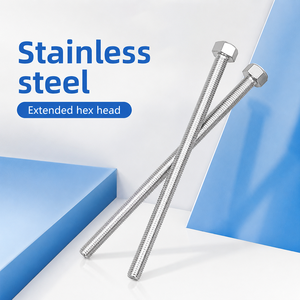
Select from our engineered stock of high-tensile alloy bolts, stainless hardware, and specialized petrochemical stud bolts.
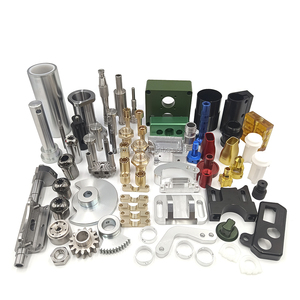
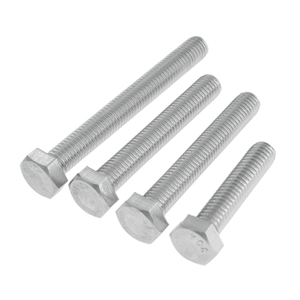
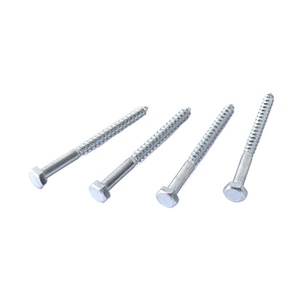
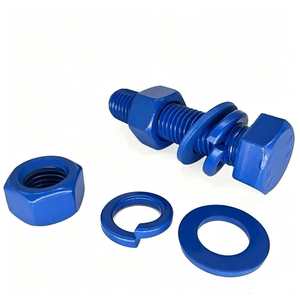
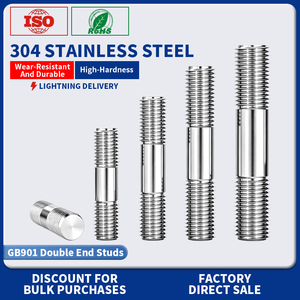
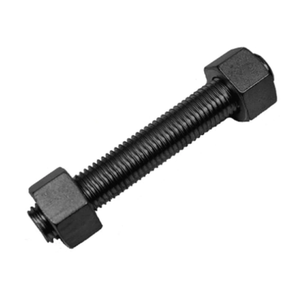
In structural mechanics and critical mechanical engineering, Property Class 12.9 represents the absolute peak of standardized high-tensile metric fasteners.
Grade 12.9 fasteners are manufactured from medium-carbon alloy steel grades such as 4140 (Chromium-Molybdenum), 4340 (Nickel-Chromium-Molybdenum), or 42CrMo4. Achieving the nominal 1,200 N/mm² ultimate tensile strength requires precise quenching in oil from an austenitizing temperature of ~860°C, followed by rigorous tempering at no less than 425°C. This microstructural transformation yields a tempered martensite matrix, balancing ultra-high mechanical yield strength with adequate impact toughness.
Due to core hardness levels exceeding 39 HRC, Grade 12.9 components are exceptionally susceptible to Hydrogen-Assisted Micro-Cracking (HAMC). Conventional acid pickling and electroplating process atomic hydrogen into the grain boundaries. Quality-certified manufacturers strictly mandate mechanical zinc plating, Geomet®/Dacromet® zinc-flake coatings, or immediate post-plating de-embrittlement baking at 200°C–230°C for 8 to 24 hours to guarantee structural integrity under sustained clamping loads.
Unlike lower-grade bolts that may utilize thread cutting, authentic Grade 12.9 fasteners feature cold-rolled threads post heat-treatment or controlled pre-heat-treatment rolling. Roll-forming continuous grain lines along the thread profile increases dynamic fatigue resistance by up to 300%. The radius root configuration (conforming to ISO 5855 or MJ thread profiles) eliminates stress concentrations at the bolt shank transition.
A rigorous evaluation of global manufacturers based on alloy purity, coating technology, testing capability, and global export compliance.
When procuring Grade 12.9 high-tensile fasteners for petrochemical reactors, subsea flanges, automotive powertrains, or heavy mining equipment, selecting the right partner is paramount. Below is a comparative assessment of the market leaders dominating the high-tensile fastener sector:
Direct mechanical property comparison per ISO 898-1 and ASTM standards for structural design engineers.
| Mechanical Property | Class 8.8 | Class 10.9 | Class 12.9 | ASTM A193 B7 |
|---|---|---|---|---|
| Nominal Tensile Strength (Rm) | 800 N/mm² (800 MPa) | 1000 N/mm² (1000 MPa) | 1200 N/mm² (1220 MPa) | 125 ksi (860 MPa) |
| Yield Strength (Rp0.2) | 640 N/mm² (640 MPa) | 900 N/mm² (900 MPa) | 1080 N/mm² (1100 MPa) | 105 ksi (724 MPa) |
| Elongation after Fracture (A %) | Min. 12% | Min. 9% | Min. 8% | Min. 16% |
| Core Hardness Range | 22 - 32 HRC | 32 - 39 HRC | 38 - 44 HRC | Max 35 HRC (221-321 HBW) |
| Raw Material Alloys | Medium Carbon Steel | Low/Medium Alloy Steel | 4140 / 4340 / 42CrMo4 | AISI 4140 / 4142 Cr-Mo Steel |
| Primary Application | General Engineering | Automotive & Machinery | Heavy Load / High Fatigue | Petrochemical & Flanges |
Combining Mumbai's metallurgical craftsmanship with international quality standards for global exports.
Every batch of incoming alloy steel wire rod undergoes X-ray fluorescence (XRF) and optical emission spectrometry to verify exact elemental composition (Cr, Mo, Ni, V) before entering the hot-forging line.
Export shipments destined for the UAE, Saudi Arabia, USA, UK, Germany, and Australia are protected with VCI anti-corrosion bags, heavy-duty wooden crates, and reinforced ISPM-15 heat-treated pallets.
Orders are dispatched with complete EN 10204 Type 3.1 Inspection Certificates, Charpy V-Notch impact testing reports, ultrasonic non-destructive test results, and third-party inspection sign-offs.
Key technological advancements transforming fastener specification in green energy, aerospace, and heavy industry.
Industrial IoT integration has introduced ultrasonic strain-gauge sensors embedded within Grade 12.9 bolt shanks. These real-time load monitoring bolts allow offshore wind turbine operators and chemical processing plants to detect bolt tension loss and fatigue stress remotely, preventing catastrophic joint failures.
Regulatory shifts toward REACH and RoHS compliance are driving the phase-out of hexavalent chromium and hazardous electroplating chemicals. Micro-layer zinc flake systems (such as Geomet® and Delta-Tone®) deliver over 1,500 hours of neutral salt spray resistance without inducing hydrogen embrittlement in Grade 12.9 steel.
As assembly lines transition to fully automated robotic fastening, tight control over friction coefficients (µ = 0.10 to 0.14) becomes vital. Suppliers are now applying integrated lubricated topcoats to ensure exact clamping force prediction during high-speed automated installation.
Direct answers from senior metallurgical and procurement specialists to address critical application queries.
Our technical engineering team assists with alloy selection, surface coating specs, torque calculations, and custom dimensional drawings. Connect with our export sales desk today.