
Engineered for extreme pressure, high-temperature service, and sour oilfield environments with complete heat traceability (EN 10204 3.1).
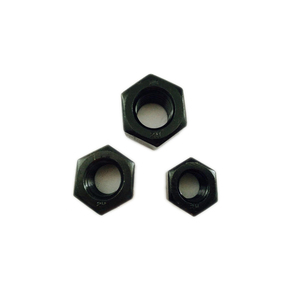
High-strength quenched and tempered carbon steel heavy hex nuts designed for high-pressure ASME flanged piping systems.
Inquire Now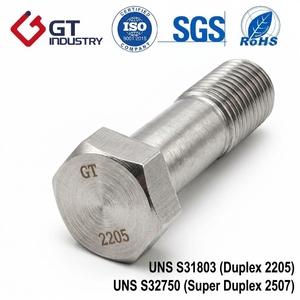
UNS S32205 duplex fasteners engineered to prevent stress corrosion cracking and flange leaks in offshore subsea piping.
Inquire Now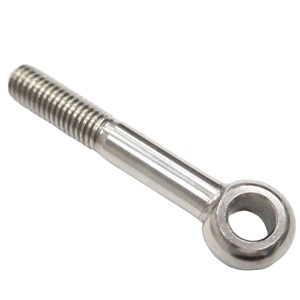
Precision polished stainless steel eyebolts for heavy marine anchoring, structural rigging, and industrial mechanical linkages.
Inquire Now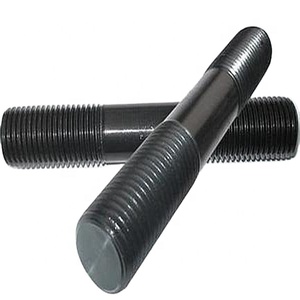
100% hardness-tested alloy stud bolt and nut sets for H2S-containing petroleum refinery and chemical process lines.
Inquire Now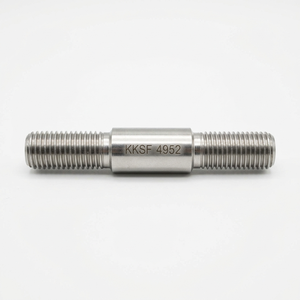
Extreme temperature nickel superalloy studs engineered for gas turbines, power station boilers, and thermal crackers.
Inquire Now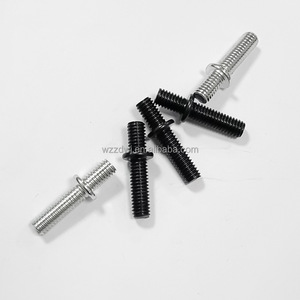
Corrosion-resistant dual-threaded flange studs engineered for fluid handling systems, automotive headers, and pump housings.
Inquire Now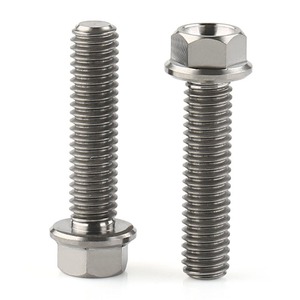
Ultra-lightweight high-tensile titanium and stainless hex bolts tailored for high-performance automotive and defense machinery.
Inquire Now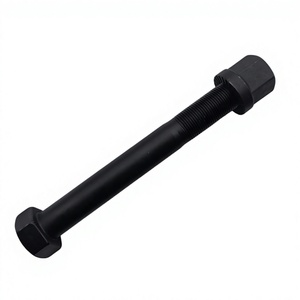
Fatigue-resistant Grade 10.9/12.9 wheel stud bolts crafted to endure severe dynamic shearing stresses in heavy haulage vehicles.
Inquire NowIn high-stakes industrial environments—ranging from deepwater offshore oil rigs to nuclear power containment structures—the integrity of a single flanged connection rests entirely upon the mechanical reliability of its fasteners. As a premier global high tensile fasteners manufacturer and exporter based in Mumbai, India, our manufacturing ecosystem combines heavy hot-forging capability, automated thread rolling, controlled atmosphere heat treatment, and stringent metallurgical laboratory testing.
Every batch of raw bar stock undergoes Positive Material Identification (PMI) using XRF analyzers upon receipt. Mill Test Certificates (MTC) conforming to EN 10204 3.1 are provided with full heat-number mapping.
Rather than cutting threads which sever grain flow lines, our factory utilizes cold and warm thread rolling. This process induces compressive residual stresses, expanding fatigue life by up to 300% under cyclic loading.
Specialized heat treatment lines produce ASTM A193 Grade B7M and A194 Grade 2HM fasteners with strictly controlled maximum hardness (22 HRC / 235 HBW) to prevent Hydrogen Stress Cracking in sour gas duty.
💡 Quality Assurance Note: All structural and pressure-retaining fasteners manufactured at our facility undergo 100% dimensional checks using thread gages, ultrasonic flaw detection (UT), magnetic particle inspection (MPI), and Charpy V-Notch impact testing down to -101°C (-150°F).
Compare mechanical properties, service temperatures, and international standard cross-references.
| Material Grade | Specification Standard | Tensile Strength (Min) | Yield Strength (Min) | Service Temp. Range | Primary Application |
|---|---|---|---|---|---|
| ASTM A193 B7 | AISI 4140/4142 Cr-Mo Steel | 125 ksi (860 MPa) | 105 ksi (720 MPa) | -29°C to 425°C | High Pressure Piping |
| ASTM A193 B7M | Cr-Mo Alloy (Controlled Hardness) | 100 ksi (690 MPa) | 80 ksi (550 MPa) | -29°C to 425°C | Sour H2S Gas Service |
| ASTM A320 L7 | Low Temp Alloy Steel | 125 ksi (860 MPa) | 105 ksi (720 MPa) | -101°C to 345°C | LNG & Cryogenics |
| Duplex 2205 (S32205) | EN 1.4462 / Austenitic-Ferritic | 95 ksi (655 MPa) | 65 ksi (450 MPa) | -50°C to 300°C | Seawater & Subsea |
| Super Duplex 2507 | UNS S32750 / PREN ≥ 42 | 116 ksi (800 MPa) | 80 ksi (550 MPa) | -40°C to 250°C | Desalination Rigs |
| Inconel 718 | UNS N07718 / Ni-Cr Superalloy | 185 ksi (1275 MPa) | 150 ksi (1034 MPa) | -250°C to 650°C | Turbines & Aerospace |
Historically, B2B procurement managers evaluated fastener suppliers predominantly on initial unit price per ton. However, global plant operators in the Middle East, North America, and Europe are fundamentally restructuring their vendor evaluation criteria. Unplanned downtime caused by fastener galling, stress corrosion cracking (SCC), or thread stripping on critical hydrocarbon flanges can incur operational losses reaching hundreds of thousands of dollars per hour.
As a consequence, forward-thinking procurement teams are standardizing on multi-layer Fluoropolymer (PTFE / Xylan 1014 / Xylan 1424) and Zinc-Nickel (88/12 alloy) coated stud bolts. These advanced barrier coatings withstand over 3,000 hours of continuous ASTM B117 salt spray fog exposure without red rust formation, reducing breakout torque requirements during routine maintenance shutdowns by up to 50%.
The global transition toward hydrogen energy carrier systems, Carbon Capture, Utilization, and Storage (CCUS), and ultra-deepwater offshore extraction is redefining material engineering requirements. Standard 304 and 316 stainless steels are increasingly inadequate under severe pitting and crevice corrosion environments containing high chloride concentrations at elevated temperatures.
Leading export factories are scaling up production of Super Duplex (UNS S32750/S32760), Nickel Alloy 625, and Inconel 718 fasteners. These alloys maintain yield strengths exceeding 150 ksi while delivering exceptional Pitting Resistance Equivalent Numbers (PREN > 40), eliminating the risk of catastrophic flange failure in high-salinity marine environments.
The modern fastener manufacturing plant is no longer just a machine shop; it is an integrated digital data hub. The integration of QR-coded laser etching on bolt heads enables field engineers to instantly scan installed studs using ruggedized mobile devices to verify chemical heat compositions, mill certificate numbers, torque values, and installation date.
Furthermore, critical heavy equipment applications—such as mining dump truck wheel hubs and wind turbine blade root connections—are adopting smart ultrasonic tension measurement. Precision machined stud ends with flat reference faces allow ultrasonic transducers to accurately calculate actual bolt elongation and residual clamping force during installation, eliminating torque-wrench friction variations.
Environmental, Social, and Governance (ESG) mandates are compelling tier-1 EPC contractors to audit the carbon intensity of their supply chains. Factories utilizing Electric Arc Furnace (EAF) steelmaking powered by renewable energy sources, alongside automated closed-loop acid pickling and zero-discharge electroplating systems, are gaining decisive competitive advantages in international B2B tenders.
Detailed technical answers to common questions regarding standards, quality certification, and export logistics.
Connect directly with our senior engineering team to receive technical assistance, custom manufacturing quotes, and material certification within 2 hours.