Featured ASTM A194 2H & High-Strength Fastener Series
Precision-engineered carbon steel, alloy steel, and heavy hex nut bolt assemblies
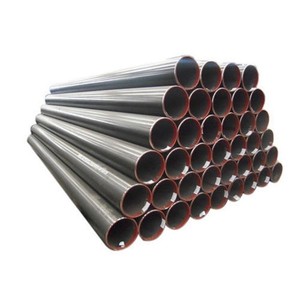
Astm A106 Gr B Schedule 80 Pipe A33 Grb Sch 160 Seamless Carbon Steel Tube
Get a Quote
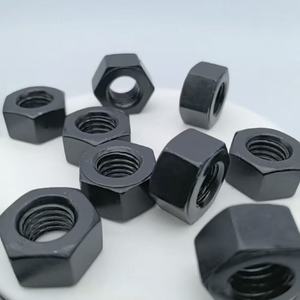
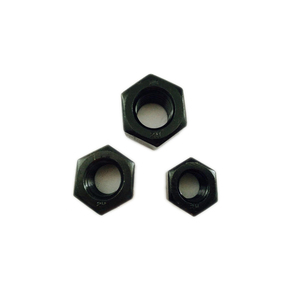
Zinc Plated Black Oxide ASTM A194 2H Alloy Steel Hex Nuts High Strength Grade 8.8 10.9 12.9 Fasteners for Oil Gas Heavy Industry
Get a Quote
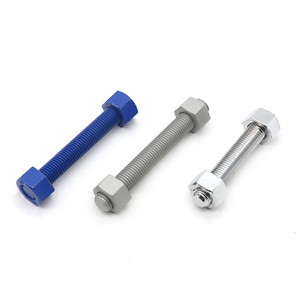
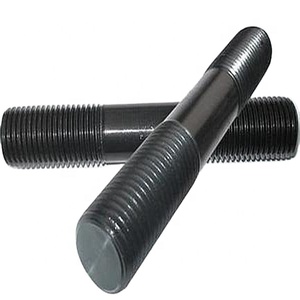
Astm A193 B7 A194 2h Stud Bolts Stud Bar Alloy Steel Stud Bolt A193 B7 All Thread Rod
Get a Quote
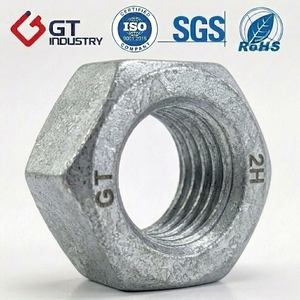
ASTM A194 2H Hot Dip Galvanized Hex Nuts for Oil & Gas Project
Get a Quote
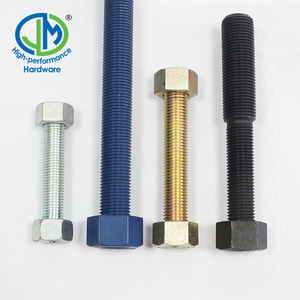
ASTM A193 B7M (42CrMo) Stud Bolt and ASTM A194 2HM Heavy Hex Nut Set/ Stud Bolt and Nut Set
Get a Quote
ASTM A193 B16 Stud Bolt /A193 B7 Thread Rod ASTM A194 GR 2H Hex Nut
Get a Quote
ASTM A193 Gr B7 B16 L7 Threaded Rod Stud Bolt and A194 Gr 2h Hex Nut
Get a Quote
120,000+
Metric Tons Annual Output
175,000 PSI
Proof Load Capacity (≤1.5")
100%
Ultrasonic & MPI Tested
45+
Global Export Markets
Comprehensive Technical Analysis: ASTM A194 Grade 2H Heavy Hex Nuts & Fastener Mechanics
The global demand for high-strength industrial fasteners operating in extreme pressure and elevated temperature regimes has driven standardizations to unprecedented levels of rigor. At the epicenter of high-pressure piping assemblies, pressure vessel flanges, and petrochemical refinery construction stands the ASTM A194 Grade 2H Heavy Hex Nut. As China's premier manufacturer and exporter of standard and custom high-tensile bolting systems, we provide an authoritative overview of metallurgy, mechanical properties, coating technologies, and global procurement dynamics.
Information Gain Insight: Unlike standard carbon steel commercial nuts (e.g., DIN 934 or ISO 4032), ASTM A194 Grade 2H heavy hex nuts are explicitly formulated with higher carbon content (0.40% minimum) and undergo a mandatory liquid-quenched and tempered heat treatment process to sustain proof load stress up to 175,000 psi without thread stripping or plastic deformation.
1. Metallurgical Composition and Heat Treatment Protocols
The standard specification ASTM A194/A194M governs carbon steel, alloy steel, and stainless steel nuts intended for high-pressure or high-temperature service. Grade 2H represents a quenched and tempered medium-carbon steel grade optimized for structural integrity under cyclic thermal expansion and mechanical fatigue.
| Element / Parameter |
ASTM A194 Grade 2H (Standard) |
ASTM A194 Grade 2HM (Sour Service) |
ASTM A194 Grade 7 (Alloy Steel) |
| Carbon (C) |
0.40% min |
0.40% min |
0.37% – 0.49% |
| Manganese (Mn) |
1.00% max |
1.00% max |
0.65% – 1.10% |
| Molybdenum (Mo) |
- |
- |
0.15% – 0.25% |
| Quenching Medium |
Liquid (Water/Oil) |
Liquid (Water/Oil) |
Oil Quenched |
| Min. Tempering Temp. |
850°F (455°C) |
1150°F (620°C) |
1100°F (593°C) |
| Hardness (Rockwell C) |
24 to 35 HRC |
22 HRC max (237 HBW max) |
24 to 38 HRC |
| Proof Load (≤ 1.5 in) |
175,000 psi |
150,000 psi |
175,000 psi |
During automated hot-forging in our state-of-the-art facility, raw steel bar stock (typically 45# carbon steel or 42CrMo alloy steel) is induction heated, forged into heavy hex geometries according to ASME B18.2.2, tapped with 2B fit pitch tolerances per ASME B1.1, and then subjected to precise thermal processing. The liquid quenching stage yields a fully martensitic structure, which is subsequently tempered at temperatures no lower than 850°F (455°C) to relieve residual stresses and achieve optimum toughness.
Advanced Surface Coatings & Hydrogen Embrittlement Mitigation
Operating in marine offshore rigs, sour gas processing plants (NACE MR0175/ISO 15156), and coastal refineries requires surface engineering that prevents galvanic corrosion while keeping friction coefficients predictable during torque tightening.
Hot-Dip Galvanizing (HDG)
Applied per ASTM A153 or F2329. Provides sacrificial zinc protection with layer thicknesses exceeding 55 μm. Requires special over-tapping of the heavy hex nut internal threads (per ASME B1.13M) to accommodate coating buildup while preserving thread engagement strength.
PTFE / Fluoropolymer / Xylan Coatings
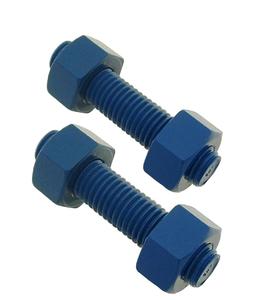
Engineered multi-layer fluoropolymer coatings offer exceptional chemical resistance to acids and alkalis, low coefficient of friction (μ = 0.06 - 0.08), and elimination of nut galling during high-speed torque installation on stainless steel or alloy stud bolts.
Zinc-Nickel Electroplating (88/12)
Delivers over 1,500 hours of neutral salt spray resistance (ASTM B117) without red rust formation. The non-brittle microcrystalline structure significantly reduces hydrogen diffusion risks during electroplating.
Critical Quality Assurance: Electroplated high-strength fasteners with hardness values exceeding 31 HRC are strictly subjected to post-plating hydrogen bakeout at 190°C – 220°C for a minimum of 4 to 24 hours per ASTM B849/B850 to eliminate catastrophic Hydrogen-Induced Cracking (HIC).
Future Procurement & Technological Trends in High-Pressure Fastening Systems
As global infrastructure transitions toward green hydrogen transport, ultra-supercritical thermal power, subsea carbon capture (CCUS), and modular nuclear reactors (SMRs), the industrial procurement landscape for ASTM A194 2H fasteners is undergoing rapid structural shifts.
1. Green Steel & Low-Carbon Manufacturing
Leading Chinese exporters are integrating Electric Arc Furnace (EAF) steel billets powered by renewable energy, reducing Scope 1 and Scope 2 embedded carbon footprints by up to 60% to meet EU CBAM requirements.
2. Smart Fasteners & RFID Traceability
Direct laser micro-QR coding and embedded RFID tags on heavy hex nut faces allow field technicians to instantaneously verify heat numbers, proof load test certificates, and installation torque parameters via mobile scanners.
3. Automated Optical Sorting
Implementation of 360-degree high-speed optical laser sorters achieves zero-defect (0 PPM) dimensional compliance for pitch diameter, washer face flatness, and thread pitch completeness.
4. NACE Sour Gas Optimization
Transition from standard 2H to modified 2HM and Grade 7M nuts in hydrogen sulfide (H2S) environments to eliminate sulfide stress cracking (SSC) under severe downhole conditions.
Why Global EPC Contractors Partner with Our Manufacturing Hub in China
With decades of specialized experience in high-tensile metallurgical engineering, our production facilities combine massive economies of scale with rigorous international compliance. We serve tier-1 energy conglomerates, flange manufacturers, and industrial stockists across North America, Europe, the Middle East, and Southeast Asia.
Complete Material Traceability
Every batch of ASTM A194 2H nuts and A193 B7 stud bolts is assigned a unique heat code directly linked to original raw material mill test reports. Full compliance with EN 10204 3.1 and 3.2 certifications is standard.
In-House Metallurgical Testing
Our CNAS-accredited testing laboratory is equipped with direct-reading optical emission spectrometers (OES), 1000kN hydraulic tensile/proof load machines, Charpy V-notch impact testers, and Rockwell/Vickers hardness testers.
Seaworthy Export Packaging
Products are protected with anti-rust VCI film, packaged in heavy-duty 25kg wooden-box reinforced cartons, and strapped onto heat-treated ISPM-15 fumigated wooden pallets to survive long ocean transits.
Frequently Asked Technical & Procurement Questions
Expert engineering insights regarding ASTM A194 2H specifications, selection, and application
What is the key chemical and structural difference between ASTM A194 2H and standard ASTM A563 Grade DH nuts?
While both ASTM A194 2H and ASTM A563 Grade DH heavy hex nuts exhibit high proof load capacities, ASTM A194 Grade 2H is specifically intended, designed, and tested for high-temperature and high-pressure service (e.g., ASME B16.5 flanged joints). A194 2H mandates specific tempering temperature thresholds (minimum 850°F / 455°C) and rigorous hardness testing after quenching to ensure stress retention under elevated thermal cycles, whereas A563 DH is primarily tailored for structural steel bolting applications under ambient conditions.
When should ASTM A194 Grade 2HM be specified over standard Grade 2H?
Grade 2HM is a modified variant of Grade 2H engineered specifically for sour oil and gas service containing hydrogen sulfide (H2S), in full compliance with NACE MR0175 / ISO 15156. Grade 2HM requires 100% hardness control, limiting maximum hardness to 22 HRC (237 HBW). This lower hardness limit prevents Sulfide Stress Cracking (SSC) under severe sour environment conditions. Standard Grade 2H has a higher maximum hardness of 35 HRC and is not suitable for wet H2S sour gas environments without special engineering evaluation.
How does Hot-Dip Galvanizing (HDG) affect the thread engagement and proof load of A194 2H nuts?
Hot-dip galvanizing adds a 45 to 65 micron thick zinc-iron alloy layer onto the fastener surface. Because male threads (such as ASTM A193 Grade B7 stud bolts) are generally cut to standard 2A tolerances prior to HDG, the internal threads of ASTM A194 2H heavy hex nuts must be tapped over-sized after heat treatment (per ASME B1.13M allowance class 6AZ or 2B over-tapping tables). Because 2H nuts possess substantial wall thickness and high carbon content, over-tapping within standard ASTM A194 specification limits does not compromise the mandatory proof load rating of 175,000 psi.
What documentation and material certificates accompany export shipments of ASTM A194 2H nuts?
All export orders supplied by our Chinese facilities include full MTRs (Material Test Reports) conforming to EN 10204 3.1 standards. The documentation outlines: (1) Melt heat number and chemical ladle analysis, (2) Hardness test results (Rockwell C/Brinell), (3) Proof load test values, (4) Microstructure and grain size evaluation, (5) Heat treatment furnace temperature records, and (6) Dimensional check reports. Third-party inspection reports from SGS, TÜV, BV, or Lloyd's Register are routinely provided upon client request.
What thread fit and pitch standards are supplied for metric and imperial ASTM A194 2H nuts?
Imperial ASTM A194 2H heavy hex nuts are supplied with UNC (Unified Coarse) threads for sizes 1 inch and smaller, and 8UN (8-Thread Series) for sizes above 1 inch per ASME B1.1 Class 2B fit, which is standard for high-pressure flanged piping. Metric A194M Grade 2H nuts are supplied according to ISO 261 / ISO 965-1 thread profiles with 6H fit tolerances.
How do you prevent Hydrogen Embrittlement during the surface treatment of Grade 2H fasteners?
For high-strength nuts with hardness levels near or above 30 HRC, acid pickling prior to electroplating introduces atomic hydrogen into the steel matrix. To prevent Hydrogen-Induced Cracking (HIC), our production line uses mechanical descaling/shot blasting where feasible. If acid pickling and zinc/cadmium plating are executed, fasteners are immediately transferred within 1 hour to hydrogen de-embrittlement baking ovens at 190°C to 220°C for 4 to 24 hours to diffuse trapped hydrogen out of the crystal lattice.
Request a Custom Technical Quote for ASTM A194 2H Fasteners
Need factory-direct pricing, mill test reports, or custom coated heavy hex nuts and stud bolts? Our engineering team responds within 24 hours.
Get a Quote