
Explore our ISO 9001 & CE-certified heavy hex bolting solutions engineered for extreme load bearing, high pressure, and severe corrosive operating environments.
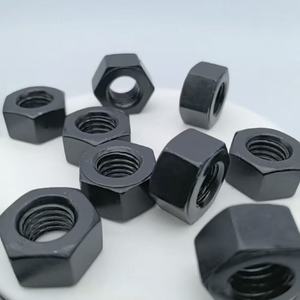
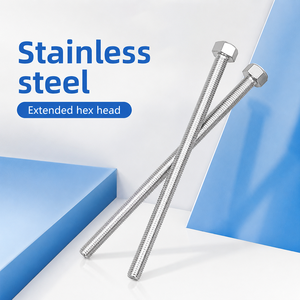
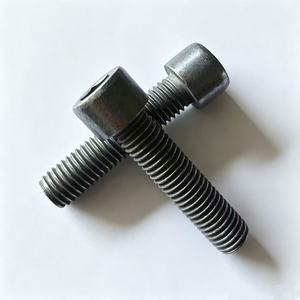
Leveraging advanced multi-station cold headers, hot forging presses, and automated heat treatment lines to deliver world-class heavy hex bolts with complete metallurgical traceability.
Understanding the mechanical geometry, load distribution mechanics, and material selection criteria for critical structural and pressure vessel bolting.
Heavy hex bolts feature a significantly larger head profile than standard hex bolts (1/8 inch wider across flats for equivalent nominal diameter). This increased bearing area spreads the clamping load over a larger surface, dramatically reducing compressive stress on mated flanges and structural steel components under intense torque loads.
Designed primarily for high-pressure fluid piping (ASME B16.5 / B16.47), steel bridge construction, and heavy industrial machinery, heavy hex bolts prevent localized plastic deformation of joint faces. When paired with heavy hex nuts (ASTM A194 Grade 2H/7/8), they ensure leak-proof fluid containment under cyclic thermal expansion.
Manufactured from premium medium-carbon steel, alloy steel (4140/4340), or austenitic/duplex stainless steels. Subjected to precision quenched and tempered (Q&T) heat treatment cycles to attain specified tensile strength ratings ranging from Grade 8.8 and 10.9 up to ASTM A193 B7 and A320 L7 for sub-zero cryogenic toughness.
| Specification Grade | Material Composition | Tensile Strength (Min) | Yield Strength (Min) | Primary Industrial Applications |
|---|---|---|---|---|
| ASTM A193 B7 | Chromium-Molybdenum Alloy Steel (AISI 4140/4142) | 125,000 PSI (860 MPa) | 105,000 PSI (720 MPa) | High-pressure refinery piping, boilers, valves, pressure vessels |
| ASTM A193 B16 | Chromium-Molybdenum-Vanadium Alloy Steel | 125,000 PSI (860 MPa) | 105,000 PSI (720 MPa) | Elevated temperature steam turbine casings and power plant headers |
| ASTM A320 L7 | Alloy Steel (Quenched & Tempered with Charpy V-Notch) | 125,000 PSI (860 MPa) | 105,000 PSI (720 MPa) | Low-temperature & cryogenic gas equipment (-101°C / -150°F impact tested) |
| ASTM F3125 A320 / A490 | High-Strength Structural Carbon & Alloy Steel | 120,000 - 150,000 PSI | 92,000 - 130,000 PSI | Structural steel bridges, skyscraper erection, heavy infrastructure frame joints |
| Duplex 2205 / S32205 | 22Cr Austenitic-Ferritic Stainless Steel | 95,000 PSI (655 MPa) | 65,000 PSI (450 MPa) | Desalination plants, marine platforms, offshore acid processing lines |
How international EPC contractors, OEM buyers, and industrial distributors are optimizing their fastener procurement strategies through 2025 and beyond.
Global procurement teams are prioritizing fastener manufacturers utilizing electric arc furnace (EAF) steel and low-carbon emission wire rod feeds. Leading OEMs now demand Scope 1, 2, and 3 carbon footprint documentation alongside raw material certificates to satisfy EU CBAM (Carbon Border Adjustment Mechanism) compliance.
Traditional hot-dip galvanizing and cadmium plating are undergoing rapid technological displacement. Modern engineering specifications mandate Zinc-Nickel (Zn-Ni 12-15%) alloy electroplating and PTFE/Fluoropolymer coatings (e.g., Xylan 1424), delivering 1,500+ hours of neutral salt spray (ASTM B117) resistance without hydrogen embrittlement risks.
In response to geopolitical shifts and maritime freight volatility, Tier-1 buyers are shifting from strict Just-In-Time (JIT) to strategic VMI (Vendor Managed Inventory) frameworks. Chinese Tier-1 exporters who offer regional bonded warehousing, consignment stock options, and quick-turn 15-day emergency manufacturing cycles possess a distinct competitive advantage.
Paper mill test certificates are being replaced by QR-code-enabled digital EN 10204 3.1 certificates directly laser-etched onto bolt head markings. This eliminates counterfeit fasteners in high-hazard installations such as offshore oil platforms and nuclear containment facilities.
Emerging metallurgical processes, smart fastener sensors, and automated cold-heading technologies redefining structural joint safety.
Integration of micro-piezoelectric ultrasonic sensors inside the core of critical heavy hex bolts allows real-time wireless monitoring of bolt pretension and residual clamp load during operational vibration, guarding against catastrophic joint loosening in wind turbines and high-speed rail infrastructure.
Eliminating surface decarburization through computer-controlled continuous mesh-belt furnace technology. Precise atmosphere regulation guarantees uniform martensitic core transformation during quenching, optimizing ductility while maximizing fatigue strength under cyclic dynamic loads.
Rolling screw threads after heat treatment (rather than before) induces compressional residual stresses at the thread root fillet. This manufacturing refinement increases dynamic fatigue resistance by up to 300% compared to standard cut threads, critical for subsea riser flanges and reciprocating machinery.
Combining rigorous Western quality standards with China's end-to-end industrial manufacturing efficiency to deliver unbeatable total cost of ownership (TCO).
Our production facilities operate under strict ISO 9001:2015, ISO 14001, ISO 45001, and CE EN 14399 structural bolting certifications. Every batch undergoes mandatory chemical PMI (Positive Material Identification), hydraulic tensile, hardness (Rockwell & Vickers), and Charpy impact testing in our CNAS-accredited laboratory.
Whether you require standard ASME B18.2.1 heavy hex bolts, extra-long M6 to M100 custom lengths, non-standard thread pitches (UNC, UNF, 8-UN), or specialized head drillings for safety wire lockouts, our engineering department provides rapid 3D CAD modeling and custom tooling within 7 business days.
Exporting to over 65 countries across North America, the Middle East, Europe, and Southeast Asia. All orders are packed in heavy-duty ISPM-15 heat-treated wooden crates, anti-corrosive VCI plastic wrapping, and steel-strapped steel drums engineered to withstand trans-oceanic shipping humidity and rough port handling.
We supply full EN 10204 3.1 Material Test Reports (MTR) detailing exact ladle chemistry analysis, mechanical proof load metrics, magnetic particle inspection (MPI) defect reports, and coating thickness measurements with every shipment to ensure effortless client inspection sign-off.
Expert answers to common technical, metallurgical, and international commercial inquiries from purchasing managers and structural engineers.
Direct factory pricing, comprehensive EN 10204 3.1 certification, and expert engineering assistance for your upcoming structural or piping project requirements.