
High-tensile, corrosion-resistant stud bolts, socket cap screws, and special alloy fasteners manufactured to ASME B18.31.2, ASTM A193, and DIN standards.
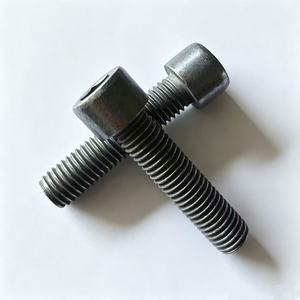
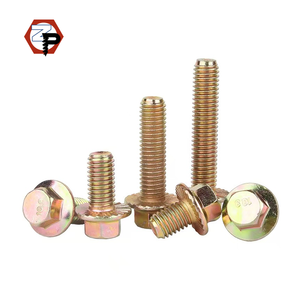
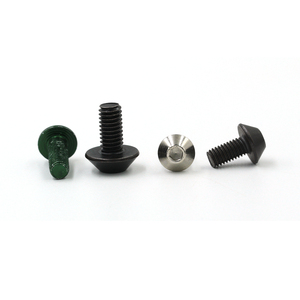
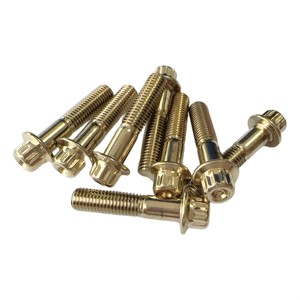
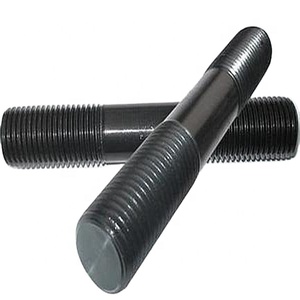
Industrial pipeline flange connections represent critical points of potential mechanical failure within high-pressure, high-temperature, and corrosive processing environments. Selecting an authoritative China pipeline stud bolts exporter requires an exhaustive evaluation of metallurgical compliance, thread geometry precision, heat treatment homogeneity, and specialized surface treatment technologies. Pipeline stud bolts—specifically continuous threaded studs conforming to ASME B18.31.2 and ASTM A193/A320 specifications—must maintain specified clamp loads across extreme operational cycles to prevent fugitive emissions, flange leaks, and catastrophic joint separation.
The operational integrity of pipeline flanged joints depends fundamentally on bolt material selection. ASTM A193 Grade B7 (quenched and tempered 4140/4142 alloy steel) serves as the industry baseline for high-pressure refinery and chemical process piping, providing a minimum tensile strength of 125,000 psi (up to 2.5-inch diameter). However, for sour gas environments containing hydrogen sulfide (H₂S), compliance with NACE MR0175/ISO 15156 dictates the specification of ASTM A193 Grade B7M, which enforces a mandatory maximum hardness cap of 235 HBW (22 HRC) to eliminate the risk of Hydrogen-Induced Stress Corrosion Cracking (SCC).
For low-temperature applications, such as LNG transport pipelines and arctic installations operating down to -150°F (-101°C), ASTM A320 Grade L7 and L7M require Charpy V-Notch impact testing to confirm energy absorption capabilities at sub-zero temperatures. In high-temperature steam systems and thermal cracking units exceeding 1000°F (538°C), elevated-creep-strength materials such as ASTM A193 Grade B16 (Cr-Mo-V alloy steel) or precipitation-hardened iron-base superalloys like ASTM A453 Grade 660 (Incoloy 928 / A286) must be implemented to resist thermal relaxation and bolt stretch over extended service lifecycles.
Over 85% of pipeline gasket leaks are traced to improper bolt preloading rather than raw material ultimate tensile failure. China’s premier fast-line exporters employ cold thread rolling after heat treatment (unbroken grain flow) combined with precision PTFE/Xylan or Electroplated Zinc-Nickel coatings. This achieves a predictable friction coefficient (K-factor = 0.11 to 0.15), ensuring that hydraulic torque wrenches convert applied torque directly into uniform axial clamping force without galling or thread deformation.
Engineers and global procurement managers can reference the structured technical matrix below to cross-evaluate mechanical properties, temperature limits, and recommended heavy hex nut pairings per ASTM A194 standards:
| Material Grade | Base Metallurgy | Tensile Strength (Min) | Yield Strength (Min) | Temp Service Range | Paired Nut Grade |
|---|---|---|---|---|---|
| ASTM A193 B7 | AISI 4140 / 4142 Alloy Steel | 125,000 psi (860 MPa) | 105,000 psi (720 MPa) | -29°C to 425°CASTM A194 Grade 2H | |
| ASTM A193 B7M | AISI 4140 (Hardness Controlled) | 100,000 psi (690 MPa) | 75,000 psi (517 MPa) | -29°C to 425°C (Sour Service)ASTM A194 Grade 2HM | |
| ASTM A320 L7 | AISI 4140 Quenched & Tempered | 125,000 psi (860 MPa) | 105,000 psi (720 MPa) | -101°C to 425°C (Cryogenic)ASTM A194 Grade 7 or 7M | |
| ASTM A193 B8 Cl.2 | AISI 304 SS (Strain Hardened) | 110,000 psi (760 MPa) | 95,000 psi (655 MPa) | -196°C to 538°CASTM A194 Grade 8 | |
| ASTM A193 B8M Cl.2 | AISI 316 SS (Strain Hardened) | 110,000 psi (760 MPa) | 95,000 psi (655 MPa) | -196°C to 538°C (Corrosive)ASTM A194 Grade 8M | |
| UNS S32750 (2507) | Super Duplex Stainless Steel | 116,000 psi (800 MPa) | 80,000 psi (550 MPa) | -40°C to 300°C (Offshore Marine)UNS S32750 Heavy Hex | |
| Inconel 718 | Ni-Cr-Mo Superalloy (UNS N07718) | 185,000 psi (1275 MPa) | 150,000 psi (1034 MPa) | -250°C to 704°C (Extreme High Pressure)Inconel 718 Heavy Hex |
Integrating modern metallurgical processing, automated CNC threading, and stringent ISO quality assurance systems to deliver international project orders on budget and on schedule.
Rather than cut threads that sever internal grain structures, our manufacturing lines utilize hydraulic two-roll and three-roll thread rolling machines. This process creates continuous, compressed grain boundaries, increasing fatigue life by up to 300% and enhancing resistance to cyclic pressure pulsations in pumping stations.
Every export order is backed by full heat number traceability. Mill test certificates verify chemical analysis (via Optical Emission Spectroscopy), mechanical tensile properties, hardness distribution, and Charpy impact energy values. Third-party inspections by DNV, Lloyd's Register, or TÜV are routinely coordinated for global projects.
We operate specialized coating lines for Fluoropolymer PTFE (Xylan 1424 / 1014), Electroplated Zinc-Nickel (88/12 alloy ratio yielding 1,000+ hours to red rust), Hot-Dip Galvanizing (HDG per ASTM F2329), and Cadmium-alternative electro-coatings engineered to withstand marine salt atmosphere exposure.
As global energy infrastructure transitions toward hydrogen-blended natural gas pipelines, subsea carbon capture systems, and deeper offshore drilling reserves, procurement strategies for pipeline stud bolts are undergoing rapid technical evolution. B2B buyers must adapt to four transformative developments:
The injection of hydrogen into existing gas distribution lines increases the risk of atomic hydrogen permeation into steel lattices. Procurement officers are shifting specifications toward low-hardness alloy steel grades (capped at 22 HRC), specialized austenitic stainless steels (316L with elevated nickel contents), and nickel superalloys (Inconel 718) to prevent hydrogen embrittlement failures in high-pressure hydrogen transport lines.
Environmental regulations (REACH & RoHS) are phasing out traditional hexavalent chromium (Cr6+) passivations and cadmium plating. Leading Chinese exporters are now deploying high-performance Zinc-Nickel (Zn-Ni) electroplating with trivalent passivates and waterborne fluoropolymer topcoats. These systems provide superior sacrificial protection while maintaining thread clearance tolerances without pitch oversizing.
Industrial IoT (IIoT) integration has given rise to smart stud bolts equipped with micro-piezoelectric ultrasonic sensors embedded within the bolt head. These studs enable real-time, non-intrusive monitoring of residual bolt tension and flange gasket compression during operation, eliminating the need for periodic manual wrench checks in hazardous chemical environments.
International project owners now require suppliers to disclose embedded carbon footprints. Advanced manufacturing facilities in China are utilizing green steel billets from electric arc furnaces (EAF) and implementing automated material tracking protocols. Digital product passports provide instantly verifiable mill certificates and carbon intensity data via QR-coded shipping tags.
Answers to common technical, metallurgical, and international logistics queries raised by engineering managers and import buyers.
Partner with China's top pipeline stud bolt manufacturer. Share your project requirements, material specifications (ASTM/ASME/DIN), dimensions, and coating preferences with our engineering team today.