
Precision-engineered ASTM, DIN, and ISO standard fasteners for oil & gas, offshore, chemical processing, and mining applications.
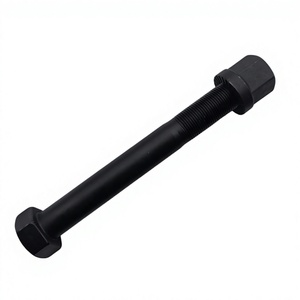
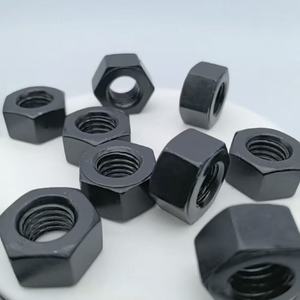
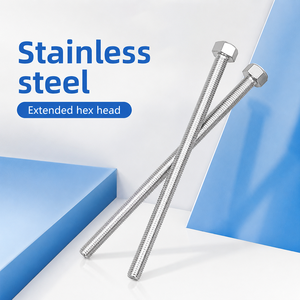
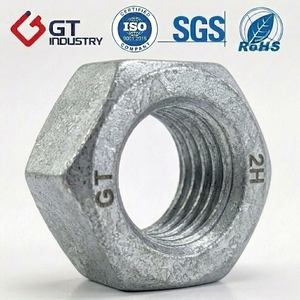
In high-stakes industrial engineering—ranging from subsea oil drilling platforms and petrochemical processing facilities to desalination plants and heavy mining equipment—the integrity of bolted joints is a primary determinant of operational safety and equipment longevity. Fasteners subjected to aggressive offshore environments, corrosive chemicals, and extreme thermal cycles are continuously exposed to severe degradation mechanisms. Among these, severe pitting corrosion, galvanic coupling, hydrogen embrittlement, and thread galling represent the most critical failure modes in pressure-retaining flange assemblies.
To overcome these challenges, China's leading fastener manufacturers have advanced the science of fluoropolymer surface engineering. PTFE (Polytetrafluoroethylene) coated bolts, often marketed under trade formulations such as Xylan® 1424 or PTFE dual-coat systems, represent a sophisticated composite solution. A standard industrial PTFE bolt assembly consists not merely of a painted surface, but a multi-layer engineering system: a substrate (carbon steel, alloy steel like ASTM A193 B7/B16, or stainless/duplex grades), followed by a metallic pre-treatment layer (such as zinc-nickel plating or phosphate conversion coating), an epoxy primer, and finally a fluoropolymer topcoat.
Key Engineering Advantage: The micro-thin fluoropolymer matrix yields a remarkably low friction coefficient (μ = 0.04 to 0.08), eliminating the unpredictable K-factor variations typical of hot-dip galvanized or plain steel bolts. This guarantees highly uniform bolt tensioning and preload retention during torque application.
Thread galling occurs when pressure and friction cause metal transfer and cold welding between mating threads, particularly in austenitic stainless steel (e.g., 304, 316) and duplex alloys (2205, 2507). When high torque is applied, surface asperities break through passive oxide layers, leading to immediate thread seizure. Applying a PTFE dry-film lubricant provides a resilient polymer barrier between mating surfaces. This prevents metal-to-metal contact, allows smooth breakout torque during maintenance shutdowns, and significantly reduces downtime costs.
Multi-layer fluoropolymer systems block moisture, chlorides, and acid vapors from reaching the steel substrate, delivering 3,000+ hours of salt spray resistance (ASTM B117).
Controls torque coefficient variance within ±0.02. Ensures precise axial preload during hydraulic tensioning and torque wrench operations.
Prevents freezing or rusting of heavy hex nuts (ASTM A194 2H/8M) on stud bolts, enabling rapid and safe disassembly during plant turnarounds.
Selecting the optimal surface treatment requires balancing environmental exposure against mechanical strength and fiscal constraints. Below is a comparative technical matrix evaluating PTFE against traditional industrial finishes, compiled by China's leading metallurgical and coating specialists.
| Coating / Surface Finish | Typical Thickness (μm) | Salt Spray Resistance (ASTM B117) | Friction Coefficient (μ) | Max Operating Temp (°C) | Galling Resistance |
|---|---|---|---|---|---|
| PTFE / Fluoropolymer System | 20 – 45 μm | 1,500 – 3,500+ Hours | 0.04 – 0.08 | 260 °C (Continuous) | Outstanding |
| Hot-Dip Galvanized (HDG) | 45 – 85 μm | 500 – 1,000 Hours | 0.14 – 0.20 | 200 °C | Poor (Requires Oversizing) |
| Zinc-Nickel Electroplating | 8 – 15 μm | 1,000 – 1,500 Hours | 0.12 – 0.16 | 200 °C | Moderate |
| Cadmium Plating with Chromate | 5 – 12 μm | 500 – 800 Hours | 0.08 – 0.12 | 230 °C | Good (RoHS Restricted) |
| Black Oxide Plain Steel | 1 – 3 μm | 12 – 24 Hours | 0.15 – 0.22 | 300 °C | Very Poor |
As demonstrated in the evaluation matrix, while traditional Hot-Dip Galvanizing provides sacrificial cathodic protection, its thick and irregular layer build-up frequently clogs fine metric and Unified National Coarse (UNC) threads. This necessitates thread chasing or overtapping nuts, which strips protective zinc away. Conversely, engineered PTFE fluoropolymer coatings maintain tight dimensional tolerances (ASME B18.31.2), ensuring seamless thread engagement without compromising structural yield strength.
The global industrial procurement landscape for mechanical fasteners is undergoing a paradigm shift driven by digital supply chain integration, stricter environmental regulations, and the demand for verified material traceability. China has established itself as the world's primary manufacturing hub for industrial fasteners, accounting for a massive share of global production capacity in high-tensile stud bolts, heavy hex nuts, and specialized threaded rods.
Modern EPC (Engineering, Procurement, and Construction) buyers and industrial distributors are increasingly prioritizing suppliers who integrate advanced raw material sourcing with in-house surface treatment facilities. Key trends include:
Demand for digital EN 10204 3.1 Material Test Certificates (MTC) linked directly via QR codes stamped on heat-batch tags for instant field verification.
Transitioning from solvent-based fluoropolymer paints to low-VOC waterborne PTFE formulations and automated electrostatic robot spray booths.
Global stocking hubs maintaining pre-machined ASTM A193 Grade B7 stud inventory ready for rapid custom PTFE color coding (Blue, Green, Red, Yellow).
The field of tribological coatings is advancing rapidly. Leading research and development laboratories across Chinese manufacturing centers are pioneering new material formulations designed to extend service life in increasingly hostile working environments.
Traditional PTFE coatings, while exceptionally low in friction, can experience micro-abrasion under extreme sliding contact pressure. By incorporating nano-ceramic particles (such as silicon carbide or aluminum oxide nanoparticles) into the fluoropolymer resin matrix, research engineers have boosted coating wear resistance by up to 300% without altering the ultra-low friction coefficient. This allows bolts to undergo multiple make-and-break torque cycles without stripping the protective film.
Substrate preparation is critical to preventing coating delamination under subsea shear stresses. Modern Chinese factories employ automated grit blasting (Sa 2.5 cleanliness standard) followed by atmospheric plasma activation. This alters the surface energy of the alloy steel, creating covalent bonds between the substrate primer and the PTFE topcoat. As a result, cross-hatch adhesion tests (ASTM D3359 Method B) consistently achieve 5B ratings.
Standard PTFE coatings degrade when exposed to continuous temperatures above 260°C. Development of PFA (Perfluoroalkoxy) and FEP (Fluorinated Ethylene Propylene) co-polymer blends combined with polyimide-amide binders now extends the maximum thermal ceiling to 315°C. This breakthrough allows PTFE coated studs to be safely specified in high-pressure steam turbines and catalytic cracking units.
Partnering with an established Chinese supplier provides global buyers with significant operational and financial advantages. Modern certified factories combine vertical integration—from raw billet forging and CNC thread rolling to heat treatment and fluoropolymer spraying—with comprehensive Quality Assurance (QA) compliance.
Manufacturing facilities operate under standardized Quality Management Systems ensuring rigorous batch consistency and international compliance.
Every shipment is backed by chemical composition analysis, tensile testing, Charpy V-notch impact test reports, and complete heat number mapping.
Full engineering support to manufacture non-standard lengths, special thread pitches (UN, Metric, Fine), and custom flange bolting profiles.
Quality control does not end after the spray booth. To guarantee zero-defect delivery for critical oil and gas service (NACE MR0175/ISO 15156 compliance), factory laboratories execute a four-point inspection routine on every production batch:
Connect directly with our engineering sales team to request a customized quotation, request EN 10204 3.1 mill test certificates, or discuss custom coating specifications for your upcoming pipeline, offshore, or industrial plant project.
Inquire Now