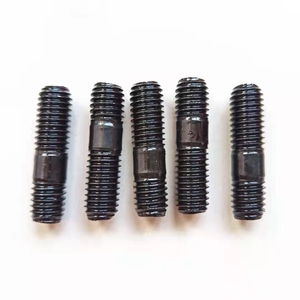
Precision-manufactured to ASTM, ASME, DIN, and ISO specifications with full material heat traceability for Portuguese industrial buyers.
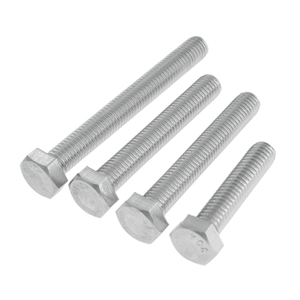
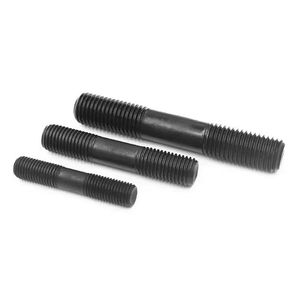
Manufactured from heat-treated chromium-molybdenum alloy steel (AISI 4140/4142), liquid-quenched and tempered to achieve minimum tensile strengths of 125,000 PSI (860 MPa) for high-pressure flange joint integrity.
Every shipment bound for Portugal includes 100% heat-number traceability, certified chemical ladle analysis, Charpy V-notch impact testing, and hardness verification conforming to strict EU pressure equipment standards.
Direct export logistics engineered for seamless customs processing through major Portuguese ports: Port of Sines, Port of Leixões (Porto), and Port of Lisbon, complete with EUR.1 / Certificate of Origin paperwork.
As Portugal accelerates its industrial modernization, expanding its refining capacities, offshore floating wind farms, and green hydrogen infrastructure, the demand for high-integrity bolting solutions has reached unprecedented levels. High-pressure piping assemblies, pressure vessels, and heavy marine structures depend fundamentally on the mechanical reliability of high-tensile fasteners. Among global standards, ASTM A193 Grade B7 stud bolts paired with ASTM A194 Grade 2H heavy hex nuts represent the definitive engineering benchmark for critical thermal and elevated-pressure applications.
This technical guide provides procurement managers, EPC contract engineers, and maintenance directors across Portugal with deep insights into the metallurgical properties, surface treatment engineering, localized application scenarios, and regulatory compliance necessary for sourcing ASTM A193 B7 stud bolts from certified manufacturers.
ASTM A193 Grade B7 is a heat-treated chromium-molybdenum alloy steel specification based on AISI 4140/4142 medium-carbon alloy steel. To meet the stringent requirements of ASME Pressure Vessel and Piping Codes (ASME Boiler and Pressure Vessel Code Section VIII and ASME B31.3 Chemical Plant and Petroleum Refinery Piping), the material undergoes precise thermal processing:
| Property Parameter | ASTM A193 Grade B7 Requirements | Engineering Significance for Refineries |
|---|---|---|
| Nominal Chemical Composition | Cr: 0.75 – 1.20% | Mo: 0.15 – 0.25% | C: 0.37 – 0.49% | Chromium enhances hardenability and oxidation resistance; Molybdenum prevents temper embrittlement. |
| Tensile Strength (Up to 2.5") | Min. 125,000 PSI (860 MPa) | Prevents joint separation and gasket blowout under high internal pressure surges. |
| Yield Strength (0.2% Offset) | Min. 105,000 PSI (720 MPa) | Ensures high elastic bolt stretch, maintaining clamp load over prolonged thermal expansion cycles. |
| Elongation in 4D / Reduction of Area | Min. 16% Elongation | Min. 50% Reduction of Area | High ductility prevents sudden catastrophic brittle fracture during bolt tensioning or seismic shifts. |
| Hardness Limit | Max. 321 HBW (35 HRC) | Maintains optimal balance between maximum tensile capacity and resistance to stress corrosion cracking. |
Portugal’s unique geographical position along the Atlantic coast and its strategic industrial investment zones require targeted fastener selection to handle distinct environmental and operational challenges:
A. Sines Petrochemical & Energy Logistics Cluster:
The Industrial and Logistics Zone of Sines (ZILS), encompassing the GALP Sines Refinery, LNG Terminal, and petro-chemical complexes, operates under high pressure and elevated operating temperatures. Flanged connections operating in steam lines, hydrocrackers, and catalytic cracking units utilize ASTM A193 B7 stud bolts continuously up to 450°C (842°F). For hydrogen-rich and sour service environments (containing H2S), our facility supplies customized ASTM A193 Grade B7M fasteners compliant with NACE MR0175 / ISO 15156, featuring restricted hardness limits (max 235 HBW / 22 HRC) to eliminate hydrogen-induced cracking (HIC).
B. Offshore Marine & Wind Energy Infrastructure (WindFloat Atlantic & Northern Portugal Yards):
Portugal is a European pioneer in floating offshore wind power (e.g., WindFloat Atlantic off the coast of Viana do Castelo). Steel structures, transition pieces, and subsea flange connections in these marine installations are exposed to severe atmospheric corrosivity rated C5-M (Marine High Corrosion category per ISO 12944). Standard black oxide or plain bare steel B7 studs will rapidly corrode in saltwater splash zones. To solve this, we supply ASTM A193 B7 stud bolts coated with Fluoropolymer PTFE / Xylan 1424 or Hot-Dip Galvanized (HDG per ASTM A153). PTFE coatings provide superior salt-spray corrosion resistance exceeding 1,500 hours (ASTM B117 test standard) while maintaining a low coefficient of friction (0.05 to 0.08) for consistent bolt torque-tension conversion during subsea installation.
C. Pulp, Paper & Biomass Processing (Aveiro, Figueira da Foz, Cister):
Portugal’s world-leading pulp and paper manufacturers (such as The Navigator Company and Altri) operate massive chemical digesters, recovery boilers, and bleaching facilities. Here, high-tensile ASTM A193 B7 studs are utilized for main pressure vessels, while ASTM A193 Grade B8 (AISI 304) and Grade B8M (AISI 316) Class 2 strain-hardened stainless steel studs are deployed in wet liquor and acidic chemical lines to prevent pitting corrosion.
D. Naval Construction & Ship Repair (Setúbal & Viana do Castelo Shipyards):
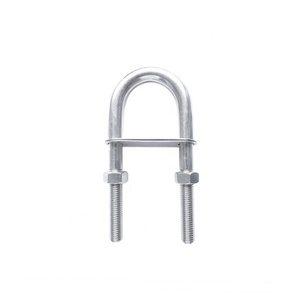
Major naval drydocks like Lisnave in Setúbal require heavy hex bolts, U-bolts, and custom double-end studs designed for propulsion shafting, seawater cooling heat exchangers, and hull fittings. Full traceability and EN 10204 3.1 certification are imperative to meet ship classification society audits (such as DNV GL, Lloyd's Register, or Bureau Veritas).
Engineering procurement strategy in Portugal is undergoing a structural shift driven by European Green Deal mandates, technological advancements, and strict supply chain verification requirements:
Portugal is positioning Sines as a primary European hub for Green Hydrogen production and export. Gaseous hydrogen under ultra-high pressure (up to 700 bar in storage systems) presents extreme risk of gas atom permeation and embrittlement in carbon and alloy steels. Industrial buyers are increasingly specifying precise chemical compositions with ultra-low phosphorus and sulfur impurities, as well as transitioning to specialized alloy bolting such as Inconel 718 / UNS N07718 or Super Duplex UNS S32750/S32760 for critical valve manifolds.
While European mechanical designs traditionally rely on Metric ISO property classes (e.g., Class 8.8, 10.9, 12.9 under ISO 898-1), the global nature of oil, gas, and power engineering means ASME/ANSI piping specifications dominate high-pressure installations. Procurement managers in Portugal frequently require dual-certified fasteners or verified cross-references:
Any fastener installed within a pressure-retaining system imported into Portugal must comply with PED 2014/68/EU Annex I Section 4.3. Material compliance requires EN 10204 Type 3.1 Certification directly from the manufacturer, confirming chemical analysis, mechanical property verification, heat treatment batch numbers, and non-destructive testing (NDT) results.
Use the matrix below to cross-reference application environments across Portugal with the correct ASTM / ISO fastener material grades:
| Material Grade | Base Metallurgy | Service Temp. Range | Primary Portuguese Application | Recommended Coating |
|---|---|---|---|---|
| ASTM A193 B7 | Cr-Mo Alloy Steel (AISI 4140/4142) | -30°C to +450°C | Refinery piping, pressure vessels, steam valves (Sines, Matosinhos) | Black Oxide, Plain, PTFE/Xylan, HDG |
| ASTM A193 B7M | Controlled-Hardness Cr-Mo Steel | -30°C to +450°C | Sour gas lines (H2S), amine units, hydrogen storage | PTFE Fluoropolymer, Cadmium, Zinc-Nickel |
| ASTM A193 B16 | Cr-Mo-V High-Temp Alloy Steel | Up to +525°C | Thermal power plants, high-pressure steam turbines | High-Temp Manganese Phosphate |
| ASTM A320 L7 | Low-Temp Alloy Steel (Impact Tested) | -101°C to +345°C | LNG receiving terminals (Sines Port), cryogenic gas handling | Electroless Nickel, PTFE Coating |
| ASTM A193 B8 Class 2 | Strain-Hardened SS 304 (UNS S30400) | -196°C to +538°C | Pulp & paper chemical lines, food processing, water treatment | Passivated, Plain Stainless |
| ASTM A193 B8M Class 2 | Strain-Hardened SS 316 (UNS S31600) | -196°C to +538°C | Coastal chemical plants, marine washdown areas, paper digesters | Passivated, PTFE Coated |
| Duplex UNS S31803 / S32205 | 22Cr Duplex Stainless Steel | -50°C to +300°C | Desalination plants, offshore topsides, marine seawater pumps | Natural Passivation |
| Super Duplex UNS S32750 | 25Cr Super Duplex (PREN > 40) | -50°C to +250°C | Offshore wind subsea structures, high-salinity splash zones (C5-M) | Natural Passivation / PTFE |
With decades of specialized experience in high-tensile fastener manufacturing, our production facilities stand as a global leader in high-integrity stud bolt manufacturing. We deliver targeted solutions to Portuguese buyers based on rigorous E-E-A-T principles (Experience, Expertise, Authoritativeness, and Trustworthiness):
Our studs feature precision-rolled threads rather than cut threads. Thread rolling burnishes thread roots, establishing continuous grain flow that increases fatigue resistance by up to 30%—a critical factor for high-vibration power generation units.
We operate fully automated coating lines for PTFE/Xylan fluoropolymer application, Hot-Dip Galvanizing, Zinc-Nickel plating, and Cadmium plating. Coating thickness and adhesion are verified per ASTM B499 and ASTM D3359 standards.
Equipped with Optical Emission Spectrometers (PMI testing), 100-Ton Universal Tensile Testers, Charpy Impact Pendulums (-196°C capability), Hardness Testers (Rockwell & Brinell), and Salt Spray Test Chambers.
We manage complete export documentation packages tailored to European customs regulations. Shipments to Portugal are secured in heavy-duty, heat-treated wooden cases (ISPM 15 certified) with moisture-proof vacuum wrapping to guarantee pristine surface conditions upon arrival at Port of Sines or Port of Leixões.