
Executive Engineering Summary: High-Temperature Bolting Dynamics
In modern power generation, petrochemical refining, and heavy chemical processing, high-pressure steam lines and thermal cracking pressure vessels operate under extreme thermodynamic conditions. For engineering procurement managers, turnaround specialists, and mechanical consultants within the greater Kuala Lumpur metropolitan area and Peninsular Malaysia industrial hubs, selecting the appropriate pressure-vessel stud bolt specification is a critical reliability decision. Standard alloy steel fasteners, such as ASTM A193 Grade B7, perform admirably under moderate thermal stresses up to 425°C (800°F). However, when continuous operating temperatures surpass this threshold, standard Chromium-Molybdenum steels succumb to elevated thermal relaxation, microstructural creep deformation, and joint pre-load degradation.
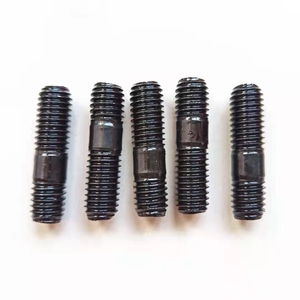
This is where ASTM A193 Grade B16 becomes the vital engineering standard. Specifically alloyed with Chromium, Molybdenum, and Vanadium (Cr-Mo-V), Grade B16 stud bolts are engineered to retain yield strength, creep rupture strength, and bolt tension under prolonged exposure to elevated temperatures up to 525°C (975°F). This whitepaper provides a comprehensive technical breakdown of ASTM A193 Grade B16 fasteners, detailing their metallurgical properties, heat treatment requirements, corrosion barrier options, regional industrial integration in Peninsular Malaysia, and procurement protocols for engineering contractors operating in Kuala Lumpur, Port Klang, and surrounding industrial sectors.
1. Metallurgical Composition & Physical Properties of ASTM A193 Grade B16
ASTM A193 Grade B16 is a heat-treated, low-alloy Chromium-Molybdenum-Vanadium steel designed primarily for pressure vessels, valves, flanges, and fittings intended for high-temperature service. Unlike basic carbon or standard alloy steels, the chemical balance of Grade B16 is specifically adjusted to optimize stress-rupture life and relaxation resistance.
1.1 Chemical Composition Breakdown
The table below outlines the precise chemical requirements specified by ASTM A193 / A193M for Grade B16 steel:
| Element | Composition Limits (%) | Primary Metallurgical Role |
|---|---|---|
| Carbon (C) | 0.36 – 0.47 | Provides baseline matrix hardness, tensile strength, and response to quenching. |
| Manganese (Mn) | 0.45 – 0.70 | Enhances hardenability and acts as a deoxidizer during steelmaking. |
| Phosphorus (P) max | 0.035 | Controlled strictly to prevent grain boundary embrittlement at high temperatures. |
| Sulfur (S) max | 0.040 | Kept low to ensure high impact toughness and prevent hot shortness during hot forging. |
| Silicon (Si) | 0.15 – 0.35 | Improves oxidation resistance and matrix solid-solution strength. |
| Chromium (Cr) | 0.80 – 1.15 | Improves deep hardenability, oxidation resistance, and elevated-temperature strength. |
| Molybdenum (Mo) | 0.50 – 0.65 | Increases creep rupture strength, retards temper embrittlement, and stabilizes carbides. |
| Vanadium (V) | 0.25 – 0.35 | Forms vanadium carbides that inhibit dislocation movement, guaranteeing high thermal relaxation resistance. |
| Aluminum (Al) max | 0.015 | Strictly limited to prevent coarse grain formation that negatively impacts creep life. |
1.2 Mechanical Property Benchmarks
To meet ASTM A193 B16 specifications, manufactured studs undergo liquid quenching (in oil or water) followed by high-temperature tempering at a minimum of 650°C (1200°F). This thermal treatment yields exceptional mechanical properties across different diameter classes:
| Diameter Range | Tensile Strength Min. | Yield Strength (0.2% Offset) Min. | Elongation in 4D Min. | Reduction of Area Min. | Hardness Max. |
|---|---|---|---|---|---|
| Up to 2-1/2 inches [M64] | 125 ksi (860 MPa) | 105 ksi (725 MPa) | 18% | 50% | 321 HBW / 35 HRC |
| Over 2-1/2 to 4 inches [M64–M100] | 115 ksi (795 MPa) | 95 ksi (655 MPa) | 17% | 45% | 321 HBW / 35 HRC |
| Over 4 to 7 inches [M100–M180] | 100 ksi (690 MPa) | 85 ksi (585 MPa) | 16% | 45% | 321 HBW / 35 HRC |
2. Engineering Comparison: ASTM A193 Grade B16 vs. Other High-Grade Fasteners
A frequent issue encountered by procurement specialists in Kuala Lumpur is the misapplication of Grade B7, Grade B8M, or ASTM A320 Grade L7 in applications where Grade B16 is required by design codes such as ASME Section VIII, ASME B31.1, or ASME B31.3. Understanding the distinct operational parameters prevents costly premature plant downtime or hazardous flange leakage.
ASTM A193 Grade B16
Chemistry: Cr-Mo-V Alloy Steel
Temp Range: -29°C to 525°C (-20°F to 975°F)
Best For: Superheated steam piping, power plant steam turbines, high-temp catalytic reformers, hydrocrackers.
ASTM A193 Grade B7
Chemistry: Cr-Mo (AISI 4140/4142)
Temp Range: -29°C to 425°C (-20°F to 800°F)
Best For: General refinery piping, standard oil & gas ASME B16.5 flange joints, non-critical pressure vessels.
ASTM A193 Grade B8M
Chemistry: AISI 316 Stainless Steel
Temp Range: -196°C to 538°C (-320°F to 1000°F)
Best For: Highly corrosive chemical environments, marine hardware, acid exposure. Lower yield strength than B16.
ASTM A320 Grade L7
Chemistry: Cr-Mo Quenched & Tempered
Temp Range: -101°C to 345°C (-150°F to 650°F)
Best For: Cryogenic gas processing, LNG storage tanks, cold-climate pipelines requiring Charpy V-notch impact testing.
3. Specialized Nut Pairing & Compatibility Protocols
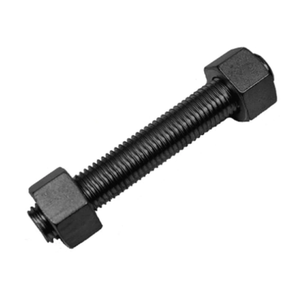
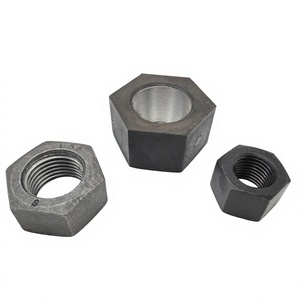
A stud bolt assembly is only as reliable as its accompanying mating heavy hex nuts. ASME pressure piping codes mandate that nuts paired with ASTM A193 Grade B16 stud bolts match or exceed the temperature capability and proof load stress of the stud.
- ASTM A194 Grade 7: Heat-treated Chromium-Molybdenum heavy hex nuts (quenched and tempered). Grade 7 nuts are the standard specified pairing for B16 stud bolts in extreme temperature applications up to 525°C, ensuring uniform thermal expansion and preventing thread galling.
- ASTM A194 Grade 4: Heat-treated Carbon-Molybdenum nuts. Acceptable for high-temperature service, though Grade 7 remains the preferred global engineering standard.
- ASTM A194 Grade 7M: 100% hardness-tested version of Grade 7 nuts designed for hydrogen sulfide ($H_2S$) sour service environments (max hardness 235 HBW / 22 HRC), complying with NACE MR0175 / ISO 15156.
4. Localized Industrial Applications in Kuala Lumpur & Peninsular Malaysia
Malaysia’s industrial sector is experiencing rapid expansion, driven by major infrastructure modernizations, power grid expansions, and downstream petrochemical integration. The Kuala Lumpur / Klang Valley region serves as the central hub for engineering procurement, EPC project management, and equipment distribution for projects across Peninsular Malaysia and Sabah/Sarawak.
4.1 Power Generation Plants (TNB Kapar, Janamanjung, Connaught Bridge)
High-efficiency coal-fired and combined-cycle gas turbine (CCGT) power plants located across the Klang Valley and West Coast rely heavily on high-pressure superheated steam lines operating above 500°C. ASTM A193 B16 studs are extensively specified for turbine casing joints, main steam valve flanges, boiler feed pumps, and steam header bolting. The relaxation resistance of Grade B16 prevents steam leaks that can cause catastrophic forced plant outages.
4.2 Downstream Refining & Petrochemical Complexes (PETRONAS Melaka, PIPC Pengerang, Kerteh)
While corporate engineering headquarters are concentrated in Kuala Lumpur’s commercial towers (such as PETRONAS Twin Towers, KLCC, and Mont Kiara), major project procurement covers critical regional assets including the Pengerang Integrated Petroleum Complex (PIPC) in Johor and the Kerteh Petrochemical Complex in Terengganu. Grade B16 studs are mandatory in hydro-cracking units, fluid catalytic cracking units (FCCU), hydrogen generation plants, and thermal reformer furnaces where process fluids reach temperatures far exceeding Grade B7 limits.
4.3 Oleochemical & Renewable Chemical Processing (Shah Alam, Port Klang, Rawang)
Selangor’s industrial zones in Shah Alam, Port Klang, and Rawang house world-leading oleochemical production facilities. High-temperature fatty acid reactors, thermal fluid heaters, and distillation columns utilize Grade B16 stud bolts coated with specialized fluoropolymer coatings to withstand combined elevated thermal stress and corrosive organic vapor environments.
5. Advanced Surface Coating Options for Tropical Maritime Environments
Kuala Lumpur and the broader Peninsular Malaysia region experience high relative humidity (averaging over 80% year-round), heavy tropical rainfall, and high ambient temperatures. When high-temperature alloy steel fasteners like ASTM A193 B16 are exposed to humid outdoor conditions or coastal marine air (such as Port Klang), severe atmospheric corrosion can occur. Selecting the correct protective coating is vital:
| Coating System | Max Operating Temp | Salt Spray Corrosion Resistance (ASTM B117) | Recommended Industrial Application |
|---|---|---|---|
| PTFE / Xylan® Fluoropolymer | 260°C (500°F) continuous | 1,500 – 3,000 Hours | Offshore platforms, chemical plant flanges requiring low coefficient of friction and anti-galling properties during breakout. |
| Hot-Dip Galvanizing (HDG) | 390°C (735°F) continuous | 800 – 1,200 Hours | Outdoor structural bolting, exposed steam line supports in industrial zones away from direct marine spray. |
| Electrolytic Zinc-Nickel (Zn-Ni) | 300°C (572°F) continuous | 1,000 – 1,500 Hours | Precision automotive, turbine auxiliary equipment, high vibration environments requiring uniform thin-film protection. |
| Phosphate & Oil Coating | 525°C (975°F) maximum | 24 – 48 Hours (Storage only) | High-temperature indoor turbine casings where organic coatings would burn off. Must be lubricated with high-temp anti-seize compound upon assembly. |
6. Manufacturing, Quality Assurance & Regulatory Compliance
As an established global manufacturer and exporter of ASTM A193 B16 fasteners supplying the Kuala Lumpur market, our facility operates under strict quality management systems certified to ISO 9001:2015. Every manufacturing lot undergoes comprehensive non-destructive and destructive testing to ensure absolute compliance with international engineering standards and local regulatory requirements, including DOSH (Department of Occupational Safety and Health Malaysia / JKKP) guidelines for Unfired Pressure Vessels (UPV).
100% Positive Material Identification
Every single bar stock and finished stud is verified using X-ray Fluorescence (XRF) alloy analyzers to confirm exact Cr, Mo, and V ratios prior to dispatch.
EN 10204 3.1 Traceability
All shipments are accompanied by complete Mill Test Reports detailing heat numbers, chemical melt analysis, hardness testing, tensile results, and Charpy impact values if specified.
Thread Rolling & NDT Inspection
Threads are precision rolled (rather than cut) post heat-treatment to generate continuous grain flow, superior fatigue life, and high surface finish accuracy complying with ASME B1.1 Class 2A/3A fits.
7. Global Supply Chain & Logistics to Kuala Lumpur & Port Klang
Timely delivery is essential for minimizing shutdown and turnaround schedules. Our direct export route from Mumbai to Port Klang (Westports and Northport) provides efficient transit times for major Malaysian industrial buyers.
- Air Freight Expedited Delivery: Emergency maintenance items and critical replacement studs can be shipped via Kuala Lumpur International Airport (KLIA) within 3 to 5 business days.
- Ocean Freight LCL/FCL: Regular bulk project orders are consolidated in seaworthy, heavy-duty wooden cases lined with vapor corrosion inhibitor (VCI) moisture barrier bags to protect steel during marine transit across the Indian Ocean and Malacca Strait.
- Customs & Documentation Compliance: Full shipping documentation including Certificate of Origin (Form E/Form D if applicable), Commercial Invoice, Packing List, and Bill of Lading are processed to ensure smooth clearance through Royal Malaysian Customs.
Require Technical Datasheets or RFQ Pricing for KL Projects?
Our dedicated engineering sales desk works directly with Malaysian procurement managers and EPC contractors to deliver fully compliant ASTM A193 B16 bolting packages.
Get a Quote