
Explore our certified industrial bolting solutions manufactured to ASTM, DIN, ISO, and AMS specifications with custom plating options for Turkish OEM applications.
A Comprehensive Technical Analysis of Cadmium Coating Mechanics, Anti-Galling Properties, and Galvanic Compatibility
In high-stress mechanical environments, selecting the right protective surface finish is as crucial as selecting the alloy grade itself. Cadmium plated bolts occupy a specialized and irreplaceable position in advanced industrial manufacturing—particularly across aerospace defense networks, marine hardware installations, and heavy military vehicle production. Electro-deposited cadmium (Cd) provides a unique combination of sacrificial corrosion protection, exceptionally low coefficient of friction, inherent lubricity, and unmatched galvanic compatibility with aluminum structures.
Unlike standard zinc plating or hot-dip galvanizing, electroplated cadmium yields a smooth, uniform deposit that preserves critical thread tolerances on precision fasteners without causing pitch diameter buildup. When subjected to marine atmospheric salt fog or aggressive industrial vapors, cadmium acts as a sacrificial anode, corroding preferentially to protect the underlying carbon or alloy steel substrate (such as ASTM A193 B7, Grade 8.8, Grade 10.9, or 4140/4340 alloy steels). Furthermore, cadmium’s corrosion products are soft and non-voluminous, preventing thread lockup, binding, or joint seizure during disassembly—a vital feature for high-maintenance military gearboxes, flight control actuators, and subsea valve assemblies in Turkey’s expanding defense and industrial sectors.
Electroplated cadmium sacrifices itself preferentially over steel substrates. With supplementary chromate passivation (Type II Yellow or Olive Drab), cadmium bolts withstand 500+ hours of salt spray exposure per ASTM B117 standards without red rust.
Cadmium boasts an extraordinarily low, predictable coefficient of friction (μ ≈ 0.12 to 0.15). This prevents galling and thread stick-slip during high-speed automated installation, ensuring precise clamp load and torque-tension correlation.
When bolted into aluminum airframes, engine casings, or naval bulkheads, cadmium minimizes galvanic potential differential. This prevents destructive localized galvanic corrosion of aluminum structures, making cadmium essential for aerospace applications.
Strict Adherence to AMS-QQ-P-416, ASTM B766, and ISO 2082 Standards for Export Orders Delivered to Turkey
To meet the stringent quality frameworks demanded by Turkish defense contractors, automotive tier-1 suppliers, and heavy equipment manufacturers, our cadmium electroplating line operates in strict accordance with worldwide aerospace and industrial standards. Cadmium plating is categorized primarily by Type (supplementary conversion treatment) and Class (plating thickness).
| Specification | Plating Type / Chromate Finish | Class / Thickness Range | Primary Industrial Use Case in Turkey |
|---|---|---|---|
| AMS-QQ-P-416 | Type I (As-Plated Bright Cadmium) | Class 1 (≥ 0.0005" / 13 μm) | Internal mechanical linkages, unexposed hydraulic fittings, precision aviation pins. |
| AMS-QQ-P-416 | Type II (Supplementary Yellow Chromate) | Class 2 (≥ 0.0003" / 8 μm) | Aerospace structural bolts, chassis fasteners for defense armored vehicles (FNSS, BMC). |
| AMS-QQ-P-416 | Type III (Supplementary Phosphate) | Class 3 (≥ 0.0002" / 5 μm) | Substrate base for high-adhesion paint, primer, or dry-film lubricant topcoats. |
| ASTM B766 | Class 12 (Yellow / Olive Drab Passivation) | 12 μm Minimum Deposit | Heavy industrial cranes, mining machinery wheel bolts, marine deck fittings in Izmir. |
| ISO 2082 / EN 12329 | Fe/Cd 8 / Fe/Cd 14 (Chromate Passivated) | 8 μm to 14 μm | General machinery export packages, automotive power-train studs in Bursa industrial zone. |
Preventing Hydrogen-Induced Delayed Fracture in Grade 10.9, Grade 12.9, and ASTM A193 B7 Fasteners
A fundamental risk during the electroplating of high-strength steel bolts (tensile strength exceeding 1000 MPa or hardness above 31 HRC) is Hydrogen Embrittlement (HE). During acid pickling and electro-deposition, atomic hydrogen diffuses into the steel’s crystal lattice. Under sustained tensile stress, atomic hydrogen migrates to grain boundaries, leading to sudden, catastrophic brittle fracture without prior deformation.
To eliminate this failure mode, our manufacturing facility implements rigorous post-plating de-embrittlement baking procedures in accordance with ASTM B851 and AMS 2759/9:
Custom Fastener Engineering Tailored to Regional Industrial Ecosystems from Marmara to Central Anatolia
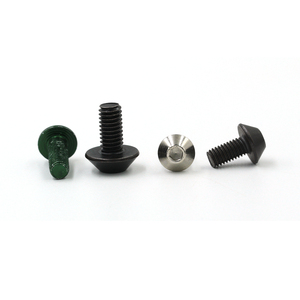
Serving defense powerhouses in OSTİM, Kahramankazan, and Gölbaşı (ASELSAN, ROKETSAN, TAI/TUSAŞ ecosystem). High-precision Cadmium Type II Class 2 studs and socket head cap screws used in missile launchers, radar assemblies, and military airframes.
Supplying heavy commercial vehicle builders and tractor manufacturers in Kocaeli, Gebze, Bursa, and Sakarya. Cadmium wheel stud bolts, hex flange bolts, and high-tensile axle fasteners designed to handle dynamic vibration and brake heat without seizing.
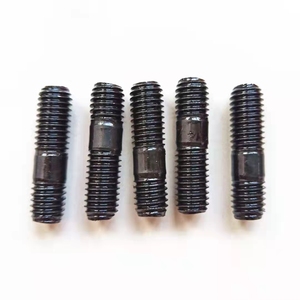
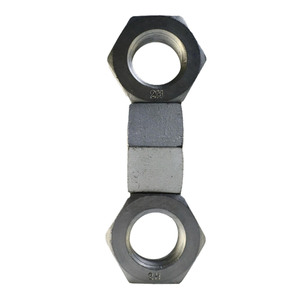
Naval and commercial marine shipyards in Tuzla, Yalova, and Aliağa (Izmir). Cadmium-plated stud bolts and heavy hex nuts deployed in saltwater pumps, marine winches, deck machinery, and subsea flange connections resistant to marine atmospheric corrosion.
Understanding EU REACH Exemption Paradigms, Defense Procurement Policies, and Direct Import Protocols
As Turkey solidifies its role as a premier manufacturing bridge between Europe, the Middle East, and Central Asia, procurement teams are balancing environmental regulations with stringent mechanical requirements. While Western Europe’s EU REACH directives have restricted cadmium electroplating for general consumer goods, Defense, Aerospace, Military Equipment, and Heavy Maritime Operations maintain explicit exemptions due to cadmium’s irreplaceable safety and anti-galling performance characteristics.
Key market dynamics influencing Turkish purchasing decisions include:
ISO-Certified Manufacturing, Complete Chemical Traceability, and Global Export Capability
Every shipment delivered to Turkish ports (Ambarlı, Gebze, Izmir, Mersin) is accompanied by authentic EN 10204 3.1 material test certificates detailing ladle chemical analysis, tensile testing, hardness values, and plating thickness verification.
Over 24 countries served with seaworthy heavy-duty wooden crate packaging, VCI anti-rust poly-lining, thread edge protectors, and full customs documentation (A.TR / EUR.1 movement certificates upon request).
From micro M3 aviation screws to massive M100 double-end stud bolts, our CNC turning and thread rolling lines produce non-standard pitch, extended shank lengths, and specialized drive heads to precise engineering drawings.
Addressing Import Protocols, Technical Standards, Testing, and Custom Manufacturing Capabilities
Our cadmium fasteners are produced strictly in accordance with ASTM B766, AMS-QQ-P-416 (Types I, II, and III, Classes 1, 2, and 3), ISO 2082, and DEF STAN 03-19. Base bolt dimensions adhere to ASME B18.2.1, DIN 931/933, TS EN ISO 4014/4017, and customer-supplied technical drawings.
For high-tensile steels (Property Class 8.8, 10.9, 12.9, ASTM A193 B7/B16), we enforce immediate de-embrittlement baking at 190°C–220°C for 8 to 24 hours within 4 hours of plating, prior to chromate passivating. Batch testing per ASTM F519 ensures complete elimination of hydrogen embrittlement risks.
Every shipment is accompanied by comprehensive quality dossiers including EN 10204 3.1 Material Test Reports (MTR), Raw Material Mill Certificates, Cadmium Plating Thickness Measurement Reports (XRF / Magnetic Gauge), Salt Spray Test Results (ASTM B117), Hardness Testing Reports, and Certificate of Origin.
Air freight orders for urgent maintenance reach Istanbul Airport (IST) within 3–5 days. Sea freight shipments from Mumbai Port reach major Turkish maritime terminals—including Haydarpaşa, Gebze Yılport, Izmir Alsancak, and Mersin Port—within 14 to 20 days depending on shipping lines.
Yes. Our Mumbai production center features advanced multi-station cold headers, CNC lathe centers, and precision thread rollers capable of manufacturing custom step bolts, wheel studs, heavy hex flange bolts, and double-end studs ranging from M3 to M100 and length up to 1000mm.
Contact our technical sales team today for immediate quotations, technical datasheets, CAD drawings, or custom plating consultations tailored to your project requirements.
Contact Us