
Explore our specialized range of high-tensile studs, metric hex bolts, threaded rods, and heavy hex nuts manufactured under strict ISO quality control and supplied to Swiss engineering enterprises.
As Switzerland continues to lead global benchmarks in high-precision machinery, aerospace engineering, alpine infrastructure, defense, and specialized chemical plant construction, the mechanical integrity of critical structural joints remains non-negotiable. Procurement managers and structural engineers operating in Swiss cantons—ranging from the industrial hubs of Zurich and Winterthur to the aerospace clusters around Lucerne and Geneva—require fastener solutions that strictly balance tribological consistency, anti-galling performance, superior galvanic isolation, and extreme environmental durability.
This technical whitepaper investigates the metallurgical superiority, mechanical characteristics, regulatory landscapes, and localized operational context of CE Certified Cadmium Plated Bolts manufactured for export to the Swiss confederation. As an established global manufacturer with ISO-certified production lines and extensive metallurgical testing protocols, our manufacturing operations deliver enterprise-grade fastener packages featuring complete heat-number traceability, rigorous hydrogen embrittlement relief processing, and bespoke geometry customization adhering to DIN, ISO, ASTM, and ASME standards.
Engineering Gain Insight: Unlike standard zinc electroplating or hot-dip galvanizing, Cadmium plating (electrodeposited cadmium per ASTM B766 / AMS-QQ-P-416) provides an exceptionally consistent coefficient of friction (μ ≈ 0.12) without requiring post-application liquid lubricants. This property guarantees uniform clamp load tightening during high-speed automated assembly in precision Swiss machine tools and aerospace structures.
Cadmium electroplating remains the gold standard for high-reliability industrial fasteners operating under harsh environmental conditions or cyclic dynamic stress. While alternative coatings have emerged over recent decades, none fully replicate the synergistic mechanical and electrochemical benefits that electroplated cadmium provides to high-strength carbon steel, alloy steel (such as ASTM A193 B7/B16), and specialized stainless grades.
Electrochemically, cadmium functions as a sacrificial anode relative to iron and steel substrates. In acidic, industrial, or chloride-laden marine environments, cadmium oxidizes preferentially, creating a dense, self-healing cadmium oxide and cadmium hydroxide passivation layer that protects the underlying steel core. When treated with supplementary chromate conversion coatings (such as Type II Yellow Chromate or Type III Clear Passivation per AMS-QQ-P-416), cadmium-plated hex bolts withstand neutral salt spray testing (ASTM B117 / ISO 9227) in excess of 500 to 1,000 hours prior to the onset of red rust.
One of the primary failure modes in threaded structural fasteners under high preload is thread galling—a form of adhesive wear caused by localized microscopic welding between mating threads. Stainless steel fasteners (such as AISI 304/316) and high-tensile alloy studs are particularly vulnerable to galling under rapid pneumatic torquing.
Cadmium possesses an inherent lubricity that significantly lowers friction. The smooth, ductile micro-structure of the cadmium layer acts as a solid-film lubricant, establishing a stable torque-tension ratio. This permits accurate calculate tensioning during installation, eliminating the unpredictable friction scatter associated with zinc flaking or wet lubricants. For Swiss original equipment manufacturers (OEMs), this translates to repeatable preload control in critical flange joints, hydraulic valves, and turbine casings.
In aerospace structures, light-rail transit systems, and precision robotic frames manufactured extensively in Switzerland, steel fasteners are frequently installed into aluminum alloy housings (e.g., 6061-T6, 7075-T6). Direct contact between bare carbon steel and aluminum triggers severe galvanic corrosion due to the large electrical potential difference between the metals. Cadmium's electrode potential closely matches that of aluminum alloys, reducing galvanic currents to negligible levels and preventing joint degradation over decades of service.
Procuring cadmium-plated hardware for use within Switzerland requires a refined understanding of both European Union directives and specific Swiss national legislation governing hazardous chemical substances.
Switzerland enforces strict environmental guidelines regarding heavy metal usage under the Chemical Risk Reduction Ordinance (ChemRRV), closely aligned with European REACH (EC 1907/2006) regulations and the RoHS directive. While general consumer goods restrict cadmium usage, specific high-reliability exemptions are explicitly recognized under Swiss law for critical industrial applications:
Our manufacturing facilities hold comprehensive CE certification adhering to EN 14592 and EN 15048 structural bolting directives. Every export consignment destined for Swiss importers or end-users undergoes systematic Factory Production Control (FPC). This includes dimensional verification, thread pitch gauging to ISO 965 / ASME B1.1 standards, coating thickness testing via X-ray fluorescence (XRF per ISO 3497), and mandatory destructive mechanical testing.
Switzerland's unique geographical, industrial, and technological topology demands customized fastener configurations engineered for severe operational stress. Our product portfolio directly serves key Swiss industrial sectors:
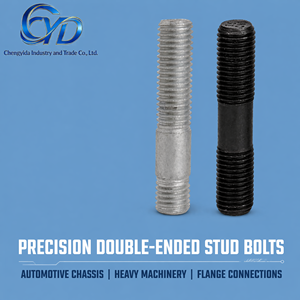
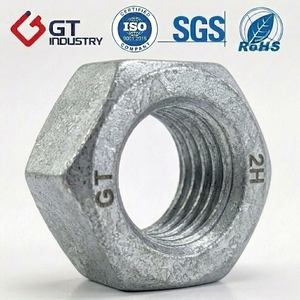
With over 600 hydroelectric power plants across the Swiss Alps (including Valais, Grisons, and Ticino), penstock pipelines, Francis turbines, and high-pressure sluice gates endure continuous water exposure, high vibration, and immense hydrostatic pressure. Our ASTM A193 Grade B7 and B16 cadmium-plated stud bolts, combined with ASTM A194 2H heavy hex nuts, provide the high tensile strength (min. 125,000 PSI) and corrosion resistance required to keep flange joints leak-free under dynamic hydraulic surge loads.
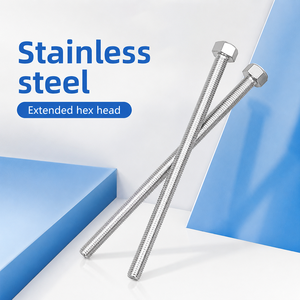
Subterranean transit tunnels such as the Gotthard Base Tunnel require hardware capable of surviving aggressive condensation, brake dust accumulation, and stray electrical currents. Cadmium-plated hex head bolts and extra-long threaded rods (DIN 976 / ASTM A193) secure catenary suspensions, ventilation ductwork, and structural wall mountings, avoiding rust staining and structural loosening over 50+ year operational lifespans.
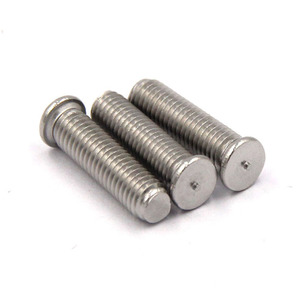
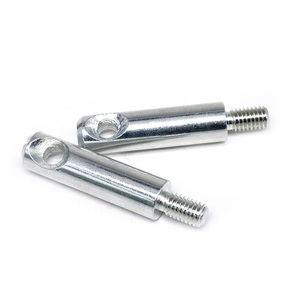
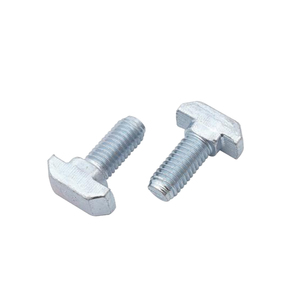
In Cantons like Neuchâtel and Jura, manufacturers of CNC turning machines, micro-milling stations, and automated assembly arms rely on specialized metric fasteners (such as ISO 13918 CD welding studs and drop-in hammer head T-bolts for aluminum extrusion profiles). Cadmium plating ensures smooth micro-adjustment without thread seizing, maintaining micron-level repeatability in high-vibration machining centers.
To assist Swiss procurement engineers and quality assurance managers in specifying the exact bolting packages for RFQs, the matrix below details our standard manufacturing capabilities for cadmium-plated industrial fasteners:
| Product Category | Material / Grade Standard | Plating / Surface Spec | Dimension Standards | Typical Size Range |
|---|---|---|---|---|
| High-Tensile Stud Bolts | ASTM A193 B7, B7M, B16, A320 L7 | Cadmium Plated (AMS-QQ-P-416 Type II Class 2/3) | ASME B18.31.2, ASME B16.5 | M6 – M100 / 1/4" – 4" |
| Heavy Hex Nuts | ASTM A194 Gr 2H, 2HM, 4, 7, 8, 8M | Cadmium Yellow Chromate / Clear Passivation | ASME B18.2.2, DIN 934, ISO 4032 | M6 – M100 / 1/4" – 4" |
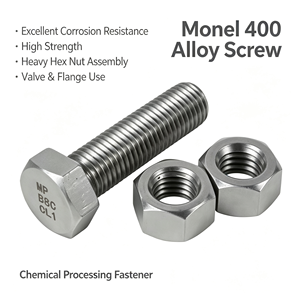
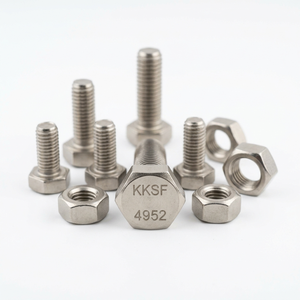
| Metric Structural Hex Bolts | Property Class 8.8, 10.9, 12.9 | Electrodeposited Cadmium per ASTM B766 | DIN 931 / 933, ISO 4014 / 4017 | M5 – M72 |
| Threaded Rods & Studs | Carbon Steel, SS 304, SS 316, Grade B7 | Cadmium Plated + Hydrogen De-embrittled | DIN 975, DIN 976 | M6 – M64 (Up to 3 Meters) |
| Specialty CD Weld Studs | Stainless Steel 304/316, Mild Steel | Electro-Cadmium or Copper Coated Base | ISO 13918 | M3 – M12 |
| T-Head & Profile Bolts | Class 8.8, 10.9 Carbon Steel | Yellow Chromate Cadmium Coating | Custom Drawings / Aluminum Profile Specs | M6 – M20 |
High-tensile fasteners (tensile strength > 1000 MPa or hardness > 31 HRC) subjected to acid pickling and electroplating are inherently vulnerable to Hydrogen Embrittlement (HE). Atomic hydrogen generated during the cleaning or plating process can diffuse into the high-strength steel crystal lattice, leading to sudden, catastrophic brittle fracture under normal tensile loading.
Strict Quality Guarantee: All high-tensile cadmium-plated bolts manufactured in our facilities immediately undergo thermal hydrogen de-embrittlement baking per ASTM B849 / ASTM B850 standards. Fasteners are baked at controlled temperatures of 190°C to 220°C for a minimum of 23 hours within 4 hours post-electroplating, ensuring 100% resistance to stress-induced cracking.
Every raw material batch undergoes Positive Material Identification (PMI) via X-ray fluorescence spectroscopy before cold heading or hot forging. Upon completion of thermal heat treatment and cadmium surface plating, export orders shipped to Switzerland are accompanied by comprehensive document dossiers, including:
Navigating global supply chains requires a manufacturing partner capable of delivering uncompromised quality, competitive factory-direct pricing, and flexible lead times tailored to Swiss industrial logistics.
We manufacture custom thread pitches, non-standard lengths (210mm-500mm+), special shank geometries, and custom head markings based on customer-provided CAD drawings.
From initial raw steel billet inspection to final automated optical sorting, our ISO 9001 quality system guarantees zero-defect deliveries for high-volume automated assembly lines.
Export consignments bound for Swiss destinations (Zurich Airport, Basel Rhine Port, or inland logistics hubs) are packed in heavy-duty wooden crates with VCI anti-corrosion inner liners.
Technical and commercial answers for engineering, quality control, and purchasing teams in Switzerland.
Partner with an ISO-certified manufacturer. Submit your detailed fastener specifications, drawings, quantity requirements, or cadmium plating grade needs to our technical engineering team today.
Contact Us