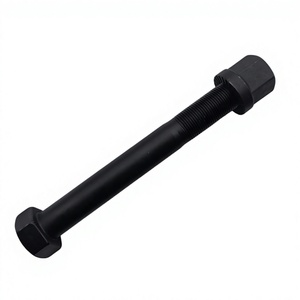
The Canadian industrial landscape demands an extraordinary level of mechanical resilience from threaded structural fasteners and pressure boundary bolting. From the sub-zero operational environments of the Athabasca Oil Sands in Alberta to the offshore drilling platforms off the coast of Newfoundland and Labrador, high tensile stud bolts endure extreme thermal cycling, corrosive chemical exposure, intense dynamic fatigue, and immense mechanical loads. Sourcing stud bolts and heavy hex nuts from premier Chinese manufacturing facilities provides Canadian engineering procurement, contracting (EPC), and OEM buyers with an optimized supply chain that balances stringent metallurgical compliance with cost efficiency.
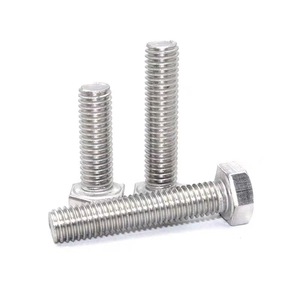
High tensile stud bolts engineered for the Canadian market primarily adhere to ASTM, ASME, CSA (Canadian Standards Association), and ISO technical specifications. Crucially, in high-pressure flange joint applications under ASME B16.5 and ASME B31.3 process piping standards, the metallurgical integrity of the stud bolt determines the pressure containment capability of the entire pipeline assembly. When selecting between carbon alloy steel grades such as ASTM A193 Grade B7, ASTM A193 Grade B16, and low-temperature specialized ASTM A320 Grade L7, procurement specialists must carefully evaluate ductile-to-brittle transition temperatures (DBTT), Charpy V-Notch (CVN) impact energy values, and protective surface coating systems.
Technical Information Gain Note: For Canadian sub-zero installations operating below -29°C (-20°F), ASTM A193 B7 standard studs are susceptible to brittle fracture under shock loads. Canadian code compliance mandates ASTM A320 Grade L7 or Grade L7M studs, which undergo mandatory Charpy V-Notch impact testing at -101°C (-150°F) or -50°C (-58°F) to guarantee minimum 27 Joules (20 ft-lbs) energy absorption.
A critical engineering differentiator of top-tier China stud bolt manufacturing is the adoption of continuous cold roll-threading processes rather than traditional machine cutting. Thread rolling induces compressive residual stresses within the thread root radius, work-hardening the grain structure and eliminating stress concentration notches. Metallographic grain-flow examination reveals that rolled threads follow the continuous contour of the bolt profile, yielding up to a 30% increase in dynamic fatigue strength—an essential prerequisite for Canadian mining haul roads, vibrating screens, and pulp mill steam lines.
| Material Specification | Nominal Size Range | Tensile Strength (Min) | Yield Strength (Min) | Low Temp Impact Limit | Primary Canadian Application |
|---|---|---|---|---|---|
| ASTM A193 Grade B7 | 1/4" to 2-1/2" (M6 - M64) | 125,000 PSI (860 MPa) | 105,000 PSI (720 MPa) | -29°C (-20°F) | Standard Refinery & Hydrocarbon Flanges |
| ASTM A320 Grade L7 | 1/4" to 2-1/2" (M6 - M64) | 125,000 PSI (860 MPa) | 105,000 PSI (720 MPa) | -101°C (-150°F) CVN tested | Arctic Pipelines, Alberta Winter Outdoor Duty |
| ASTM A193 Grade B16 | 1/4" to 2-1/2" (M6 - M64) | 125,000 PSI (860 MPa) | 105,000 PSI (720 MPa) | Elevated Temp (Up to 525°C) | Power Generation Steam Turbines & Boilers |
| ASTM A193 Grade B8M (Cl 2) | 1/4" to 1-1/2" (M6 - M36) | 110,000 PSI (760 MPa) | 95,000 PSI (650 MPa) | Cryogenic Low Temp Duty | LNG Terminals, Marine & Pulp Bleach Plants |
| UNS S32750 (Super Duplex) | M12 - M56 (1/2" - 2-1/4") | 116,000 PSI (800 MPa) | 80,000 PSI (550 MPa) | Severe Marine Corrosion | Offshore Platforms (Hibernia/Hebron), Seawater |
Targeted Fastening Solutions Engineered for Regional Canadian Industry Ecosystems
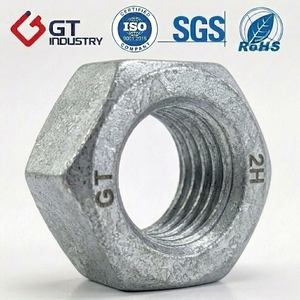
Steam-Assisted Gravity Drainage (SAGD) and bitument processing facilities in Fort McMurray require stud bolts capable of handling high-pressure thermal steam injection alongside heavy hydrocarbon slurries. We supply PTFE/Fluoropolymer-coated ASTM A320 L7 studs matched with ASTM A194 Grade 7M heavy hex nuts, guaranteeing anti-galling performance, easy torque breakout during maintenance, and high sour-service resistance conforming to NACE MR0175 / ISO 15156 standards.
Offshore production units in Eastern Canada face continuous salt spray, splash zone oxidation, and cyclic wave loads. Our factory supplies Super Duplex UNS S32750/S32760 and Inconel 718 studs featuring PREN (Pitting Resistance Equivalent Number) values greater than 40. These components exhibit complete immunity to chloride stress corrosion cracking, extending maintenance intervals for subsea Christmas trees and manifold flanges.
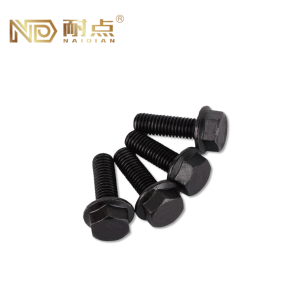
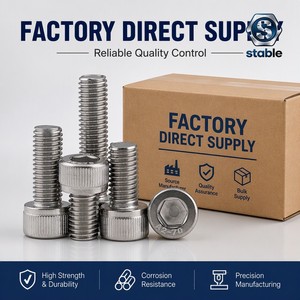
Hard rock nickel, gold, and copper mines in Sudbury and British Columbia utilize heavy haul trucks, ball mills, and jaw crushers. High-vibration structural connections rely on our Grade 10.9 and 12.9 precision-machined flange bolts, wheel stud bolts, and socket head cap screws. Custom heat treatment ensures ultra-high yield strength to resist impact shears and fatigue-induced joint loosening.
Hydro-Québec and BC Hydro megaprojects depend on heavy structural anchor bolts, stainless steel threaded rods, and high tensile fasteners within turbine casings, penstocks, and high-voltage transmission towers. Hot-Dip Galvanized (HDG) to ASTM A153 specifications, our fasteners deliver 50+ year maintenance-free corrosion resistance in pristine freshwater and forested outdoor corridors.
Atmospheric conditions in Canada range from humid coastal environments to industrial chemical belts. Unprotected carbon steel studs fail rapidly under galvanic and atmospheric corrosion. To address this, our manufacturing hub integrates state-of-the-art surface treatment lines offering customized protective systems:
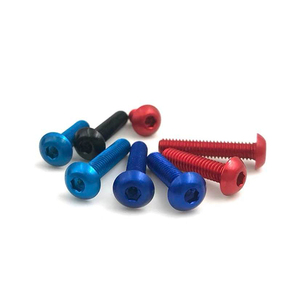
PTFE coatings (available in blue, green, red, and yellow) deliver an exceptionally low coefficient of friction (0.04 to 0.08), eliminating thread galling during high-torque power tightening. Fluoropolymer layers provide over 1,500 hours of salt spray resistance (ASTM B117 standard) and allow easy breakout of nuts without flame-cutting during refinery turnarounds.
For outdoor structural steelwork conforming to CSA S16 standards, hot-dip galvanizing provides a thick zinc metallurgical alloy layer (min. 85 microns / 610 g/m²). This sacrificial protection mechanism ensures self-healing protection if the surface is scratched during site rigging.
An eco-friendly alternative to cadmium plating, Zinc-Nickel alloy coatings (12-15% Ni content) offer outstanding heat resistance up to 300°C and exceed 1,000 hours to red rust in salt spray trials. It is highly recommended for automotive components, mining hydraulic blocks, and exposed undercarriage fasteners.
Rigorous Quality Control, Full Material Traceability, and End-to-End Export Logistics
Every single stud bolt is deep-stamped with material grade codes and raw heat numbers, linked directly to EN 10204 3.1 chemical & mechanical test certificates.
In-house Positive Material Identification (PMI) using XRF analyzers verifies Chromium, Nickel, Molybdenum, and Vanadium alloying percentages before raw bar stock processing.
Capability to manufacture non-standard lengths, special metric/UNJ thread pitches, heavy hex dimensions, and custom engineering prints with tight tolerances (±0.02mm).
All shipments bound for Canadian ports (Vancouver, Montreal, Halifax) are treated with VCI anti-rust oil, wrapped in moisture-proof plastic, and secured in ISPM-15 compliant wooden crates.
Direct factory-floor pricing eliminates intermediary markups, providing Canadian stocking distributors and project EPCs with a distinct margin advantage.
Maintained buffer stocks of raw B7, L7, 316, and Duplex round bars enable emergency order turnaround in as short as 7 to 10 working days for critical downtime situations.
Expert Engineering Clarifications Regarding Importation, Compliance, and Fastener Performance
While both ASTM A193 B7 and ASTM A320 L7 are manufactured from quenched and tempered AISI 4140/4142 chromium-molybdenum alloy steel and share identical room-temperature mechanical tensile specs (125 ksi min. tensile strength), ASTM A320 Grade L7 is specifically formulated and tested for low-temperature service. ASTM A320 L7 requires mandatory Charpy V-Notch impact testing at -101°C (-150°F) or lower, ensuring that the bolt will not undergo sudden brittle fracture when exposed to harsh Canadian winter sub-zero temperatures (e.g., -40°C in Alberta or Saskatchewan).
We provide comprehensive export documentation packages tailored for Canadian Customs clearance, including accurate Commercial Invoices, Packing Lists with HS Code classifications, Certificates of Origin (COO), and full Mill Test Reports (MTRs) to verify compliance with Special Import Measures Act (SIMA) guidelines. Our experienced logistics desk coordinates directly with your freight forwarder or customs broker in Canada.
Yes. For Canadian sour gas processing plants and oilfield piping where Hydrogen Sulfide (H2S) stress corrosion cracking is a hazard, we manufacture ASTM A193 Grade B7M and ASTM A320 Grade L7M stud bolts. These grades undergo specialized tempering to cap maximum hardness at 235 HBW (22 HRC), matching seamlessly with ASTM A194 Grade 2HM or 7M heavy hex nuts in strict adherence to NACE MR0175 limits.
We supply studs in Unified Inch Screw Threads (UN / UNR series). In accordance with ASME B16.5 and ASME B18.31.2 standards, stud bolts 1 inch in diameter and smaller typically utilize UNC (Unified Coarse) threads, while stud bolts larger than 1 inch in diameter utilize 8-UN (8-Thread Series), which ensures optimal clamp load retention under high internal fluid pressure.
Every shipment is accompanied by a full EN 10204 3.1 Material Test Report (MTR). This MTR documents raw heat chemical composition (ladle analysis), mechanical tensile and yield test results, elongation, reduction of area, Brinell/Rockwell hardness testing, Charpy V-Notch impact values (where applicable), dimensional inspection logs, and coating thickness test verification.
Have an upcoming pipeline project, structural building spec, or maintenance RFQ? Speak directly with our fastener engineering desk to confirm material grades, custom dimensions, coating specs, and fast ocean/air freight pricing.
Get a Quote