
Direct OEM & ODM export solutions fully certified to ASME, ASTM, DIN, and ISO specifications for critical mechanical engineering applications.
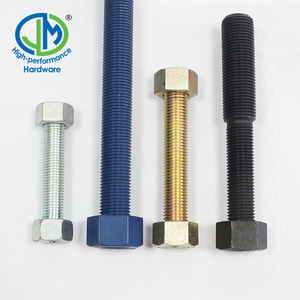
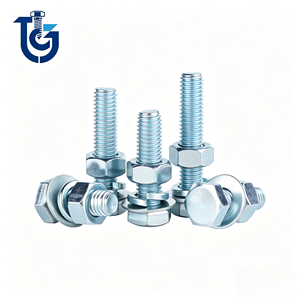
Engineered with controlled additions of Vanadium (0.15%–0.25%) to preserve yield strength and resist thermal creep under continuous elevated temperatures up to 1100°F (593°C).
Offering low-VOC PTFE/Xylan 1424, Cadmium-alternative Zinc-Nickel plating, and Hot-Dip Galvanizing compliant with Southern California air quality and sour-gas corrosion standards.
Seamless logistics via direct container routes from Ningbo/Shanghai into Port of Los Angeles and Port of Long Beach, backed by local US customs clearance documentation.
In high-pressure pressure vessel engineering, chemical refining, and steam turbine power generation, flange joint integrity at elevated temperatures is a primary safety and operational factor. While standard ASTM A193 Grade B7 stud bolts (Chromium-Molybdenum steel) perform effectively up to 800°F (426°C), operations exceeding this boundary require superior metallurgical resistance to stress relaxation and thermal creep. This is where ASTM A193 Grade B16 stud bolts—a heat-treated Chromium-Molybdenum-Vanadium (Cr-Mo-V) alloy steel—become the designated engineering standard.
The addition of Vanadium forms ultra-fine vanadium carbide precipitates within the tempered martensite matrix. These carbides act as physical pinpoints that block dislocation movement at elevated thermal states. As a result, Grade B16 studs maintain tight clamping loads across cyclic thermal expansions where standard B7 fasteners lose bolt tension and cause flange leaks.
Technical Benchmark: ASTM A193 B16 stud bolts are specifically engineered for service temperatures ranging from 800°F (426°C) to 1100°F (593°C), fulfilling ASME Boiler and Pressure Vessel Code (BPVC) Section VIII and ASME B31.3 Process Piping requirements.
Selecting the correct stud bolt grade requires matching chemical composition, tensile capability, and thermal performance to specific operating environments. Below is an authoritative technical overview comparing ASTM A193 B16 against other industrial grades widely utilized in Southern California industrial facilities.
| Specification Parameter | ASTM A193 Grade B16 | ASTM A193 Grade B7 | ASTM A193 Grade B8M (Class 2) |
|---|---|---|---|
| Alloy System | Cr-Mo-V Alloy Steel (1Cr-0.5Mo-0.25V) | AISI 4140/4142 Cr-Mo Steel | AISI 316 Stainless Steel (Strain Hardened) |
| Recommended Temp Limit | Up to 1100°F (593°C) | Up to 800°F (426°C) | Up to 1500°F (816°C) [Low Pressure] |
| Tensile Strength (Min.) | 125 ksi (860 MPa) [≤ 2.5"] | 125 ksi (860 MPa) [≤ 2.5"] | 110 ksi (760 MPa) |
| Yield Strength (Min. 0.2%) | 105 ksi (725 MPa) [≤ 2.5"] | 105 ksi (725 MPa) [≤ 2.5"] | 95 ksi (655 MPa) |
| Hardness Range | HBW 285 - 352 (HRC 30 - 38) | HBW 235 - 321 (HRC 22 - 35) | HBW 223 - 321 (HRC 20 - 35) |
| Matched Nut Specification | ASTM A194 Grade 4 or Grade 7 / 7M | ASTM A194 Grade 2H or Grade 7 | ASTM A194 Grade 8M |
| Primary Application | Turbine Casing, High-Temp Headers, Reformers | General Refinery Flanges, Valves, Pipelines | Cryogenic, Coastal Seawater, Acidic Media |
The Greater Los Angeles metropolitan region, encompassing Los Angeles County, Orange County, and the Inland Empire, represents one of the most concentrated industrial and energy processing hubs on the US West Coast. Key demand sectors include:
Refineries operating along the South Bay area—such as facilities in El Segundo, Torrance, Wilmington, and Carson—process hundreds of thousands of barrels of crude oil daily. Thermal hydrocracking units, catalytic reformers, steam methane reformers (SMR), and fluid catalytic cracking units (FCCU) operate under high temperature and high pressure. ASTM A193 Grade B16 stud bolts paired with ASTM A194 Grade 7 Heavy Hex Nuts are specified for pipe flanges, vessel manways, and heat exchanger bonnet joints to prevent fugitive hydrocarbon emissions compliant with Rule 1173 of the South Coast Air Quality Management District (SCAQMD).
From combined-cycle natural gas peaker plants in the LA Basin to geothermal facilities in the nearby Salton Sea geothermal field, steam turbine casings and high-pressure steam headers demand fasteners capable of enduring continuous thermal cycling. Grade B16 studs resist thermal fatigue, ensuring zero steam bypass and minimizing un-planned maintenance shutdowns.
As major ocean gateways handling international maritime commerce, POLA and POLB host bulk liquid transfer pipelines, bunkering facilities, and offshore berth manifolds. B16 stud bolts equipped with Xylan/PTFE corrosion protection barriers provide both high tensile clamping forces and marine atmospheric corrosion resistance against coastal salt fog.
California sits on major fault zones, including the San Andreas and Newport-Inglewood faults. Structural and piping engineers in Los Angeles adhere to strict Cal/OSHA, ASME B31.3, and California Building Code (Title 24) standards. Under dynamic seismic loads, high-yield Grade B16 stud bolts maintain mechanical integrity, preventing joint separation or catastrophic bolt shear during earthquake-induced ground motions.
As US energy infrastructure updates require reliable supply chains, leading Chinese fastener manufacturers have transformed into preferred primary suppliers for US distributors and EPC contractors. Our enterprise leverages state-of-the-art manufacturing infrastructure to deliver distinct advantages:
Supply Chain Security: Our factory maintains a permanent raw material stock of ASTM A193 B16, B7, and Stainless bars in sizes from 1/2" to 4" (M12 to M100), ensuring rapid order fulfillment for emergency refinery turnarounds in the Los Angeles area.
Answers to common technical, regulatory, and supply chain queries regarding ASTM A193 B16 fasteners exported to California.
Supply your Los Angeles projects with fully traceable, heat-treated B16 stud bolts, B7 threaded rods, and heavy hex nuts at competitive direct-from-factory pricing.
Send an Inquiry