Industry Whitepaper: Strategic Sourcing of Hot Dip Galvanized Fasteners & Steel Components from China to New Zealand
New Zealand’s unique geographical position presents one of the world's most demanding atmospheric environments for structural steel and industrial hardware. Surrounded by the Pacific Ocean and Tasman Sea, major infrastructure hubs in Auckland, Wellington, Christchurch, and Tauranga are constantly subjected to high salt-spray concentrations, intense UV radiation, and localized geothermal sulfur emissions. In this context, civil engineering procurement teams, steel fabricators, and agricultural OEMs must source hot-dip galvanized (HDG) products that do not merely meet minimal commercial standards, but strictly comply with AS/NZS 4680 (Hot-dip galvanized coatings on fabricated ferrous articles) and AS/NZS 1214 (Hot-dip galvanized coatings on threaded fasteners).
As a leading Chinese manufacturer and direct global supplier of high-tensile fasteners, stud bolts, and custom galvanizing assemblies, our operations bridge the gap between high-volume manufacturing efficiency and rigid Australian/New Zealand building codes (NZS 3404). This guide provides procurement executives and structural engineers with an authoritative breakdown of metallurgical considerations, anti-corrosion engineering, and supply chain logistics required when importing HDG fasteners from China to New Zealand.
85 µm+
Avg. HDG Coating Thickness
50+ Yrs
Design Service Life (C3/C4 Zone)
100%
Traceable EN 10204 3.1 MTRs
24+
Global Export Markets
1. Metallurgical Science of Hot Dip Galvanizing for New Zealand's ISO 9223 Marine Environments
Corrosivity categories defined under ISO 9223 classify much of New Zealand’s coastline as Category C4 (High) to C5 (Very High Marine) and CX (Extreme). Standard electro-plated zinc finishes (5–12 microns) fail within months under these atmospheric conditions. Hot-Dip Galvanizing provides dual-layer protection: a physical barrier layer combined with sacrificial cathodic protection where zinc prioritizes oxidation over the base steel alloy.
During the molten zinc immersion process at 445°C to 460°C, a series of zinc-iron alloy layers are formed via metallurgical diffusion:
- Gamma (γ) Layer: 75% Zn, 25% Fe (Super-hard intermetallic bond directly adjacent to base steel).
- Delta (δ) Layer: 90% Zn, 10% Fe (Ductile layer absorbing mechanical impacts).
- Zeta (ζ) Layer: 94% Zn, 6% Fe (Columnar crystal structure providing structural density).
- Eta (η) Layer: 100% Outer pure zinc coating delivering immediate atmospheric barrier performance.
Engineering Note for NZ Structural Engineers: For high-tensile structural bolts (such as ASTM A193 B7, Property Class 8.8, and 10.9), precise temperature control during hot-dip galvanizing and subsequent spin-centrifuging is essential to prevent hydrogen embrittlement and maintain thread fit clearance without sacrificing specified coating thickness.
2. Technical Performance Matrix: HDG vs. Alternative Protective Coatings
To assist procurement managers in evaluating life-cycle costs for infrastructure projects across the North and South Islands of New Zealand, the following technical comparison matrix evaluates key protective coatings under standard test protocols:
| Coating Specification |
Typical Thickness |
Salt Spray Resistance (ASTM B117) |
AS/NZS Standard Compliance |
Ideal NZ Application Environment |
| Hot Dip Galvanized (HDG) |
50 µm – 85 µm+ |
1,500 – 3,000+ Hours |
AS/NZS 1214 / AS/NZS 4680 |
Coastal Infrastructure, Civil Engineering, Agriculture |
| PTFE / Xylan Fluoropolymer |
20 µm – 35 µm |
1,000 – 2,500 Hours |
ASTM A193 / ASME B18.31.2 |
Chemical Processing, Offshore Oil & Gas Pipelines |
| Stainless Steel 316 / A4-80 |
N/A (Passivated) |
3,000+ Hours (No Rust) |
ASTM A193 B8M / ISO 3506 |
Submerged Marine Fittings, Dairy Processing Tanks |
| Electro-Zinc Plated (Yellow/Blue) |
5 µm – 12 µm |
72 – 150 Hours |
ASTM F1941 / ISO 4042 |
Indoor Dry Enclosures, Temporary Scaffolding |
| Mechanical Galvanizing |
25 µm – 50 µm |
500 – 1,000 Hours |
ASTM B695 Class 50 |
High-Strength Springs & Small Fasteners |
3. Localized Application Scenarios Across New Zealand Industries
Our custom manufacturing lines cater directly to regional industry specifications across major commercial centers in New Zealand:
Coastal Infrastructure & Ports
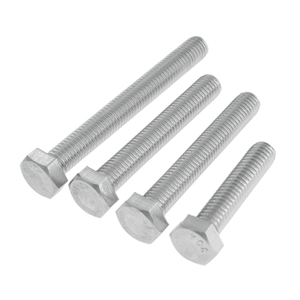
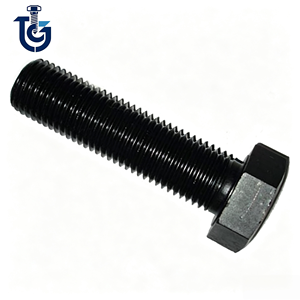
Heavy hex HDG structural bolts (AS/NZS 1252) engineered for wharf expansions, bridges, and sea defense structures in Auckland Harbour and Lyttelton Port.
Dairy & Agricultural Processing
Corrosion-resistant HDG anchor bolts, threaded rods, and 304/316 stainless fasteners for milk powder processing facilities and irrigation equipment in Waikato and Canterbury.
Geothermal & Renewable Energy
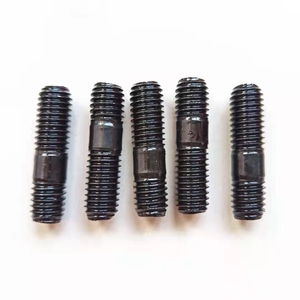
Specialized PTFE and HDG treated ASTM A193 B7 stud bolts designed to withstand acidic atmospheric conditions and thermal expansion in Rotorua and Taupo geothermal plants.
4. Six-Stage Quality Assurance Protocol for Export Orders
To guarantee that zero defective parts reach New Zealand ports, our factory operates a closed-loop quality control workflow for every production batch:
- Raw Material Spectrometric Verification: Optical Emission Spectrometry (OES) testing on incoming round bars to confirm exact chemical composition (C, Mn, Si, P, S, Cr, Mo) prior to forging.
- Precision Thread Rolling & CNC Machining: Threads are rolled prior to hot-dip galvanizing, with specialized oversize pitching on internal nuts to accommodate zinc layer deposition.
- Controlled Heat Treatment: Quenching and tempering in continuous mesh-belt furnaces to achieve precise Mechanical Property Classes (Class 8.8, 10.9, ASTM A193 B7, ASTM A194 2H).
- Thermostatic Hot-Dip Galvanizing & Spin-Centrifuging: Molten zinc bath maintained at 450°C ± 5°C with automated centrifuging to clear drive recesses and thread roots cleanly.
- Coating & Dimensional Inspection: Magnetic thickness gauge measurements (ISO 2178), pitch diameter go/no-go gauge validation, and ultrasonic flaw detection.
- Export Seaworthy Packaging: Heavy-duty double-walled corrugated cartons stacked on fumigated heat-treated wooden pallets, wrapped in VCI anti-corrosion film for trans-oceanic shipping.
5. Frequently Asked Questions by New Zealand Buyers
How do your HDG fasteners comply with New Zealand standards AS/NZS 1214 and AS/NZS 4680?
+
Our hot-dip galvanizing process is strictly calibrated to satisfy AS/NZS 1214 (for threaded fasteners) and AS/NZS 4680 (for general steel fabrications). We guarantee a minimum average zinc coating mass of 375 g/m² (equivalent to >53 µm thickness) for small fasteners and up to 600 g/m² (>85 µm thickness) for heavy structural bolts, validated via magnetic thickness testing and supplied with mill test certificates.
What documentation is supplied with container shipments to Auckland, Tauranga, or Lyttelton?
+
Every shipment is accompanied by complete inspection documentation, including EN 10204 3.1 Material Test Reports (MTRs), chemical composition analysis, mechanical tensile and proof load testing reports, HDG thickness verification certificates, and China-New Zealand Free Trade Agreement (FTA) Certificate of Origin (Form NZ) for tariff preferences.
How do you prevent hydrogen embrittlement in high-tensile galvanized bolts (Grade 10.9 / B7)?
+
For high-tensile fasteners exceeding 1000 MPa tensile strength (or 32 HRC hardness), standard acid pickling poses a risk of hydrogen absorption. We utilize mechanical blast cleaning (shot blasting) prior to fluxing, followed by immediate thermal baking at 200°C for 4 to 8 hours when required, neutralizing hydrogen embrittlement risks according to ISO 10454 guidelines.
What are the standard lead times for custom HDG bolt manufacturing and shipment to New Zealand?
+
Standard production lead time for custom items is typically 15 to 25 days depending on batch volume. Transit times from our main export ports (Ningbo / Shanghai / Shenzhen) to Port of Auckland or Tauranga average 14 to 18 days via direct ocean freight vessels.
Do you offer custom OEM sizes, special thread pitches, or specialized packaging?
+
Yes. We manufacture non-standard sizes, custom thread lengths, metric fine pitches, and imperial UN/UN8 series threads according to customer technical drawings. Packaging options include small plastic tub packs, branded boxes, or heavy bulk industrial bags customized for local NZ distribution.
Why Partner with Us for Your New Zealand Projects?
Navigating global supply chains requires a trusted manufacturing partner who understands both metallurgical engineering and international trade compliance. By consolidating your procurement of hot-dip galvanized bolts, stud bolts, nuts, washers, and custom threaded rods with our China manufacturing hub, you benefit from:
- Direct Factory Pricing: Eliminate intermediary margins while maintaining full material traceability.
- Strict Batch Consistency: Advanced automated galvanizing lines ensure uniform coating thickness and smooth thread engagement.
- Comprehensive Testing Facilities: In-house salt spray chambers, tensile testers, hardness testers, and spectro-analyzers.
- Dedicated Export Logistics Support: Full assistance with NZ customs clearing documentation, sea freight booking, and palletized container loading.
Request Technical Data & Competitive Factory Quote
Contact our engineering sales team today to discuss your project specifications, request sample testing, or download our complete product catalog.