
Precision-engineered continuous thread studs, hex nuts, and specialty bolts built to withstand Ghana’s severe offshore, mining, and industrial environments.
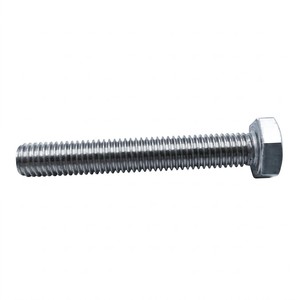
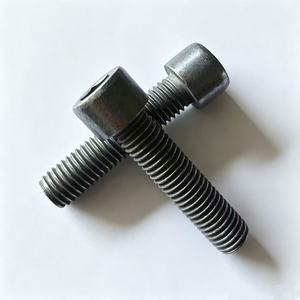
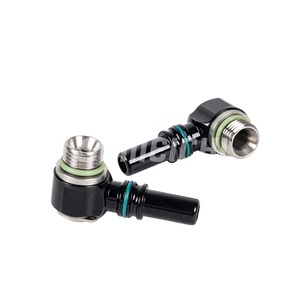
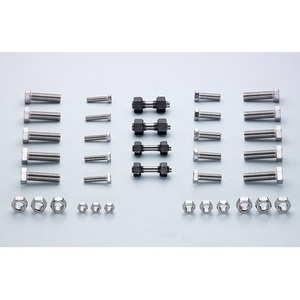
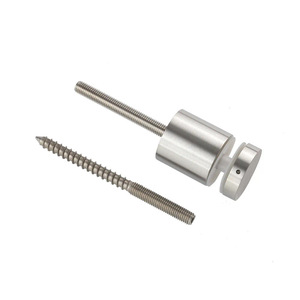
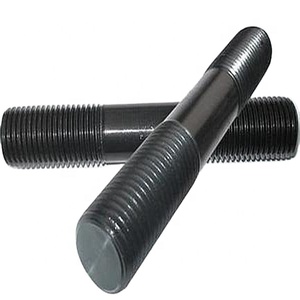
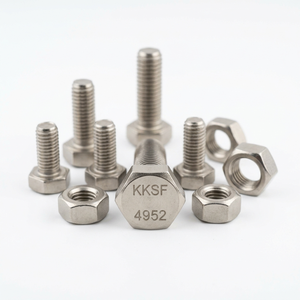
Continuous thread stud bolts—often referred to as all-thread studs or fully threaded stud bolts—are foundational structural elements across oil and gas refinement, offshore drilling, petrochemical processing, and mineral extraction. Unlike standard headed hex bolts, continuous thread studs feature unbroken external threading along their entire length. This geometric design facilitates uniform tension distribution across the full body of the fastener, eliminating stress concentration points typically found at the head-to-shank junction of traditional bolts.
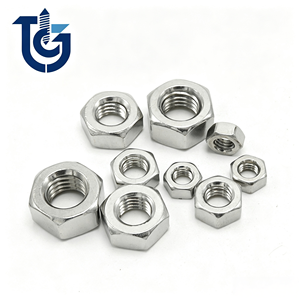
In high-pressure flange joint assemblies conforming to ASME B16.5 and ASME B16.47 specifications, continuous thread studs utilized in conjunction with two heavy hex nuts (such as ASTM A194 Grade 2H or 2HM) optimize joint integrity. Under dynamic pressure fluctuations, thermal expansion cycles, and mechanical vibration, the dual-nut configuration distributes clamping force symmetrically. This mechanical efficiency prevents localized fatigue, minimizes micro-gapping at gasket interfaces, and guarantees operational safety in toxic, high-temperature, or high-pressure containment systems.
Technical Information Gain Note: In bolted flange connections subjected to elevated thermal gradient operating conditions (e.g., steam pipelines or hydrocrackers), continuous thread studs demonstrate up to 35% higher resilience against thermal fatigue relaxation compared to shanked hex bolts, owing to the absence of differential thermal expansion along unthreaded shank segments.
Specifying the proper metallurgical grade for continuous thread studs requires evaluating yield strength, tensile resilience, Charpy V-notch impact toughness, and environmental stress cracking resistance. The primary international standards governing high-service continuous thread studs include ASTM A193, ASTM A320, ASTM A453, and ASTM A194.
| ASTM Specification | Material / Alloy Grade | Tensile Strength (Min.) | Yield Strength (Min.) | Service Temperature Range | Primary Industrial Application |
|---|---|---|---|---|---|
| ASTM A193 Grade B7 | AISI 4140/4142 Cr-Mo Alloy Steel | 125 ksi (860 MPa) | 105 ksi (720 MPa) | -29°C to 425°C | High-pressure valves, ASME B16.5 flanges, refineries. |
| ASTM A193 Grade B7M | Cr-Mo Steel (Controlled Hardness) | 100 ksi (690 MPa) | 80 ksi (550 MPa) | -29°C to 425°C | Sour gas (H2S) fields; complies with NACE MR0175/ISO 15156. |
| ASTM A193 Grade B8 Cl. 2 | AISI 304 Stainless Steel (Strain Hardened) | 110 ksi (760 MPa) | 95 ksi (650 MPa) | -196°C to 538°C | Cryogenic processing, chemical storage, coastal plants. |
| ASTM A193 Grade B8M Cl. 2 | AISI 316 Stainless Steel (Strain Hardened) | 110 ksi (760 MPa) | 95 ksi (650 MPa) | -196°C to 538°C | Offshore marine, chloride environments, acid piping. |
| ASTM A320 Grade L7 | AISI 4140 Cr-Mo Alloy Steel | 125 ksi (860 MPa) | 105 ksi (720 MPa) | -101°C to 345°C | Low-temperature subsea equipment, refrigerated gas lines. |
| ASTM A453 Grade 660 | A286 Superalloy (Iron-Nickel-Base) | 130 ksi (895 MPa) | 85 ksi (585 MPa) | Up to 700°C | High-temperature gas turbines, exhaust manifolds. |
Ghana’s rapid industrial expansion—driven by hydrocarbon extraction, gold mining modernization, coastal port expansion, and energy infrastructure developments—has created a specialized demand for high-performance continuous thread studs. Ghana’s tropical maritime climate presents severe atmospheric corrosion conditions, marked by high relative humidity (often exceeding 85%), elevated ambient temperatures, and intense airborne salt spray concentration along the Gulf of Guinea. Fastener performance in this region hinges on metallurgical suitability and protective surface engineering.
Deployments in offshore floating production storage and offloading (FPSO) units—such as FPSO Kwame Nkrumah and FPSO John Agyekum Kufuor—demand ASTM A193 B7M and Grade B8M continuous thread studs. Subsea manifolds and riser connections require total resistance to Hydrogen-Induced Cracking (HIC) and Sulfide Stress Cracking (SSC). Fluoropolymer PTFE/Xylan 1424 coatings are routinely applied over zinc-nickel substrates to deliver over 1,500 hours of salt spray corrosion resistance without galling during high-torque hydraulic tensioning.
Ghana’s mineral processing sector relies on continuous thread studs for slurry pipelines, autoclaves, ball mills, and gold cyanidation leaching tanks. Exposure to acidic mine drainage, abrasive tailings, and chemical reagents requires AISI 316L (B8M) stainless steel or Duplex UNS S31803 (2205) studs. These alloys resist pitting corrosion induced by chloride-laden wash water while maintaining high mechanical strength under severe mechanical shock loading.
Independent Power Producers (IPPs) and state utility installations in Ghana run high-pressure gas turbines, steam boilers, and heat recovery steam generators (HRSGs). ASTM A193 Grade B16 (Chromium-Molybdenum-Vanadium) continuous thread studs are extensively deployed in high-temperature steam lines up to 525°C, ensuring high creep-rupture strength and resistance to stress relaxation over extended operational cycles.
The industrial procurement landscape in Ghana is undergoing significant transformations driven by regulatory shifts, regional trade agreements, and environmental challenges. Procurement directors and engineering consultants in Accra, Tema, and Takoradi must consider three critical macro dynamics:
With the secretariat of the African Continental Free Trade Area (AfCFTA) headquartered in Accra, Ghana is positioned as West Africa’s primary logistics hub for industrial components. Regional engineering contractors are increasingly sourcing standardized, fully certified continuous thread studs stocked centrally in Ghana to streamline regional distribution into neighbouring markets such as Côte d'Ivoire, Burkina Faso, Togo, and Mali. This shift reduces transit lead times from European or Asian mills from 12 weeks to under 7 days.
Historically, Hot-Dip Galvanizing (ASTM A153) was the default protective coating for construction fasteners in West Africa. However, in coastal installations such as the Tema Port Expansion and Takoradi Marine Terminals, HDG exhibits premature white rust formation due to high humidity and atmospheric salt deposits. Modern technical specifications increasingly require Zinc-Nickel Alloy Plating (ASTM B841) or Fluoropolymer (PTFE / Xylan) coatings. Zinc-Nickel provides sacrificial protection with five times the corrosion resistance of conventional zinc plating, while avoiding the thread pitch distortion and hydrogen embrittlement risks associated with HDG on high-tensile (B7/B7M) fasteners.
The Petroleum Commission of Ghana (under LI 2204) and the Ghana Standards Authority (GSA) have escalated quality verification for imported mechanical hardware. Fasteners destined for energy and public infrastructure projects must demonstrate total material traceability. Procurement orders must be accompanied by EN 10204 3.1 Material Test Reports (MTRs), verified heat numbers stamped on stud ends, and third-party inspection (TPI) clearance reports (by agencies like Bureau Veritas, SGS, or TUV) to guarantee anti-counterfeiting compliance.
Our manufacturing protocols for continuous thread stud bolts combine high-precision cold and hot processing technologies with rigorous metallurgical validation. Every production lot destined for the Ghanaian market adheres to strict quality controls:
Threads are precision-rolled rather than cut. Thread rolling burnishes the surface, induces favorable compressive residual stresses, increases fatigue strength by up to 30%, and produces Class 2A / 3A fit tolerances for smooth nut assembly without thread binding.
Quenching and tempering processes for ASTM A193 Grade B7/B7M and A320 Grade L7 studs are executed in continuous atmosphere-controlled furnaces. Real-time temperature recording ensures homogeneous microstructural transformation (tempered martensite) and precise hardness control.
Destructive and non-destructive testing includes Positive Material Identification (PMI via XRF spectrometers), Tensile and Yield testing, Hardness mapping (Rockwell & Brinell), Charpy V-Notch impact testing at cryogenic temperatures, and Magnetic Particle Inspection (MPI) for micro-crack detection.
Addressing the technical, regulatory, and logistical queries common among Ghanaian industrial buyers.
ASTM A193 Grade B7 is a high-strength chromium-molybdenum alloy stud bolt (min. tensile 125 ksi). Grade B7M uses identical chemical composition but undergoes specialized tempering to cap maximum hardness at 235 HB (22 HRC). B7M is explicitly required for sour gas (H2S) environments in offshore Ghana (Tano Basin) to meet NACE MR0175/ISO 15156 standards and prevent sulfide stress cracking.
Thread galling occurs when friction causes localized welding between stainless steel stud threads and stainless hex nuts. We mitigate galling by maintaining precise thread tolerances, offering strain-hardened Class 2 materials, and applying specialized anti-galling coatings such as Xylan fluoropolymer, molybdenum disulfide (MoS2), or pairing 316 studs with nitronic or dissimilar grade stainless nuts.
All export shipments to Ghana include comprehensive EN 10204 3.1 Material Test Reports detailing chemical composition, mechanical test results, heat numbers, and heat-treatment parameters. We also provide Certificate of Origin (COO), Commercial Invoice with HS Code classification, Packing List, and Third-Party Inspection (TPI) certificates if requested.
For high-humidity coastal mining plants (such as facilities near Takoradi or coastal processing hubs), we recommend Fluoropolymer PTFE (Xylan 1424) over Zinc-Nickel electroplating. This dual-layer system provides superior chemical resistance against acidic mining reagents, salt fog, and UV radiation, surpassing 1,500 hours of ASTM B117 salt spray testing.
Yes. We produce continuous thread studs in both UNC, UNR, 8-UN series (ASME B1.1) and Metric coarse/fine pitch threads (ASME B1.13M / ISO 261). Diameters range from 1/4" to 4" (M6 to M100) with lengths customized to exact client engineering drawings.
Get in touch with our technical sales engineers for instant quotes, EN 10204 3.1 certified datasheets, and direct export logistics support to Tema Port, Accra, or Takoradi.
Contact Us