
Explore our specialized range of high-tensile, stainless, alloy, and custom-coated studs and hex bolts engineered to DIN, ASTM, and ISO specifications for European industrial compliance.
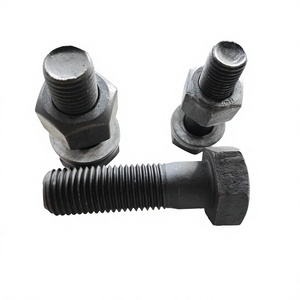
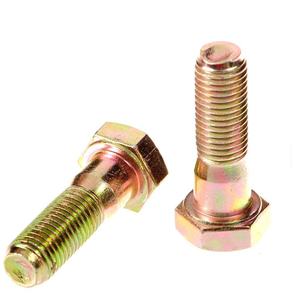
A rigorous breakdown of thread engagement ratios, metallurgical grades, and specialized surface treatments designed to eliminate joint failure in critical applications.
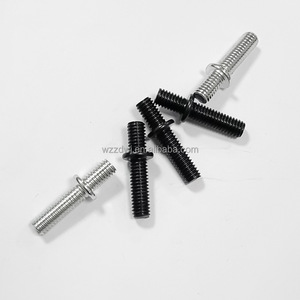
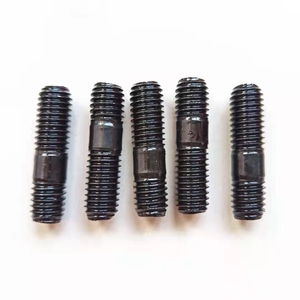
Double ended studs (also referred to as tap-end studs or double-end threaded rods) represent an essential class of mechanical fasteners designed to establish high-integrity joints where through-bolting is either physically impossible or structurally unfeasible. Unlike continuous fully-threaded studs, double ended studs feature threaded portions at both terminal ends separated by an unthreaded smooth middle shank. In demanding industrial environments across Romania—from high-pressure gas pipelines in the Black Sea to high-vibration powertrain castings in Craiova—selecting the correct double-ended stud configuration is critical to preventing thread stripping, fatigue cracking, and stress-corrosion failures.
Tap-end studs are specifically engineered for permanent insertion into tapped blind holes of cast housings, engine blocks, and valve bodies. The tap end (e) features a tightly tolerance interference thread fit, while the nut end carries standard metric or unified threads. We supply:
Engineered primarily for structural flange clamping, pressure vessel nozzles, and fluid transfer manifolds where symmetrical torque distribution is mandated. Both threaded ends feature identical lengths and pitch diameters, providing versatile tensioning across gasketed joints operating under thermal cycling.
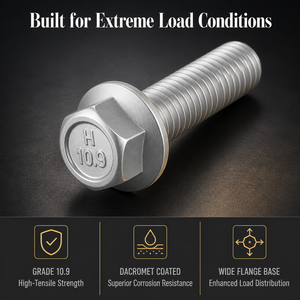
To combat harsh atmospheric and chemical exposure in Romanian industrial clusters, our double-ended studs are available with specialized coatings including PTFE (Xylan / Teflon), Hot-Dip Galvanizing (HDG), Dacromet, Geomet, and Electro-Zinc Aluminum coatings engineered for low coefficient of friction during breakout maintenance.
| Material Standard | Grade / Alloy Designation | Tensile Strength (MPa) | Service Temperature Range | Primary Industrial Sector |
|---|---|---|---|---|
| ASTM A193 | Grade B7 / B7M (Cr-Mo Alloy Steel) | 860 – 1000+ MPa | -29°C to 425°C | Refining, Petrochemical, Boiler Flanges |
| ASTM A193 | Grade B8 / B8M (Class 1 & Class 2 SS 304/316) | 515 – 750 MPa | -196°C to 538°C | Chemical Processing, Food & Beverage, Marine |
| ASTM A320 | Grade L7 / L7M (Low-Temp Alloy Steel) | 860 MPa min | Down to -101°C | Cryogenic Terminals, Subsea Gas Piping |
| Duplex Stainless | UNS S31803 / S32205 (2205 Duplex) | 655 – 800 MPa | -50°C to 300°C | Offshore Platforms, Desalination, Pulp & Paper |
| Super Duplex / Nickel | UNS S32750 (2507) / Inconel 718 / 625 | 850 – 1200+ MPa | -196°C to 650°C | High-Sour Gas Fields, Power Turbines, Aerospace |
Supporting Romania's strategic industrial hubs with high-yield custom studs designed for severe operational stresses, thermal cycles, and rigorous regulatory standards.
Romania stands as one of Central-Eastern Europe’s powerhouse vehicle manufacturing zones. In high-volume production facilities around Mioveni (Dacia-Renault hub) and Craiova (Ford Otosan plant), custom double ended studs (DIN 939 / DIN 835) are indispensable for fastening exhaust manifolds, turbocharger housings, and cast aluminum cylinder heads. Our metric double ended studs feature roll-threaded Class 6g/6H tolerances that guarantee zero thread galling during automated robotic insertion.
With major refining complexes in Ploiești and Petromidia (Năvodari), along with landmark offshore deepwater natural gas initiatives like the Neptun Deep project, the demand for ASTM A193 B7, B8M, and Super Duplex S32750 double ended studs is paramount. Our studs endure extreme marine splash zones and sour gas environments containing hydrogen sulfide ($H_2S$), backed by NACE MR0175/ISO 15156 compliance.
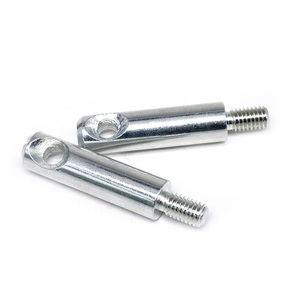
From massive hydroelectric infrastructure maintenance along the Danube River to heavy industrial pump and gearbox production in Cluj-Napoca, Brașov, and Sibiu, high-torque clamping double ended studs provide structural rigidity. Custom shoulder lengths, safety wire hole cross-drilling, and high-tensile alloy heat-treatments ensure flawless operation under severe dynamic loads.
How EU green transformation initiatives, industrial nearshoring, and energy autonomy projects are shaping fastener procurement across Romanian enterprises.
Driven by the EU National Recovery and Resilience Plan (PNRR), Romanian manufacturers are modernizing heavy infrastructure. OEM procurement managers are moving away from non-certified commodity imports toward high-precision OEM fastener manufacturers capable of delivering 100% material traceability, EN 10204 3.1 certificates, and strict compliance with EU REACH/RoHS environmental directives.
Given global maritime bottlenecks, Romanian industrial buyers prioritize suppliers offering optimized logistics corridors via the Port of Constanța or overland European transport networks. Establishing reliable OEM partnerships with rapid engineering sample turnarounds and flexible Minimum Order Quantities (MOQs) is essential for maintaining lean manufacturing schedules in Romanian factories.
Combining state-of-the-art multi-station cold forging, precision CNC turning, and rigorous quality assurance to deliver superior double-ended stud solutions.
We manufacture non-standard double ended studs tailored precisely to your CAD drawings. Options include custom tap-end lengths ($e=1d, 1.25d, 2d, 2.5d$), reduced shanks for elasticity, special thread pitches (Metric Fine, UNC, UNF, 8-UN), and customized dog-point or chamfered tips.
Every batch undergoes strict mechanical and non-destructive testing: Tensile & Proof Load Testing, Hardness Testing (Rockwell/Vickers), Optical Thread Profile Inspection, Positive Material Identification (PMI Spectrometry), and Salt Spray Corrosion Testing in compliance with ASTM B117.
Each order exported to Romania is accompanied by comprehensive EN 10204 3.1 Inspection Certificates detailing heat numbers, chemical ladle analysis, mechanical test results, and surface coating thickness verification reports.
Products are packed in heavy-duty moisture-proof wooden crates with individual thread protective sleeving, engineered to prevent thread distortion during international transit to Bucharest, Constanța, Cluj-Napoca, or Timișoara.
Clear, direct answers regarding compliance, international customs clearance, thread tolerance standards, and ordering protocols.
Our double ended studs are manufactured strictly to major European and international standards including DIN 938, DIN 939, DIN 835, DIN 940, ISO 898-1, ASME B18.31.2, ASTM A193 (B7, B8, B8M), and ASTM A320 (L7). Non-standard fasteners are produced directly from customer-supplied CAD drawings or physical samples.
The choice depends primarily on the base metal of the tapped hole: DIN 938 (e ≈ 1d) is designed for steel tapped components; DIN 939 (e ≈ 1.25d) is optimized for cast iron and ductile iron housings; DIN 835 (e ≈ 2d) is specified for low-strength non-ferrous alloys such as aluminium castings commonly used in automotive engine blocks.
Yes. Every shipment is delivered with EN 10204 3.1 material test certificates linked directly to heat numbers stamped on the studs. We can also provide EN 10204 3.2 third-party inspection reports (TUV, SGS, Lloyd's Register) upon request prior to dispatch.
For high-corrosion offshore installations (such as Neptun Deep or coastal facilities near Constanța), we recommend PTFE/Xylan fluoropolymer coatings or Hot-Dip Galvanizing (HDG) which offer superior salt spray resistance (1,000 to 1,500+ hours without red rust). For automotive applications, electro-plated Zinc-Nickel (Zn-Ni) or Dacromet coatings provide excellent thin-film corrosion protection without causing thread pitch interference.
For standard stock grades (ASTM A193 B7, SS 304/316), dispatch can occur within 5–7 working days. For custom OEM double-ended studs requiring specialized tooling or coatings, lead times typically range from 2 to 3 weeks. We accommodate flexible MOQs starting from small prototype batches to full-container shipments for large-scale Romanian engineering projects.
We utilize precision CNC thread rolling rather than cut threading, which compresses the grain structure and creates smoother thread flanks. Additionally, anti-galling treatments such as silver-plating or specialized anti-seize dry film lubricants are applied to stainless steel (B8/B8M) and duplex studs to ensure smooth installation and breakout torque control.
Submit your engineering specifications, material grades, or custom CAD drawings today. Our technical sales team will provide a comprehensive quote and material recommendation tailored for your project in Romania.