As the Slovak Republic solidifies its strategic position along the Rhine-Main-Danube Trans-European Waterway (Pan-European Corridor VII), the demand for high-integrity, corrosion-resistant marine hardware has reached an unprecedented scale. Although landlocked, Slovakia maintains a crucial maritime legacy rooted in major inland ports such as Bratislava and Komárno, robust river-sea vessel manufacturing, hydroelectric infrastructure along the Danube basin (such as the Gabčíkovo Waterworks), and specialized sub-tier exports for offshore marine platforms across Northern Europe and the Mediterranean.
Securing structural integrity in marine environments requires an in-depth understanding of electrochemical dynamics, localized crevice corrosion, stress corrosion cracking (SCC), and dynamic fatigue resistance. Fasteners utilized in marine propulsion systems, lock-gate hydraulics, deck machinery, and fluid handling must withstand aggressive brackish water interfaces, industrial chemical effluents carried by river transport, and micro-climatic variations.
In marine applications, standard grade fasteners are susceptible to rapid degradation due to pitting corrosion induced by chloride ions ($Cl^-$). To mitigate catastrophic joint failure, material selection is governed by the Pitting Resistance Equivalent Number (PREN), calculated via the alloy composition formula:
$PREN = \%Cr + 3.3 \times (\%Mo + 0.5 \times \%W) + 16 \times \%N$
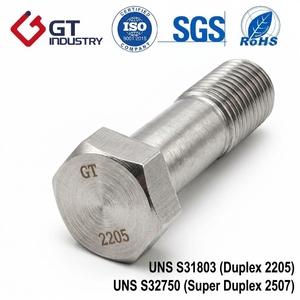
For inland waterway vessels operating on the Danube, austenitic stainless steels like AISI 316L (EN 1.4404) offer adequate performance with PREN values ranging between 23 and 25. However, for critical underwater structural assemblies, sea-going tugs, and high-salinity marine exports from Slovak shipbuilders, Duplex 2205 (EN 1.4462, PREN 32-35) and Super Duplex 2507 (EN 1.4410, PREN > 42) are essential. These dual-phase austenitic-ferritic alloys provide twice the yield strength of conventional austenitic steels combined with extreme resistance to chloride-induced stress corrosion cracking.
| Material Grade | EN / DIN Standard | Yield Strength (0.2% MPa) | PREN Rating | Primary Marine Application Field |
|---|---|---|---|---|
| AISI 316L Stainless | 1.4404 / X2CrNiMo17-12-2 | 220 - 300 | 23 - 25 | Deck fittings, interior cabin fixtures, freshwater locks |
| Duplex 2205 | 1.4462 / X2CrNiMoN22-5-3 | 450 - 550 | 32 - 35 | Propeller shafts, hull flanges, heavy vessel bolting |
| Super Duplex 2507 | 1.4410 / X2CrNiMoN25-7-4 | 550 - 750 | > 42 | Subsea manifolds, ballast pumps, aggressive chemical barges |
| Titanium Grade 5 | 3.7165 / TiAl6V4 | 830 - 900 | Immune (N/A) | High-speed naval craft, lightweight military marine hardware |
| ASTM A193 B7 + Xylan | Alloy Steel Quenched & Temp. | 725 Min | Coated Protection | High-pressure marine piping flanges & offshore valves |
Mechanical strength must be matched with appropriate surface barrier protections. In marine equipment exported from Slovakia to global markets, fast-turnaround assembly and non-galling characteristics during breakout are paramount. We supply fasteners with engineered anti-corrosion coatings tailored for marine exposure:
• PTFE / Xylan 1424 Coatings: Formulated with fluoropolymer composites, providing a ultra-low coefficient of friction ($0.05 - 0.08$) while withstanding up to 3,000 hours of salt spray testing per ASTM B117 without red rust breakout.
• Hot-Dip Galvanizing (HDG per ISO 10684): Creates a metallurgically bonded zinc-iron alloy layer (45–85 µm thick) that delivers sacrificial anodic protection for heavy civil marine structures and Danube bridge anchor bolts.
• Electrolytic Zinc-Nickel (Zn-Ni per ISO 19598): Provides superior sacrificial protection against marine atmospheres, resisting over 1,500 hours to white rust, making it ideal for automotive and marine engine bay hardware.
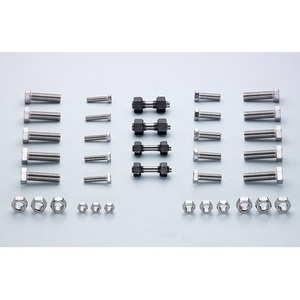
Shipbuilders along the Danube in Komárno require high-tensile studs, DIN 931 hex bolts, and DIN 934 nuts in 316L and 2205 Duplex for river-sea push barges, cargo motor vessels, and passenger catamarans. Fasteners must withstand cyclic vibration from heavy marine diesels and continuous water immersion.
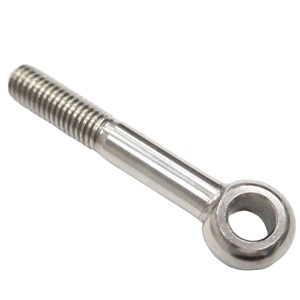
The Gabčíkovo waterworks represents one of Central Europe's largest inland water management projects. Our heavy-duty ASTM A193 B7/B16 stud bolts, heavy hex nuts, and DIN 444 eye bolts are deployed in hydraulic gate control mechanisms, turbine housings, and submerged sluice gate assemblies.
As a key multimodal hub connecting rail, road, and river, the Port of Bratislava utilizes our high-strength wheel studs, flange bolts, and heavy hex hardware across container gantry cranes, marine loading arms, and bulk material handling systems.
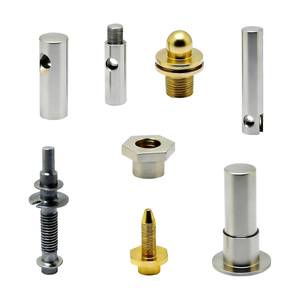
Slovakia's precision engineering sector manufactures pumps, heat exchangers, hydraulic valves, and electrical control boxes for global marine OEMs. We supply custom CNC machined pins, brass locator shafts, and small PC/SSD standoff hardware for high-tech marine electronics.
Driven by the European Union’s Green Deal and the "Green Danube" decarbonization initiatives, Slovakia’s inland maritime sector is undergoing a profound modernization. Key trends influencing fastener procurement include:
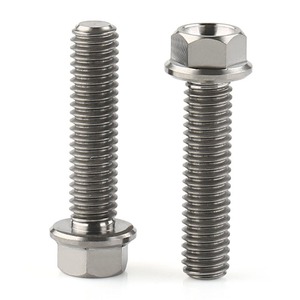
1. Electrification & Alternative Fuel Barges: The push toward hydrogen-powered and battery-electric push-tugs along the Danube mandates lightweight, non-magnetic, and fire-resistant materials. Titanium Grade 5 and Silicon Bronze fasteners are increasingly specified for electrical distribution boxes, battery housings, and lightweight superstructure joints.
2. Strict Adherence to EU Directives & EN ISO Standards: Slovak procurement teams are enforcing stringent compliance with EN ISO 3506 (Corrosion-resistant stainless steel fasteners) and Pressure Equipment Directive (PED 2014/68/EU). Full material certification under EN 10204 Type 3.1 is now a mandatory prerequisite for all structural and fluid-retaining components.
3. Transition to Cr6-Free & Environmentally Safe Coatings: In response to REACH regulations, traditional hexavalent chromium coatings have been completely phased out in favor of advanced Zinc-Nickel, PTFE Xylan, and mechanical galvanizing solutions that deliver superior protection without hazardous byproduct leaching into European inland waterways.
From high-tensile carbon steel (ASTM A193 B7, B16, A194 2H) to exotic alloys (Duplex 2205, Super Duplex S32750, Inconel 625/718, Monel 400/K500, Titanium, Silicon Bronze), we supply complete bolting packages from a single certified manufacturing origin.
Every production batch undergoes Positive Material Identification (PMI), mechanical tensile testing, hardness checks, and 2D optical dimensional inspection. All export orders include EN 10204 3.1 certification linking fasteners directly to original raw material heat numbers.
Fasteners are wrapped with VCI anti-corrosion film, packed into heavy-duty wooden cases, and palletized to withstand ocean and overland transit. We offer flexible Incoterms (DDP, CIF, FOB) with streamlined customs clearance into the European Union via Hamburg, Koper, or direct Danube routes.
Consult with our senior metallurgical engineers today to verify material compatibility, request EN 10204 3.1 mill test samples, or obtain instant factory-direct pricing for your tender.
Get a Quote