
Certified ASTM, ASME, DIN, and ISO Fasteners Supplied with Complete Heat Traceability & EN 10204 3.1 Certification for Bulgarian Heavy Industry
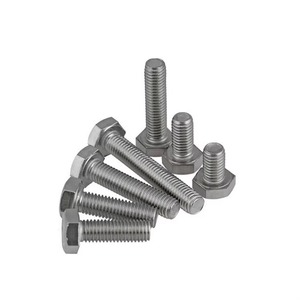
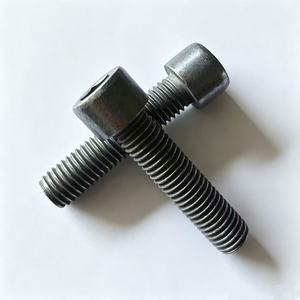
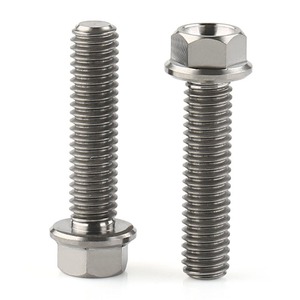
In modern industrial operations operating above elevated thermal thresholds, standard commercial grade fasteners fail rapidly due to creep deformation, thermal stress relaxation, oxidation, and microstructural phase changes. For industrial infrastructure across Southeastern Europe—specifically within Bulgaria's extensive thermal power, nuclear, petrochemical, and non-ferrous smelting sectors—the selection of high-temperature stud bolts, heavy hex nuts, and specialized threaded fasteners is a fundamental safety and operational imperative.
As a specialized global manufacturer and direct exporter to Bulgarian industrial centers (including Burgas, Varna, Sofia, Stara Zagora, and Ruse), our production facility delivers high-tensile, heat-resistant bolting systems manufactured strictly to ASTM, ASME, DIN, and EN specifications. Our engineering focus eliminates joint leakage, flange separation, and stress-rupture failures in critical pressure vessels, high-pressure steam lines, gas turbines, and hydro-processing units.
When bolted flange connections operate under severe cyclic temperatures ranging from 300°C to over 700°C, three interrelated mechanical phenomena threaten the structural joint integrity:
Under continuous high thermal exposure, the elastic strain stored during bolt tightening gradually converts into permanent plastic deformation, reducing the residual clamp load on pressure-gasketed joints.
Long-term mechanical loading at temperatures exceeding 400°C causes slow, time-dependent plastic strain (creep). Materials lacking specific alloying additions suffer intergranular grain boundary voiding and sudden rupture.
Thermal expansion mismatches between flange materials, gaskets, and stud bolts create extreme localized over-stressing during warm-up phases, followed by joint loosening during cooling shutdowns.
Achieving reliable joint sealing requires matching the specific metallurgical properties of the fastener to the operational thermal envelope, internal pressure, and chemical atmosphere. The detailed table below outlines the core alloy material grades exported for heavy industrial installations:
| Specification Grade | Alloy Type / Composition | Max Temp (°C) | Tensile Strength (MPa) | Primary Industrial Application |
|---|---|---|---|---|
| ASTM A193 Grade B7 | AISI 4140 Cr-Mo Alloy Steel | 425°C | min. 860 MPa | Standard refinery piping, steam valves, heat exchangers |
| ASTM A193 Grade B7M | Mod. 4140 Cr-Mo (Hardness Controlled) | 425°C | min. 690 MPa | Sour gas (H2S) service, NACE MR0175/ISO 15156 environments |
| ASTM A193 Grade B16 | Chromium-Molybdenum-Vanadium Steel | 540°C | min. 860 MPa | High-pressure power generation boilers & superheaters |
| ASTM A320 Grade L7 / L7M | Low-Temp Quenched & Tempered Alloy | -101°C to 425°C | min. 860 MPa | Cryogenic vessel flanges, LNG tanks, sub-zero logistics |
| ASTM A453 Grade 660 (Class A/B) | A286 Iron-Nickel High-Temp Superalloy | 700°C | min. 895 MPa | Gas turbine casings, high-temperature exhaust, aerospace |
| Inconel 718 (UNS N07718) | Precipitation-Hardened Ni-Cr Superalloy | 700°C+ | min. 1240 MPa | Extreme corrosive elevated temp, chemical reactors, power plants |
| Duplex 2205 / Super Duplex 32750 | Austenitic-Ferritic Stainless Steel | 300°C | min. 750-850 MPa | Desalination, flue gas desulfurization (FGD), marine piping |
Bulgaria’s strategic position as an energy and industrial hub in Southeastern Europe demands high-performance structural and pressure-retaining components. Our export supply chains directly support key regional facilities and manufacturing ecosystems:
Supply of fully certified ASTM A453 Grade 660 and Stainless Steel B8M Class 2 strain-hardened stud bolts for auxiliary turbine loops, high-pressure steam distribution valves, and heat exchangers requiring strict EN 10204 3.1 certification and non-destructive examination (NDE).
High-tensile ASTM A193 B7/B7M studs combined with ASTM A194 2H/2HM heavy hex nuts coated with Xylan PTFE. Designed for fluid catalytic cracking (FCC) units, hydrocracker reactor flanges, and high-temperature distillation columns exposed to aggressive hydrogen sulfide atmospheres.
Supplying creep-resistant ASTM A193 B16 stud bolts designed specifically to withstand elevated thermal cycles inside lignite-fired utility boilers, main steam piping networks, reheater manifolds, and flue-gas desulfurization (FGD) wet scrubber units.
Delivery of heat-resistant nickel alloy fasteners (Inconel 625, Hastelloy C276) and Grade 8.8 / 10.9 hot-dip galvanized machine bolts for copper smelting reverberatory furnaces, concentrated sulfuric acid production units, and heavy industrial crushing machinery.
Providing high-reliability ANSI/ASME standard threaded rods, hex head bolts, and ASTM F436 hardened washers for urban steam distribution pipelines, heat exchange stations, and high-pressure boiler revamps across municipal utility grids.
Marine-grade ANSI 316 / 316L hex bolts, Zinc-Nickel alloy plated cap screws, and customized duplex fasteners engineered to resist saltwater pitting, marine atmospheric corrosion, and mechanical stress in port crane load-bearing assemblies.
Bulgaria’s national industrial sector is currently undergoing a profound transformation driven by EU Green Deal mandates, industrial decarbonization investments, and infrastructure modernization:
1. Modernization of Thermal Generation to Biomass & Gas Co-firing: Older coal-fired facilities in the Maritsa basin are adapting boilers for co-firing with biomass and natural gas. This transition requires retrofitting piping networks with high-temperature creep-resistant bolting like ASTM A193 B16 and A453 660 to handle higher thermal cycles.
2. Expansion of Hydrogen & Green Chemical Production: With Bulgaria investing in regional green hydrogen corridors and upgrading ammonia/fertilizer facilities (e.g., in Devnya and Dimitrovgrad), demand for high-pressure alloy bolting certified under the EU Pressure Equipment Directive (PED 2014/68/EU) is increasing rapidly.
3. Coastal Infrastructure & Marine Logistics Modernization: Port expansions at Varna and Burgas require high-grade marine fasteners featuring 1500+ hours salt spray corrosion protection, such as Zinc-Nickel plating and fluoropolymer PTFE coatings, to prevent severe marine oxidation.
To ensure total reliability in critical infrastructure, our export shipments to Bulgaria strictly conform to all relevant European and international standards:
With decades of specialized manufacturing experience, state-of-the-art thread rolling machinery, and robust metallurgical quality controls, we serve as a premier single-source manufacturer for heavy industrial projects. By maintaining extensive stocks of high-temperature alloy round bars—ranging from ASTM A193 B7/B16 to Inconel 718 and A453 Grade 660—we guarantee rapid turnaround times for both standard flange bolting and custom engineered parts.