
Comprehensive Engineering Whitepaper: Fastening Solutions for South Africa's Pump Industry
An In-Depth Technical Analysis on Material Selection, Corrosion Mitigation, Fatigue Resistance, and SANS/ISO Compliance for Industrial Fluid Handling in Sub-Saharan Africa.
The industrial fluid handling ecosystem across the Republic of South Africa presents some of the most aggressive working conditions in global engineering. From the deep-level underground gold and platinum mines of the Witwatersrand Basin and Rustenburg to the coal-fired thermal power stations of Mpumalanga, chemical refinement complexes in Sasolburg and Secunda, and heavy marine ports in Durban and Cape Town—pumping machinery must endure continuous hydrodynamic strain, severe chemical corrosion, high thermal loads, and highly abrasive slurry transport.
Within every centrifugal pump, positive displacement pump, submersible mine dewatering unit, or split-case booster pump, fasteners serve as the critical joint structural link. A single flange bolt stretch, stud fatigue fracture, or thread galling failure can cause catastrophic fluid loss, environmental contamination, unscheduled plant trips, and tens of millions of ZAR in downtime losses. As a premier global manufacturer and exporter specializing in high-tensile, stainless steel, and exotic alloy fasteners, we deliver certified, high-gain fastening solutions tailored specifically to the rigorous procurement standards of South African industrial operators and pump original equipment manufacturers (OEMs).
1. Localized Application Landscapes Across South Africa
To specify the correct fastener grade, engineering teams must evaluate the micro-environment surrounding the pump installation. South Africa’s key industrial sectors present distinct operational challenges:
Mining & Slurry Dewatering
Locations: Witwatersrand, Rustenburg, Polokwane.
Media: Acid Mine Drainage (pH 2.5–4.5), abrasive silica slurries, heavy metal ions.
Fastener Needs: Ultra-high yield strength studs (ASTM A193 B7 / Duplex 2205) capable of resisting extreme shock loading and slurry erosion around volute casings.
Petrochemical & Synthetic Fuel
Locations: Sasolburg, Secunda, Durban Refineries.
Media: Hydrocarbon distillates, hot synthetic gas, sulfuric acids, volatile aromatics.
Fastener Needs: High-temperature ASTM A193 B7/B16 with PTFE/Xylan coatings to ensure precise torque coefficients and zero VOC gland leakage under elevated thermal cycles.
Coastal Seawater & Desalination
Locations: Durban, Richards Bay, Cape Town, Coega.
Media: Warm saline sea water, hypochlorite solutions, marine bio-fouling agents.
Fastener Needs: Super Duplex (UNS S32750/S32760) and 316L Stainless Steel (ASTM A193 B8M) offering PREN > 40 to completely prevent pitting and crevice corrosion in gland seal sumps.
Power Generation & Boiler Feedwater Systems
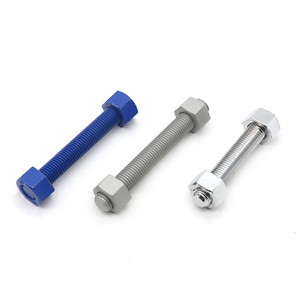
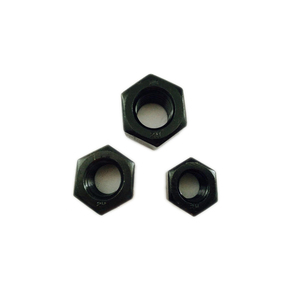
In the power-generation heartland of Mpumalanga, massive high-pressure boiler feed pumps operate at pressures exceeding 250 bar and temperatures above 350°C. Fasteners securing pump casing splits, discharge flanges, and mechanical seal housings require elevated creep resistance. The standard choice of ASTM A193 Grade B7 alloy steel studs paired with ASTM A194 Grade 2H heavy hex nuts provides the required high-tensile clamping force. For ultra-high temperature turbine feed pumps, ASTM A193 Grade B16 (Chromium-Molybdenum-Vanadium alloy) prevents stress relaxation during multi-year continuous operating campaigns.
2. Metallurgy & Material Selection Matrix for Pump Fastening
Selecting the optimal fastener grade requires balancing tensile yield strength, fatigue endurance limit, chemical resistance, and galvanic compatibility with the pump casing material (e.g., cast iron, ductile iron, CF8M stainless steel, or high-chrome iron).
| Material Grade | Specification / Standard | Tensile Strength (Min) | Corrosion Resistance | Primary South Africa Application |
|---|---|---|---|---|
| Alloy Steel B7 | ASTM A193 B7 / A194 2H | 125 ksi (860 MPa) | Moderate (Needs Coating) | High-pressure pump casing splits, clean water transfer, boiler feed. |
| Alloy Steel B16 | ASTM A193 B16 / A194 7 | 125 ksi (860 MPa) | Moderate (High Temp) | Power station thermal pumps (>500°C steam/feedwater service). |
| Stainless 316 / B8M | ASTM A193 B8M Cl 1 & Cl 2 | 75 - 110 ksi (515-760 MPa) | High (General Chemical) | Chemical dosing pumps, municipal water purification, food & beverage. |
| Duplex 2205 | UNS S31803 / S32205 | 95 ksi (655 MPa) | Very High (PREN ~34) | Acid mine drainage pumps, coal wash slurry lines, acidic process fluids. |
| Super Duplex 2507 | UNS S32750 / S32760 | 116 ksi (800 MPa) | Ultra High (PREN >42) | Offshore oil pumps, coastal marine intake, high-salinity brine pumps. |
| Inconel 625 / 718 | ASTM B446 / B637 | 120 - 185 ksi (827-1275 MPa) | Maximum (Severe Acid) | Concentrated nitric/sulfuric acid pumps, severe petrochemical service. |
3. Protective Coatings & Surface Engineering for South African Duty
Corrosion mitigation extends beyond base metal selection. In industrial areas like Durban's South Coast or Richards Bay, airborne marine salts combine with industrial sulfur dioxide to form aggressive electrolyte films on exposed stud threads. Unprotected alloy steel studs will seize within months, preventing maintenance disassembly and resulting in torquing failure during repairs.
To eliminate thread seizure and ensure predictable friction coefficients during tightening, we supply advanced coating technologies:
- PTFE / Xylan® Fluoropolymer Coatings: Multi-coat PTFE over zinc-phosphate substrate delivers a low coefficient of friction (µ = 0.06 to 0.08), eliminating thread galling and permitting effortless breakout torque even after 5,000 hours of salt-spray exposure (ASTM B117).
- Hot-Dip Galvanizing (HDG) per ASTM A153: Ideal for outdoor pump station structural anchor bolts and heavy flanges where heavy zinc coating (over 50 microns) provides sacrificial cathodic protection against atmospheric rust.
- Electroplated Zinc-Nickel (Zn-Ni): Superior to traditional electro-galvanizing, Zn-Ni provides over 1,500 hours of red-rust resistance without hydrogen embrittlement risks when processed with mandatory post-plate baking procedures for high-strength Grade B7 fasteners.
4. Engineering Calculations: Dynamic Load, Vibration & Flange Sealing Integrity
Centrifugal pumps operate under severe dynamic conditions. Impeller unbalance, pressure pulsations at cutwater vanes, and thermal pipe strain transmit intense cyclic shear and tensile stresses directly to the pump flange fasteners. Under unmitigated dynamic strain, standard fasteners suffer from two primary failure modes: rotational loosening and high-cycle fatigue snapping.
Vibration-Induced Self-Loosening Safeguards
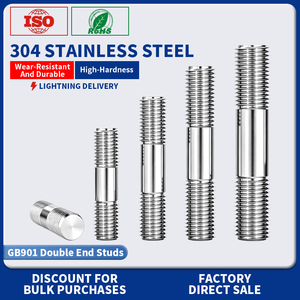
When high-volume slurry pumps vibrate at 1,450 to 2,900 RPM, the transverse dynamic movement causes minute slip between nut threads and bolt threads. To guarantee zero clamp force loss, our technical division recommends pairing ASTM A194 Grade 2H Heavy Hex Nuts with hardened flat washers (ASTM F436) or utilizing specialized double-ended studs with self-locking serrated hex flange nuts for auxiliary pump skids.
Preload & Torque Control Matrix
Achieving accurate gasket seating stress (e.g., for spiral wound or metallic ring-joint gaskets) requires exact torque control. Overshot bolt torque stretches the stud beyond its proportional limit, causing permanent plastic deformation, while undershot torque leads to immediate flange leakage. The relationship between applied torque ($T$) and bolt clamping force ($F$) is governed by the short-form equation:
Where K is the torque friction factor (nut factor), d is nominal bolt diameter, and F is target preload. For plain black oil studs, $K \approx 0.20$; for PTFE-coated studs, $K \approx 0.12$. By manufacturing thread pitches to exact ASME B1.1 Class 2A/2B fit tolerances, we ensure consistent $K$-factor repeatability across every shipment entering South Africa.
5. Manufacturing Precision & Quality Control Standards
Our Mumbai production facilities utilize state-of-the-art multi-station cold headers, CNC thread-rolling equipment, and continuous computer-controlled heat-treatment furnaces. Thread rolling after heat treatment (RAGT) is executed for fatigue-critical pump studs, creating compressive residual stress in the thread roots that enhances fatigue life by up to 400% compared to cut threads.
100% Positive Material Identification (PMI)
Every batch of duplex, super duplex, and nickel alloy studs undergoes XRF spectroscopic PMI verification prior to dispatch, guaranteeing 0% alloy mix-ups and providing certified heat numbers on EN 10204 3.1 inspection certificates.
Full Mechanical & NDT Testing
Destructive wedge tensile testing, proof load validation, Charpy V-notch impact testing at sub-zero temperatures (for ASTM A320 L7 low-temperature studs), and magnetic particle inspection (MPI) guarantee absolute structural integrity under pressure spikes.
6. South African Procurement Trends & Import Logistics Synergy
Procurement teams across Johannesburg, Durban, and Cape Town face tight maintenance windows during scheduled plant turnarounds. Sourcing directly from an established ISO-certified manufacturer in India offers significant commercial and supply chain advantages:
- Direct Port Connectivity: Direct shipping routes from Nhava Sheva (Mumbai) to Durban Port allow standard container transit times of just 14 to 18 days, enabling rapid air-freight or sea-freight replenishment of bulk stock.
- Compliance with SANS & International Standards: All manufactured product lines conform strictly to SANS 1700 (South African National Standard for Fasteners) as well as ASME B18.2.1, ASME B18.2.2, DIN 938/939, and ISO 4014/4017 specs.
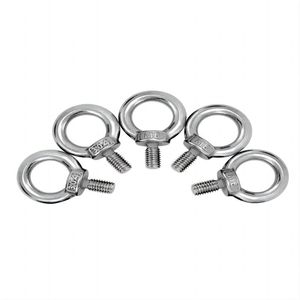
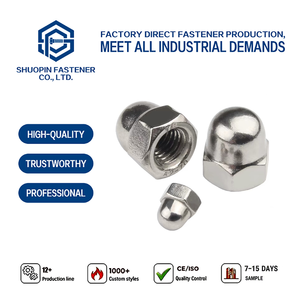
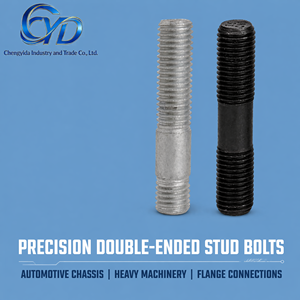
- Custom Machining to Drawing: In addition to standard ANSI/ASME flange studs, we manufacture specialized double-end stud bolts, fisheye tie rods, heavy acorn nuts, and micro-precision fasteners according to customer-supplied CAD drawings.