
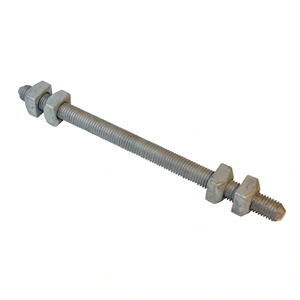
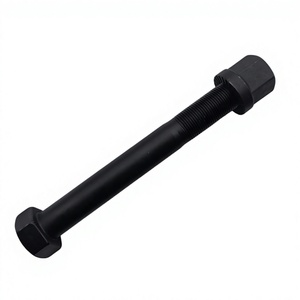
The Sultanate of Oman stands as one of the Middle East’s key oil and natural gas producers. Operating under unique geographical and environmental stresses—ranging from the arid, high-temperature desert conditions of the Interior (Block 6, Khazzan Tight Gas Field) to the severe marine atmospheric corrosion along the Arabian Sea and Gulf of Oman (Sohar, Duqm, and Salalah)—pipeline joint integrity is of paramount operational importance.
Industrial fasteners utilized in Oman’s upstream exploration, midstream transport, and downstream refining (such as OQ’s Sohar Refinery and the Duqm Complex) must strictly comply with rigorous international material specifications, including ASTM A193, ASTM A194, ASTM A320, ASME B16.5, and API 20E (Bolting Standards for Use in the Petroleum and Natural Gas Industries). Furthermore, due to the high presence of hydrogen sulfide (H2S) in Omani sour gas fields, compliance with NACE MR0175 / ISO 15156 is mandatory to prevent Sulfide Stress Cracking (SSC) and Hydrogen-Induced Cracking (HIC).
Heat-treated chromium-molybdenum alloy steel. Grade B7 is the standard bolt choice for high-pressure flange bolting. Grade B7M features 100% hardness testing (max 235 HBW / 22 HRC) designed specifically for H2S sour gas service per NACE MR0175.
Specially formulated for low-temperature applications down to -101°C (-150°F). Required for Omani LNG liquefaction facilities in Sur and subsea gas transport pipelines requiring Charpy V-Notch impact resistance.
Pitting Resistance Equivalent Number (PREN) ≥ 42. Essential for coastal reverse osmosis desalination plants and offshore platforms in Salalah and Duqm facing extreme chloride concentration.
When specifying pipeline stud bolts and heavy hex nuts for Petroleum Development Oman (PDO) or OQ contracts, matching the bolt material to the mating flange grade (ASME B16.5 / B16.47) and process fluids is essential to prevent galvanic corrosion and thermal expansion mismatches.
| Material Grade | Specification / Standard | Tensile Strength (Min.) | Yield Strength (Min.) | Recommended Service Environment |
|---|---|---|---|---|
| Alloy Steel B7 | ASTM A193 Gr. B7 | 125 ksi (860 MPa) | 105 ksi (720 MPa) | High Pressure Steam & General Oil Pipelines |
| Sour Service B7M | ASTM A193 Gr. B7M / NACE | 100 ksi (690 MPa) | 80 ksi (550 MPa) | H2S Sour Oil & Natural Gas Fields (Block 6) |
| Low Temp L7 / L7M | ASTM A320 Gr. L7 / L7M | 125 ksi (860 MPa) | 105 ksi (720 MPa) | Sur LNG Cryogenic Terminals & Sub-Zero Duty |
| Stainless Steel B8/B8M | ASTM A193 Class 1 & Class 2 | 75 to 110 ksi | 30 to 95 ksi | Chemical Processing & Coastal Flanges |
| Duplex 2205 | UNS S31803 / S32205 | 95 ksi (655 MPa) | 65 ksi (450 MPa) | Brine & Seawater Desalination Plants |
| Inconel 625 / 718 | ASTM B446 / B637 | 120 to 185 ksi | 60 to 150 ksi) | Extreme Heat (>600°C) & Corrosive Acids |
As a leading exporter of heavy industrial fasteners from manufacturing hubs into Oman, our products are tailored to the distinct operational realities of major local industrial zones:
Scenario: Crude oil storage terminals, refinery expansion, and drydock repair facilities.
Solution: Fluoropolymer PTFE (Xylan 1014/1424) coated ASTM A193 B7 stud bolts paired with A194 2H heavy hex nuts. The PTFE coating provides a low coefficient of friction (0.05 to 0.08) for precise torque control while resisting salt mist corrosion along the Arabian Sea.
Scenario: High-pressure steam lines, cracker units, and methanol synthesis plants.
Solution: High-temperature ASTM A193 Grade B16 alloy steel stud bolts designed to maintain creep strength and resist relaxation at continuous operational temperatures exceeding 525°C (975°F).
Scenario: Enhanced Oil Recovery (EOR) projects, steam injection pipelines, and wet crude treatment plants.
Solution: NACE MR0175 verified ASTM A193 Grade B7M fasteners with Cadmium or Zinc-Nickel plating to resist sulfide stress cracking in high H2S and CO2 reservoir conditions.
Under the umbrella of Oman Vision 2040, the Sultanate is aggressively investing in economic diversification, green energy transitions, and advanced industrial infrastructure. This shift is driving key trends in industrial fastener procurement:
With Oman positioning itself as a global exporter of green hydrogen (projects in Salalah and Duqm), pipeline stud bolts must prevent hydrogen embrittlement. Super Austenitic (254 SMO) and Nickel Alloy 718 (UNS N07718) fasteners are increasingly specified for low-molecular hydrogen gas transport systems.
Omani operators require strict quality compliance. Every lot imported must carry full material test certificates (MTC) conforming to EN 10204 Type 3.1 or 3.2, detailing positive material identification (PMI), ultrasonic testing (UT), and mechanical proof load results.
Moving away from traditional electroplated cadmium due to environmental directives, Omani projects are standardizing on lead-free Xylan PTFE, Hot-Dip Galvanizing (ASTM A153), and Zinc-Nickel coatings (ASTM B841) offering over 1500 hours of neutral salt spray testing (ASTM B117).
As a specialized manufacturer and global exporter, our state-of-the-art forging and thread-rolling facilities adhere to international standard specifications to supply EPC contractors serving Oman with zero-defect fasteners.
Unlike cut threads, our stud bolt threads are cold or hot-rolled to create continuous grain flow lines. This eliminates stress concentration points and increases fatigue life by up to 300% under cyclic pressure variations in pipelines.
For NACE B7M and 2HM grades, every single stud bolt undergoes Rockwell hardness testing to ensure values remain within the strict 18-22 HRC range, preventing catastrophic hydrogen-induced failures in sour oilfields.
Magnetic Particle Inspection (MPI) and Dye Penetrant Inspection (DPI) are performed on critical offshore and subsea stud bolts to detect micro-cracks or surface discontinuities prior to final surface treatment.
All shipments are dispatched with full EN 10204 3.1 Material Test Certificates (MTC) detailing heat number, raw material chemical composition, mechanical tensile and yield results, hardness testing, impact test values (for low-temp grades), and coating thickness verification. Third-party inspection (TPI by TUV, SGS, Bureau Veritas) is available upon request.
Heavy hex nuts feature larger across-flat dimensions and greater thickness than standard hex nuts, distributing heavy tensile loads evenly across flange bolt holes. Grade 2H and 2HM nuts match the heat treatment and mechanical strength of B7 and B7M stud bolts, preventing thread stripping under extreme joint clamping forces.
Standard inventory (A193 B7/B7M, Stainless 304/316) ships within 3 to 7 days. Custom manufactured stud bolts (special lengths, non-standard pitch, or Super Duplex/Inconel alloys) take approximately 2 to 3 weeks. Sea freight to Sohar Port, Muscat (Mina Al Sultan Qaboos), or Duqm Port takes approximately 7 to 12 days depending on vessel scheduling.
Yes. We apply authentic PTFE / Xylan 1014 and 1424 coatings in standard safety blue, green, yellow, or custom project colors. Coating thickness is maintained between 20 to 30 microns to ensure smooth nut engagement without thread interference.
Yes. Our ASTM A193 Grade B7M and ASTM A194 Grade 2HM fasteners are specifically processed through controlled quenching and tempering cycles to comply strictly with NACE MR0175 / ISO 15156 hardness and microstructural parameters.
Stud bolt lengths for ASME B16.5 flanges are calculated as the distance from the first thread to the last thread, excluding chamfers. The calculation includes: Flange Thickness (x2) + Gasket Thickness + Heavy Hex Nut Thickness (x2) + Height of 2 to 3 Free Threads. Our engineering team can provide exact bolt length charts upon request.
Contact our technical sales team today to receive a competitive factory-direct quote, complete MTC package, and fast shipping schedules to Muscat, Sohar, Duqm, or Salalah.
Get Catalog